

Dossier:
not provided by us yet
WelfareCheck:
C (2026-03-03)
Advice:
not provided by us yet
Scientific names (currently not valid)
Mullus erythraeus, Mullus fuscatus, Mullus fuscus
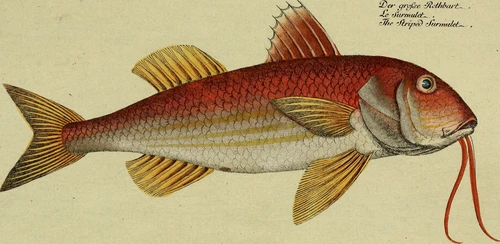
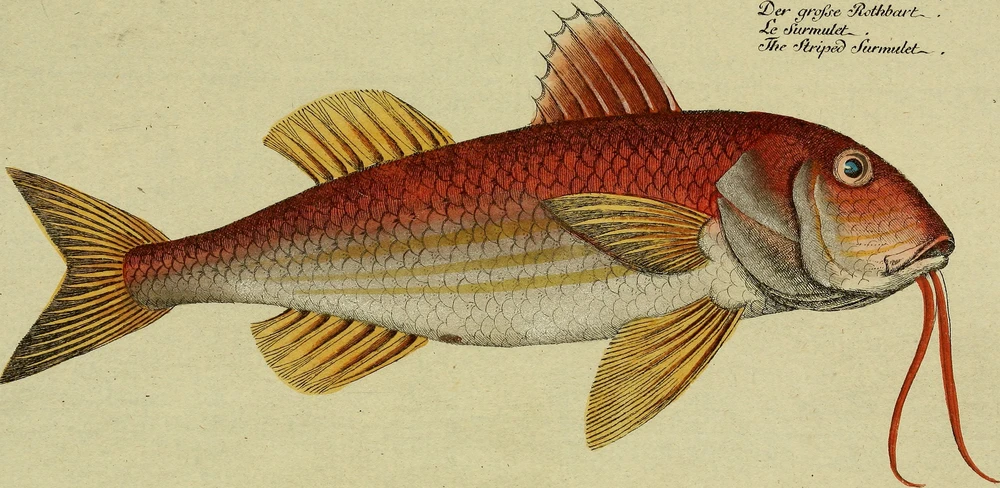
English: Striped red mullet, Surmullet, Red mullet, Mallette, Goatfish
Latin names based on Eschmeyer's
Common names based on Wikipedia


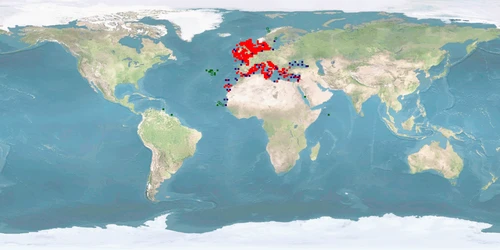
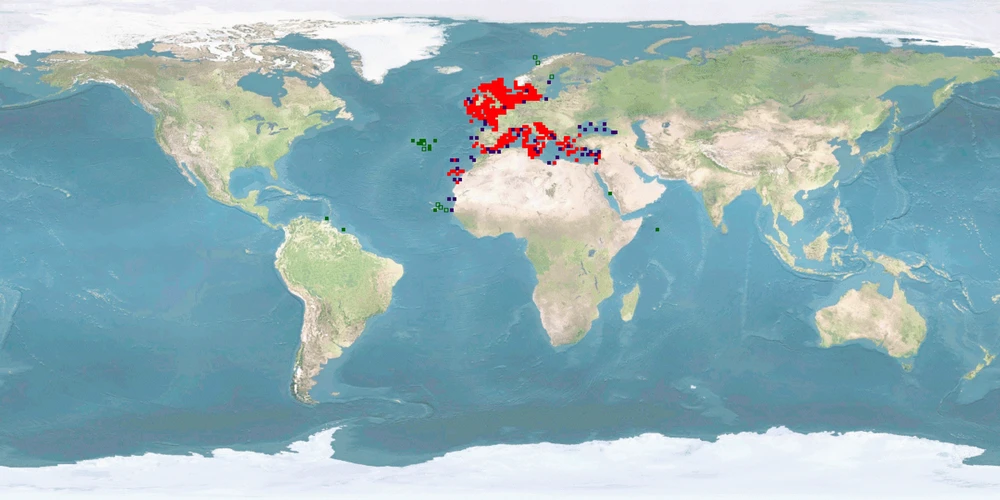
Mullus surmuletus is a popular species from waters off Norway to the Canary islands and in the Mediterranean and Black sea. In some regions, its catch statistic is combined with that of the related M. barbatus (Red mullet), as the market does not differentiate between the two. As a BENTHIC carnivore foraging in depths of 2-80 m, it is caught by DEMERSAL fisheries, predominantly of small scale, among them (bottom-)set nets. The second most frequent capture method is bottom trawl.
After being caught and held in the (gill or trammel) net during soaking and hauling – which can take several hours – the IND can already emerge dead or very weak from exhaustion or depredation by crustaceans or cetaceans. A shorter soak time could decrease suffering. Avoiding bycatch of the target species will only be able through mesh size that reduces catching undersized IND. Once on board, IND then will endure exposure to air, disentangling, experiencing their own weight, and throwing during release from gear, sorting, and storing. This could be avoided through stunning as soon as they arrive on board, followed by slaughter while still unconscious. Such a protocol does not exist, though.
Another possibility to reduce the contact with predating cetaceans could be to close the fishing for certain times or areas which would also benefit the local M. surmuletus populations. To prevent non-target species (usable and non-usable including ETP) being accidentally caught, the mesh size is decisive, but it might also need an adjustment of the minimum conservation reference size. Installing guarding nets for trammel nets is another option. Since non-target bycatch will probably not be completely avoided, a landing obligation and a campaign to encourage consumption of the less popular species could be pursued. Set nets are to be preferred over bottom trawl to catch M. surmuletus, since set nets seem to have a higher size selectivity and since their impact on the benthos is relatively low, as set nets are usually not dragged along the seafloor.
For details see: WelfareCheck | catch (latest major release: )
We broadened our portfolio of method profiles by adding a Dossier on "set nets". Our method profiles consist of the information gathered in the WelfareChecks on species caught with the respective method. This allows to get an overview of different application examples of the method in different parts of the world and on different species. In the case of set nets, the WelfareChecks are those of Merluccius merluccius, the European hake, and Mullus surmuletus, the Striped red mullet. From now on, each WelfareCheck we add on a species caught with set nets will also enrich the method profile of set nets.
Set nets consist of a wall of netting set at the bottom of a body of water. The netting is either made of one layer ("gillnets") or three layers ("trammel nets"). When fishes swim into it, they get interlocked in between the meshes in different ways. Main hazards are the duration of the soak time, the manual disentanglement from the gear under air exposure, and high rates of undersized target species and accidentally caught non-target species which can only partially be ameliorated. Further research is also needed on a slaughter procedure that includes a reliable stunning step.
To find out more, please explore the new method profile on set nets here and navigate to the Dossier for the main content. If you know of more information that can fill the gaps, don't hesitate to get in touch!
The catch branch of the fair-fish database (on fisheries) has one more WelfareCheck to show: We recently added Mullus surmuletus caught with set nets. This Striped red mullet is a popular species in the Northeast Atlantic and the Mediterranean which yields a high price on the market. Until it is sold, it runs through a number of potentially stressful catching steps. First and foremost, this is the catching itself which entails being entangled for some time without being able to escape and potentially fall prey to predators.
It is possible that most of the individuals emerging to the vessel are already dead or dying within minutes after being disentangled. Further research is needed on that. The ones who are not dead continue to experience emersion to air and handling during sorting and storing until they eventually die from asphyxiation. Find the details of this in the profile as well as mitigation measures that could help improve the situation.
Do you have comments or hints for us on Mullus surmuletus caught with set nets or the database in general? Let us know in the contact form!
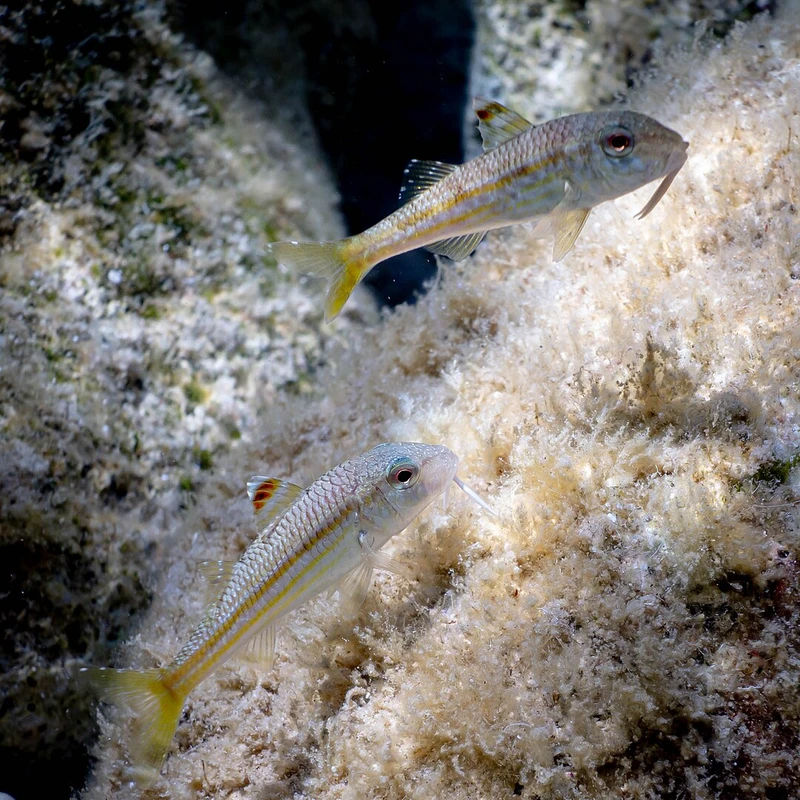
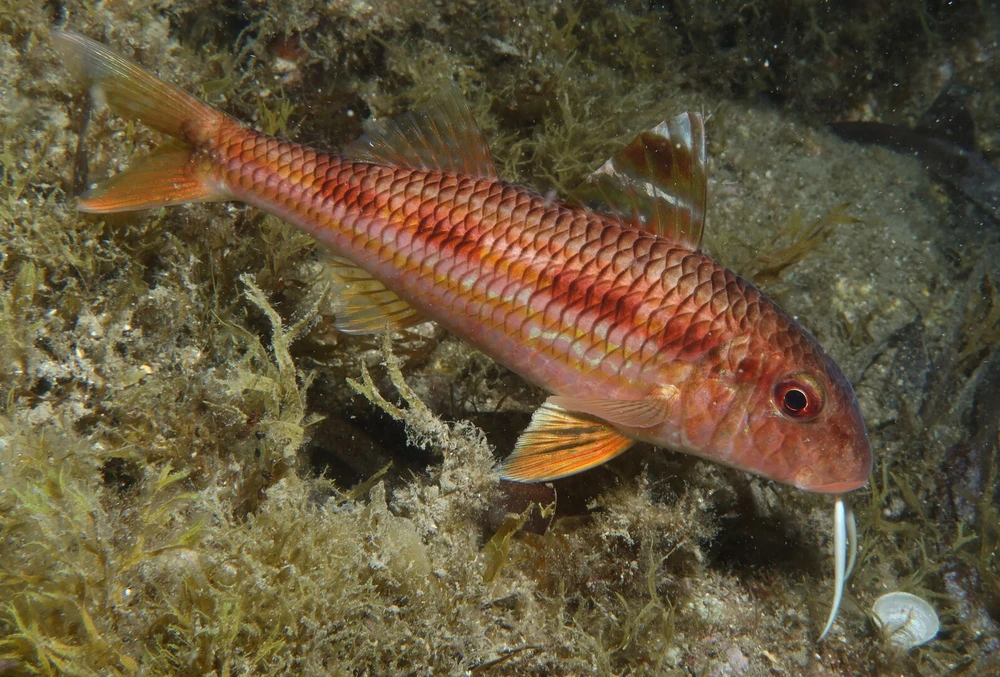
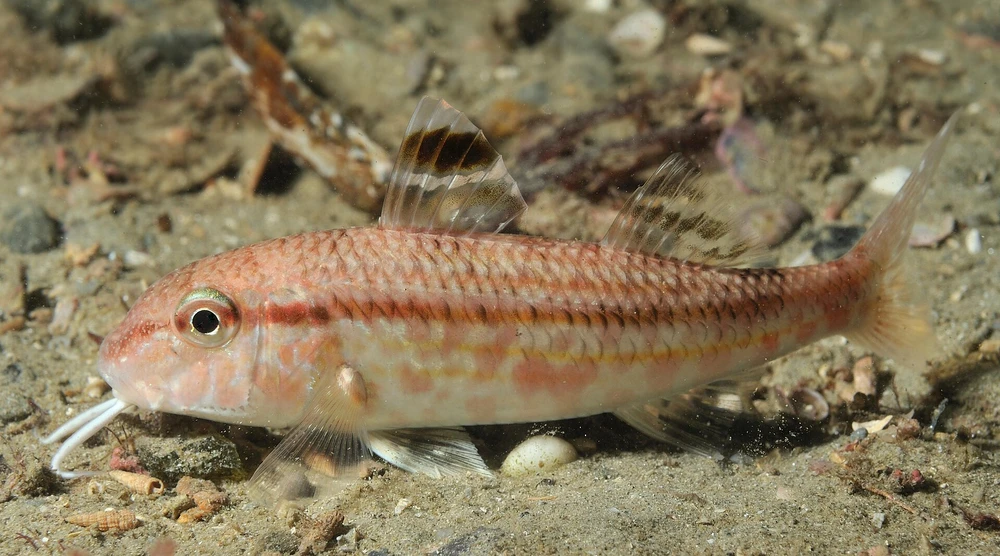
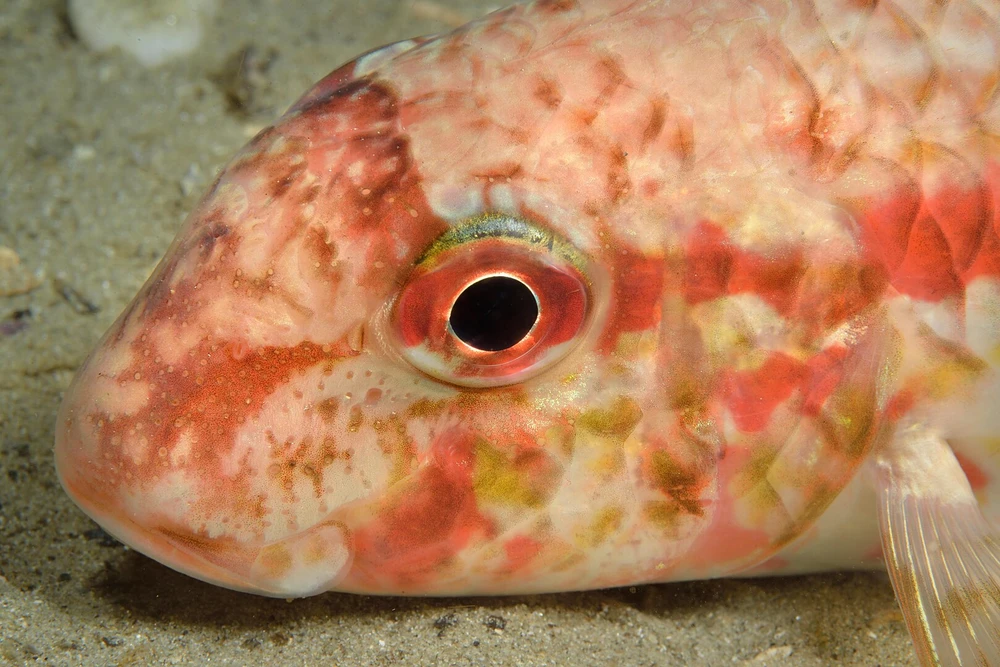


The centre of the Overview is an array of criteria covering basic features and behaviours of the species. Each of this information comes from our literature search on the species. If we researched a full Dossier on the species, probably all criteria in the Overview will be covered and thus filled. This was our way to go when we first set up the database.
Because Dossiers are time consuming to research, we switched to focusing on WelfareChecks. These are much shorter profiles covering just 10 criteria we deemed important when it comes to behaviour and welfare in aquaculture (and lately fisheries, too). Also, WelfareChecks contain the assessment of the welfare potential of a species which has become the main feature of the fair-fish database over time. Because WelfareChecks do not cover as many criteria as a Dossier, we don't have the information to fill all blanks in the Overview, as this information is "not investigated by us yet".
Our long-term goal is to go back to researching Dossiers for all species covered in the fair-fish database once we set up WelfareChecks for each of them. If you would like to support us financially with this, please get in touch at ffdb@fair-fish.net
See the question "What does "not investigated by us yet" mean?". In short, if we have not had a look in the literature - or in other words, if we have not investigated a criterion - we cannot know the data. If we have already checked the literature on a criterion and could not find anything, it is "no data found yet". You spotted a "no data found yet" where you know data exists? Get in touch with us at ffdb@fair-fish.net!
First up, you will find answers to questions for the specific page you are on. Scrolling down in the FAQ window, there are also answers to more general questions. Explore our website and the other sub pages and find there the answers to questions relevant for those pages.
In the fair-fish database, when you have chosen a species (either by searching in the search bar or in the species tree), the landing page is an Overview, introducing the most important information to know about the species that we have come across during our literatures search, including common names, images, distribution, habitat and growth characteristics, swimming aspects, reproduction, social behaviour but also handling details. To dive deeper, visit the Dossier where we collect all available ethological findings (and more) on the most important aspects during the life course, both biologically and concerning the habitat. In contrast to the Overview, we present the findings in more detail citing the scientific references.
Depending on whether the species is farmed or wild caught, you will be interested in different branches of the database.
Founded in 2013, the farm branch of the fair-fish database focuses on farmed aquatic species.
Founded in 2022, the catch branch of the fair-fish database focuses on wild-caught aquatic species.
The heart of the farm branch of the fair-fish database is the welfare assessment – or WelfareCheck | farm – resulting in the WelfareScore | farm for each species. The WelfareCheck | farm is a condensed assessment of the species' likelihood and potential for good welfare in aquaculture, based on welfare-related findings for 10 crucial criteria (home range, depth range, migration, reproduction, aggregation, aggression, substrate, stress, malformations, slaughter).
For those species with a Dossier, we conclude to-be-preferred farming conditions in the Advice | farm. They are not meant to be as detailed as a rearing manual but instead, challenge current farming standards and often take the form of what not to do.
In parallel to farm, the main element of the catch branch of the fair-fish database is the welfare assessment – or WelfareCheck | catch – with the WelfareScore | catch for each species caught with a specific catching method. The WelfareCheck | catch, too, is a condensed assessment of the species' likelihood and potential for good welfare – or better yet avoidance of decrease of good welfare – this time in fisheries. We base this on findings on welfare hazards in 10 steps along the catching process (prospection, setting, catching, emersion, release from gear, bycatch avoidance, sorting, discarding, storing, slaughter).
In contrast to the farm profiles, in the catch branch we assess the welfare separately for each method that the focus species is caught with. In the case of a species exclusively caught with one method, there will be one WelfareCheck, whereas in other species, there will be as many WelfareChecks as there are methods to catch the species with.
Summarising our findings of all WelfareChecks | catch for one species in Advice | catch, we conclude which catching method is the least welfare threatening for this species and which changes to the gear or the catching process will potentially result in improvements of welfare.
Welfare of aquatic species is at the heart of the fair-fish database. In our definition of welfare, we follow Broom (1986): “The welfare of an individual is its state as regards its attempts to cope with its environment.” Thus, welfare may be perceived as a continuum on which an individual rates “good” or “poor” or everything in between.
We pursue what could be called a combination of not only a) valuing the freedom from injuries and stress (function-based approach) but b) supporting attempts to provide rewarding experiences and cognitive challenges (feelings-based approach) as well as c) arguing for enclosures that mimic the wild habitat as best as possible and allow for natural behaviour (nature-based approach).
Try mousing over the element you are interested in - oftentimes you will find explanations this way. If not, there will be FAQ on many of the sub-pages with answers to questions that apply to the respective sub-page. If your question is not among those, contact us at ffdb@fair-fish.net.
It's right here! We decided to re-name it to fair-fish database for several reasons. The database has grown beyond dealing purely with ethology, more towards welfare in general – and so much more. Also, the partners fair-fish and FishEthoGroup decided to re-organise their partnership. While maintaining our friendship, we also desire for greater independence. So, the name "fair-fish database" establishes it as a fair-fish endeavour.
