

Dossier:
D (2019-05-09)
WelfareCheck:
F (2026-04-02)
Advice:
F (2019-05-09)
Scientific names (currently not valid)
Silurus gariepinus, Macropteronotus charmuth, Clarias capensis, Clarias lazera, Clarias syriacus, Clarias mossambicus, Clarias macracanthus, Clarias orontis, Clarias xenodon, Clarias robecchii, Clarias smithii, Clarias microphthalmus, Clarias guentheri, Clarias longiceps, Clarias moorii, Clarias tsanensis, Clarias vinciguerrae, Clarias malaris, Clarias notozygurus, Clarias depressus, Clarias muelleri
English: African sharptooth catfish
German: Afrikanischer Raubwels
French: Poisson-chat africain
Spanish: Siluro africano
Italian: Siluro africano
Latin names based on Eschmeyer's
Common names based on Wikipedia


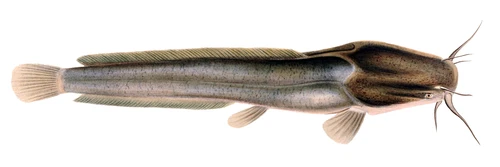
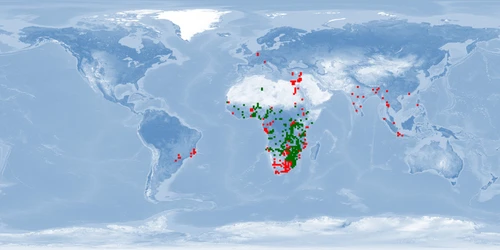
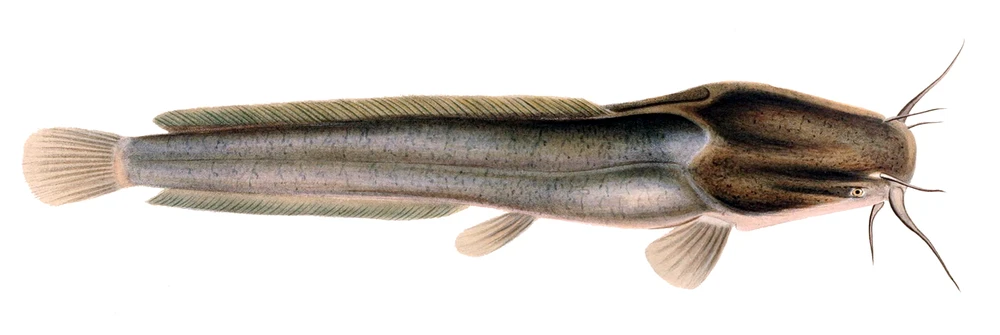
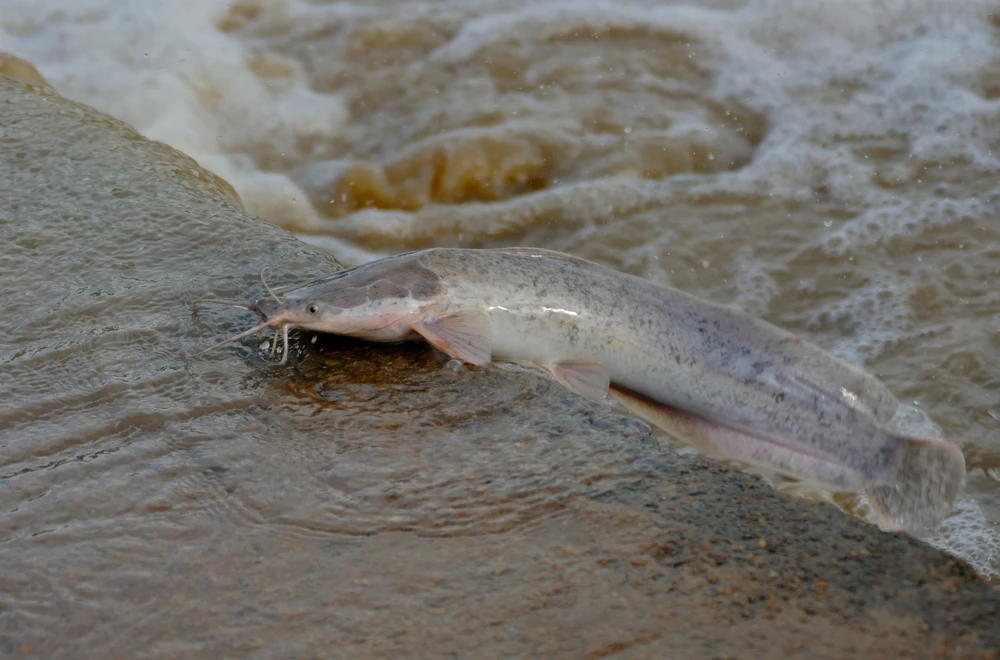
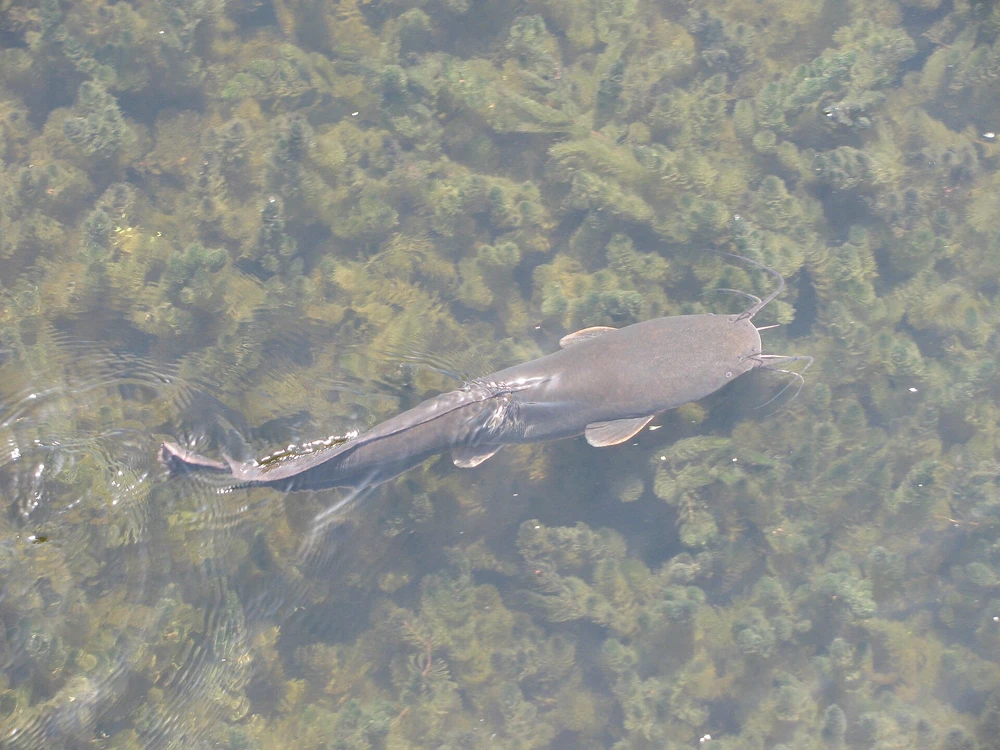
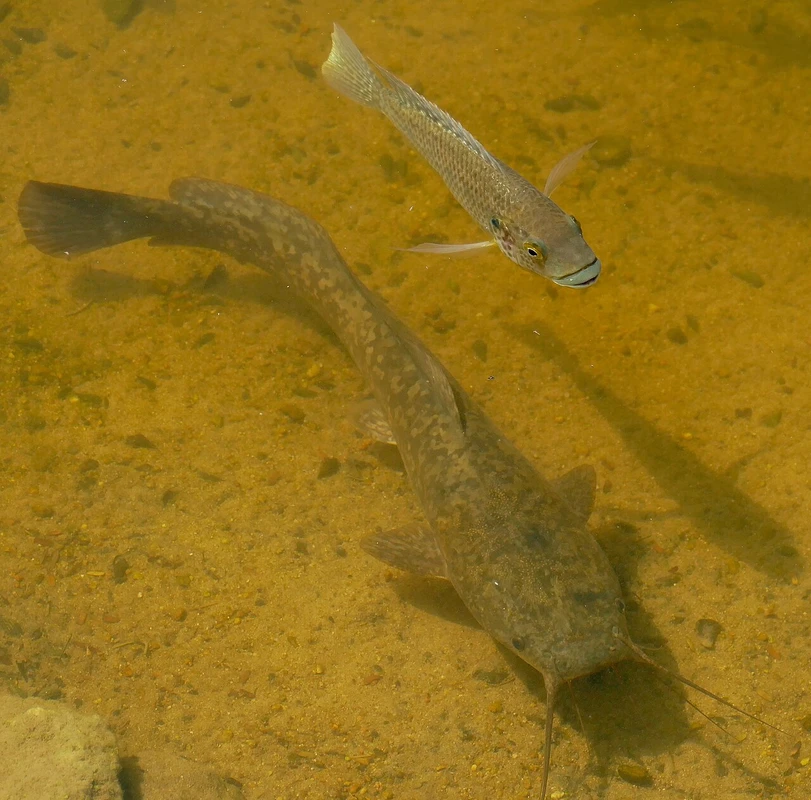
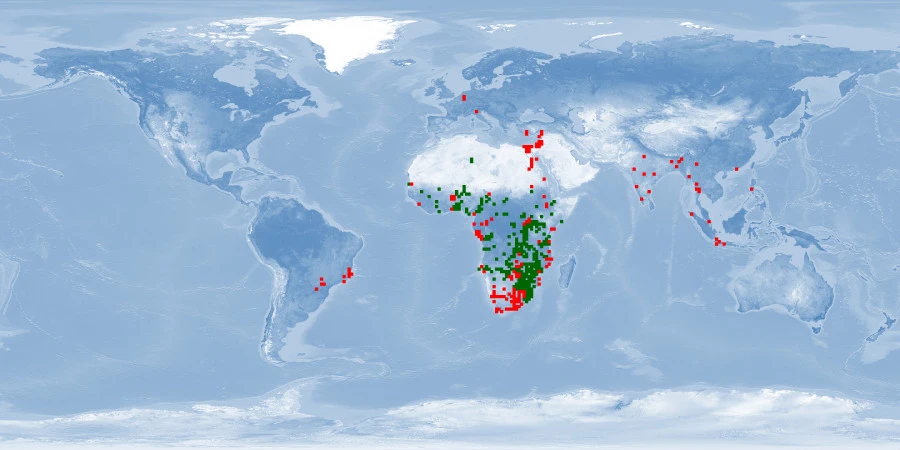
Clarias gariepinus is a very resilient air-breathing fish that can be naturally found in lakes, streams, rivers, swamps, and floodplains in Africa and Israel. This catfish is an omnivorous but primarily predatory fish. Clarias gariepinus is mainly a nocturnal species, migrating from the larger water bodies, in which the IND feed and mature, to temporarily flooded marginal areas to spawn. It was already introduced in inland waters of Africa, in addition to several other countries. Despite that, escapees generally result in negative or at most unpredictable consequences for the local ecosystems.
C. gariepinus is one of the most widely farmed species in Africa and a leading candidate for aquaculture development in Sub-Saharan regions, being also cultured in South America, Asia, and China by using EXTENSIVE and traditional methods as well as INTENSIVE and industrial techniques. Even though the lifecycle is closed in captivity (meaning all age classes can be achieved in farms), taking JUVENILES or SPAWNERS from the wild is still a habit occasionally. This catfish is reared in a variety of structures, including concrete, plastic, or fibreglass tanks, wooden vats, steel bathtubs, and earthen ponds. Its rapid growth, high fecundity, tolerance to diverse culture systems, and ability to thrive under a range of environmental conditions – including harsh water quality – make it a preferred species for INTENSIVE production.
On the other hand, it is an aggressive fish easily stressed by common rearing conditions and practices. Usual farming procedures for reproduction are also highly invasive – especially for males. Important information about its natural behaviours is still missing, especially about home range, migration distances, and aggregation ratios. Furthermore, developing and applying a high-standard slaughter method seems to be a challenge for this robust species.
For details see: WelfareCheck | farm (latest major release: 2026-04-02)
For recommendations see: Advice | farm (latest major release: 2019-05-09)
Our WelfareCheck of Clarias gariepinus, the African sharptooth catfish, was from 2017 and overdue for an update. This catfish was our highest-scoring species, but our recent assessment – using our updated scoring rationale and newly added sources – could not uphold this score.
Natural spatial needs exceed what any farming facility is able to offer, and the species is aggressive and stressed by husbandry. Malformations are a frequent problem, and even though hints for reduction exist, it is not clear by how much the malformation rates may be reduced. Further research is also needed on stocking densities that strike a balance between aggression and stress.
The silver lining concerns reproduction – which leaves the individuals free from hormonal manipulation and stripping – as well as earthen ponds with vegetation that cater to the substrate needs. More criteria might follow, for example, if the promising slaughter protocols that lab studies identified are verified for the farming context.
Let us know what you think. Where you aware of this situation contrary to the reputation of C. gariepinus as resilient? Do you have expertise to inform our assessment?


The centre of the Overview is an array of criteria covering basic features and behaviours of the species. Each of this information comes from our literature search on the species. If we researched a full Dossier on the species, probably all criteria in the Overview will be covered and thus filled. This was our way to go when we first set up the database.
Because Dossiers are time consuming to research, we switched to focusing on WelfareChecks. These are much shorter profiles covering just 10 criteria we deemed important when it comes to behaviour and welfare in aquaculture (and lately fisheries, too). Also, WelfareChecks contain the assessment of the welfare potential of a species which has become the main feature of the fair-fish database over time. Because WelfareChecks do not cover as many criteria as a Dossier, we don't have the information to fill all blanks in the Overview, as this information is "not investigated by us yet".
Our long-term goal is to go back to researching Dossiers for all species covered in the fair-fish database once we set up WelfareChecks for each of them. If you would like to support us financially with this, please get in touch at ffdb@fair-fish.net
See the question "What does "not investigated by us yet" mean?". In short, if we have not had a look in the literature - or in other words, if we have not investigated a criterion - we cannot know the data. If we have already checked the literature on a criterion and could not find anything, it is "no data found yet". You spotted a "no data found yet" where you know data exists? Get in touch with us at ffdb@fair-fish.net!
First up, you will find answers to questions for the specific page you are on. Scrolling down in the FAQ window, there are also answers to more general questions. Explore our website and the other sub pages and find there the answers to questions relevant for those pages.
In the fair-fish database, when you have chosen a species (either by searching in the search bar or in the species tree), the landing page is an Overview, introducing the most important information to know about the species that we have come across during our literatures search, including common names, images, distribution, habitat and growth characteristics, swimming aspects, reproduction, social behaviour but also handling details. To dive deeper, visit the Dossier where we collect all available ethological findings (and more) on the most important aspects during the life course, both biologically and concerning the habitat. In contrast to the Overview, we present the findings in more detail citing the scientific references.
Depending on whether the species is farmed or wild caught, you will be interested in different branches of the database.
Founded in 2013, the farm branch of the fair-fish database focuses on farmed aquatic species.
Founded in 2022, the catch branch of the fair-fish database focuses on wild-caught aquatic species.
The heart of the farm branch of the fair-fish database is the welfare assessment – or WelfareCheck | farm – resulting in the WelfareScore | farm for each species. The WelfareCheck | farm is a condensed assessment of the species' likelihood and potential for good welfare in aquaculture, based on welfare-related findings for 10 crucial criteria (home range, depth range, migration, reproduction, aggregation, aggression, substrate, stress, malformations, slaughter).
For those species with a Dossier, we conclude to-be-preferred farming conditions in the Advice | farm. They are not meant to be as detailed as a rearing manual but instead, challenge current farming standards and often take the form of what not to do.
In parallel to farm, the main element of the catch branch of the fair-fish database is the welfare assessment – or WelfareCheck | catch – with the WelfareScore | catch for each species caught with a specific catching method. The WelfareCheck | catch, too, is a condensed assessment of the species' likelihood and potential for good welfare – or better yet avoidance of decrease of good welfare – this time in fisheries. We base this on findings on welfare hazards in 10 steps along the catching process (prospection, setting, catching, emersion, release from gear, bycatch avoidance, sorting, discarding, storing, slaughter).
In contrast to the farm profiles, in the catch branch we assess the welfare separately for each method that the focus species is caught with. In the case of a species exclusively caught with one method, there will be one WelfareCheck, whereas in other species, there will be as many WelfareChecks as there are methods to catch the species with.
Summarising our findings of all WelfareChecks | catch for one species in Advice | catch, we conclude which catching method is the least welfare threatening for this species and which changes to the gear or the catching process will potentially result in improvements of welfare.
Welfare of aquatic species is at the heart of the fair-fish database. In our definition of welfare, we follow Broom (1986): “The welfare of an individual is its state as regards its attempts to cope with its environment.” Thus, welfare may be perceived as a continuum on which an individual rates “good” or “poor” or everything in between.
We pursue what could be called a combination of not only a) valuing the freedom from injuries and stress (function-based approach) but b) supporting attempts to provide rewarding experiences and cognitive challenges (feelings-based approach) as well as c) arguing for enclosures that mimic the wild habitat as best as possible and allow for natural behaviour (nature-based approach).
Try mousing over the element you are interested in - oftentimes you will find explanations this way. If not, there will be FAQ on many of the sub-pages with answers to questions that apply to the respective sub-page. If your question is not among those, contact us at ffdb@fair-fish.net.
It's right here! We decided to re-name it to fair-fish database for several reasons. The database has grown beyond dealing purely with ethology, more towards welfare in general – and so much more. Also, the partners fair-fish and FishEthoGroup decided to re-organise their partnership. While maintaining our friendship, we also desire for greater independence. So, the name "fair-fish database" establishes it as a fair-fish endeavour.




