

Dossier:
not provided by us yet
WelfareCheck:
C (2025-01-21)
Advice:
not provided by us yet
Scientific names (currently not valid)
Scomber glauciscus, Scomber punctatus, Scomber scriptus, Scomber vernalis, Scomber vulgaris
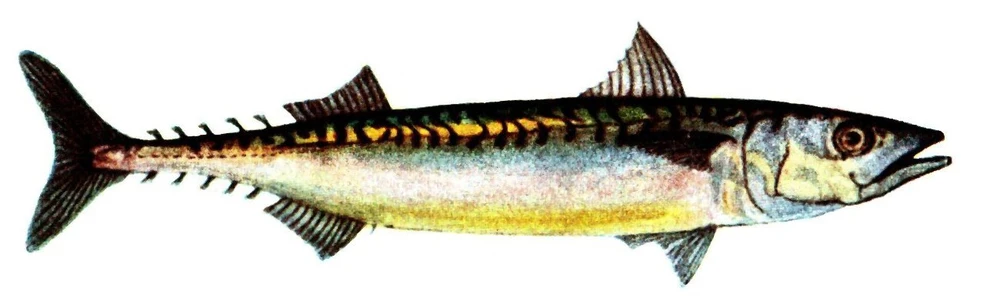
English: Atlantic mackerel, mackerel, Boston mackerel, Norwegian mackerel, Scottish mackerel, joey, split
German: Makrele
Latin names based on Eschmeyer's
Common names based on Wikipedia


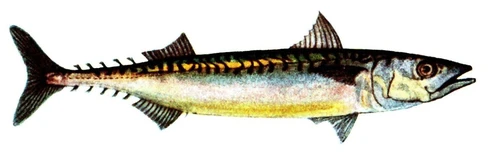
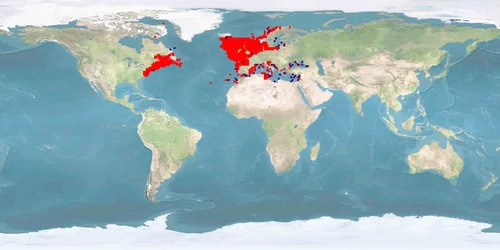
Scomber scombrus is a marine species naturally inhabiting North Atlantic waters, including the Mediterranean. In fisheries, it is of commercial importance to many Atlantic fisheries, being extensively targeted by purse seine fisheries in European waters from the northern Norwegian Sea to waters off the Portuguese coast.
Slipping the whole or parts of a catch has traditionally been used in pelagic fisheries if catches are too large or the size and/or quality of the FISHES are regarded as unsatisfactorily, although high post-slipping mortalities have been reported. S. scombrus is delicate and particularly vulnerable to stress which explains the very high mortality rates following the stress of capture, handling, and retention in nets, with excessive crowding in the net being considered the principal stress mechanism. Transfer to the vessel mainly happens via pumps which avoids contact with air, but the arrival on deck or in the storage containers is most likely stressful and may lead to injuries. Further research is needed on welfare hazards and their consequences. S. scombrus is brought to land without prior stunning or slaughter. Stunning and slaughtering protocols are on the table, but validation in field studies are still needed.
For details see: WelfareCheck | catch (pre-release)
Series 21 of FishEthoGroup's Fish Talk podcast covering species in the fair-fish database is out! It presents a quick look into the lives of Micropterus salmoides (Largemouth bass), Dicentrarchus labrax (European seabass), and Colossoma macropomum (Tambaqui). In around 3 min each, it also covers the main welfare hazards in aquaculture, possible improvements, and the grounds for our welfare assessment.
In another podcast episode, you will learn about the catching method "purse seine" based on our Method profile of it. We combined the information of the four WelfareChecks of Clupea harengus (Atlantic herring), Engraulis ringens (Peruvian anchoveta), Scomber colias (Atlantic chub mackerel), and Scomber scombrus (Atlantic mackerel) – all caught with purse seine – and complemented the Method profile with more general bits of purse seine knowledge.
As usual, you can find these episodes in the respective profiles here in the fair-fish database or over at FishEthoGroup's. While you are there, also check out their podcast programmes "Fish Five" – interviews with renowned scientists in the field of welfare of aquatic species – and "The Fish Mind" – a look into the different capabilites of aquatic species. Tell your friends about it!
In our ongoing effort to make the database more known, we have recently published in "Fishes", a peer-reviewed journal! We are putting a lot of effort into creating WelfareChecks – and now also method profiles – in the fair-fish database. We are applying a comprehensive approach using sources from peer-reviewed papers to grey literature like YouTube videos, university theses, and governmental reports. We do have an internal review process involving experts in our team, but inviting external reviewers has failed in the past. Therefore, the purpose of publishing in scientific journals is to make the fair-fish database known in larger scientific circles and get feedback by the community through the peer-review process.
In this latest paper, we focused on the method profile of "purse seines" on four small pelagic species that are among the most frequently caught worldwide. The review is not only a look into the welfare-relevant data gathered and critically analysed in the fair-fish database; it also offers an overview of a holistic approach suggested to apply this scientific knowledge in practice by involving practitioners, technology, and economic concerns.
Please find the paper in the Fishes journal under the link provided in the beginning – it is open access! Alternatively, feel free to browse our Publications page where you will find this and previously published peer-reviewed papers from our team as well as non-peer-reviewed manuscripts and the profiles published in the fair-fish database.
The latest episode in FEG's FishTalk podcast programme on species from the fair-fish database covers Scomber scombrus (Atlantic mackerel) caught with purse seines. In the catch branch (fisheries) of the database, we assess the welfare of aquatic species specific to the catching method. So, the WelfareCheck – and consequently also the FishTalk episode – specifically looks into welfare hazards through capture by purse seines. To find out about the major hazards and ways to alleviate the problems, listen to the 5 min episode over at FEG's website or here in the fair-fish database. Let us know what you think and recommend us further.
We have a new addition to the fair-fish database | catch, our welfare assessment of aquatic species in fisheries. This time, we took a close look at Scomber scombrus caught with purse seines.
Scomber scombrus, the Atlantic mackerel, is mostly targeted from the Norwegian Sea to the waters off Portugal. Because the species aggregates in large schools, purse seine is the gear of choice. In terms of protecting this delicate species from injuries and stress, targeting very large schools should be avoided, though. The density in the seine net will increase too much even before it is fully crowded next to the vessel. Slipping part of the catch is not that easy, as the individuals prefer the safety of the school. Crowding and pumping should be kept as shortly as possible. Arrival on deck or in storage containers is rough and ends in asphyxia or hypothermia. Ideally, stunning and slaughter should precede storing, but there is no indication of this being applied as far as we know. If you have more knowledge, please get in touch!


The centre of the Overview is an array of criteria covering basic features and behaviours of the species. Each of this information comes from our literature search on the species. If we researched a full Dossier on the species, probably all criteria in the Overview will be covered and thus filled. This was our way to go when we first set up the database.
Because Dossiers are time consuming to research, we switched to focusing on WelfareChecks. These are much shorter profiles covering just 10 criteria we deemed important when it comes to behaviour and welfare in aquaculture (and lately fisheries, too). Also, WelfareChecks contain the assessment of the welfare potential of a species which has become the main feature of the fair-fish database over time. Because WelfareChecks do not cover as many criteria as a Dossier, we don't have the information to fill all blanks in the Overview, as this information is "not investigated by us yet".
Our long-term goal is to go back to researching Dossiers for all species covered in the fair-fish database once we set up WelfareChecks for each of them. If you would like to support us financially with this, please get in touch at ffdb@fair-fish.net
See the question "What does "not investigated by us yet" mean?". In short, if we have not had a look in the literature - or in other words, if we have not investigated a criterion - we cannot know the data. If we have already checked the literature on a criterion and could not find anything, it is "no data found yet". You spotted a "no data found yet" where you know data exists? Get in touch with us at ffdb@fair-fish.net!
First up, you will find answers to questions for the specific page you are on. Scrolling down in the FAQ window, there are also answers to more general questions. Explore our website and the other sub pages and find there the answers to questions relevant for those pages.
In the fair-fish database, when you have chosen a species (either by searching in the search bar or in the species tree), the landing page is an Overview, introducing the most important information to know about the species that we have come across during our literatures search, including common names, images, distribution, habitat and growth characteristics, swimming aspects, reproduction, social behaviour but also handling details. To dive deeper, visit the Dossier where we collect all available ethological findings (and more) on the most important aspects during the life course, both biologically and concerning the habitat. In contrast to the Overview, we present the findings in more detail citing the scientific references.
Depending on whether the species is farmed or wild caught, you will be interested in different branches of the database.
Founded in 2013, the farm branch of the fair-fish database focuses on farmed aquatic species.
Founded in 2022, the catch branch of the fair-fish database focuses on wild-caught aquatic species.
The heart of the farm branch of the fair-fish database is the welfare assessment – or WelfareCheck | farm – resulting in the WelfareScore | farm for each species. The WelfareCheck | farm is a condensed assessment of the species' likelihood and potential for good welfare in aquaculture, based on welfare-related findings for 10 crucial criteria (home range, depth range, migration, reproduction, aggregation, aggression, substrate, stress, malformations, slaughter).
For those species with a Dossier, we conclude to-be-preferred farming conditions in the Advice | farm. They are not meant to be as detailed as a rearing manual but instead, challenge current farming standards and often take the form of what not to do.
In parallel to farm, the main element of the catch branch of the fair-fish database is the welfare assessment – or WelfareCheck | catch – with the WelfareScore | catch for each species caught with a specific catching method. The WelfareCheck | catch, too, is a condensed assessment of the species' likelihood and potential for good welfare – or better yet avoidance of decrease of good welfare – this time in fisheries. We base this on findings on welfare hazards in 10 steps along the catching process (prospection, setting, catching, emersion, release from gear, bycatch avoidance, sorting, discarding, storing, slaughter).
In contrast to the farm profiles, in the catch branch we assess the welfare separately for each method that the focus species is caught with. In the case of a species exclusively caught with one method, there will be one WelfareCheck, whereas in other species, there will be as many WelfareChecks as there are methods to catch the species with.
Summarising our findings of all WelfareChecks | catch for one species in Advice | catch, we conclude which catching method is the least welfare threatening for this species and which changes to the gear or the catching process will potentially result in improvements of welfare.
Welfare of aquatic species is at the heart of the fair-fish database. In our definition of welfare, we follow Broom (1986): “The welfare of an individual is its state as regards its attempts to cope with its environment.” Thus, welfare may be perceived as a continuum on which an individual rates “good” or “poor” or everything in between.
We pursue what could be called a combination of not only a) valuing the freedom from injuries and stress (function-based approach) but b) supporting attempts to provide rewarding experiences and cognitive challenges (feelings-based approach) as well as c) arguing for enclosures that mimic the wild habitat as best as possible and allow for natural behaviour (nature-based approach).
Try mousing over the element you are interested in - oftentimes you will find explanations this way. If not, there will be FAQ on many of the sub-pages with answers to questions that apply to the respective sub-page. If your question is not among those, contact us at ffdb@fair-fish.net.
It's right here! We decided to re-name it to fair-fish database for several reasons. The database has grown beyond dealing purely with ethology, more towards welfare in general – and so much more. Also, the partners fair-fish and FishEthoGroup decided to re-organise their partnership. While maintaining our friendship, we also desire for greater independence. So, the name "fair-fish database" establishes it as a fair-fish endeavour.

