homebutton

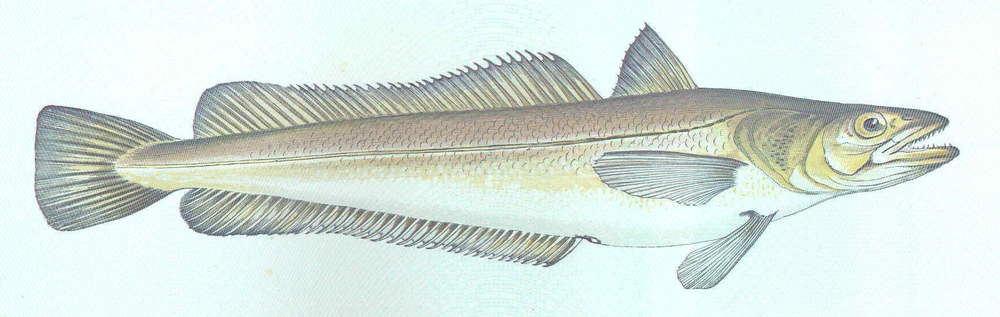
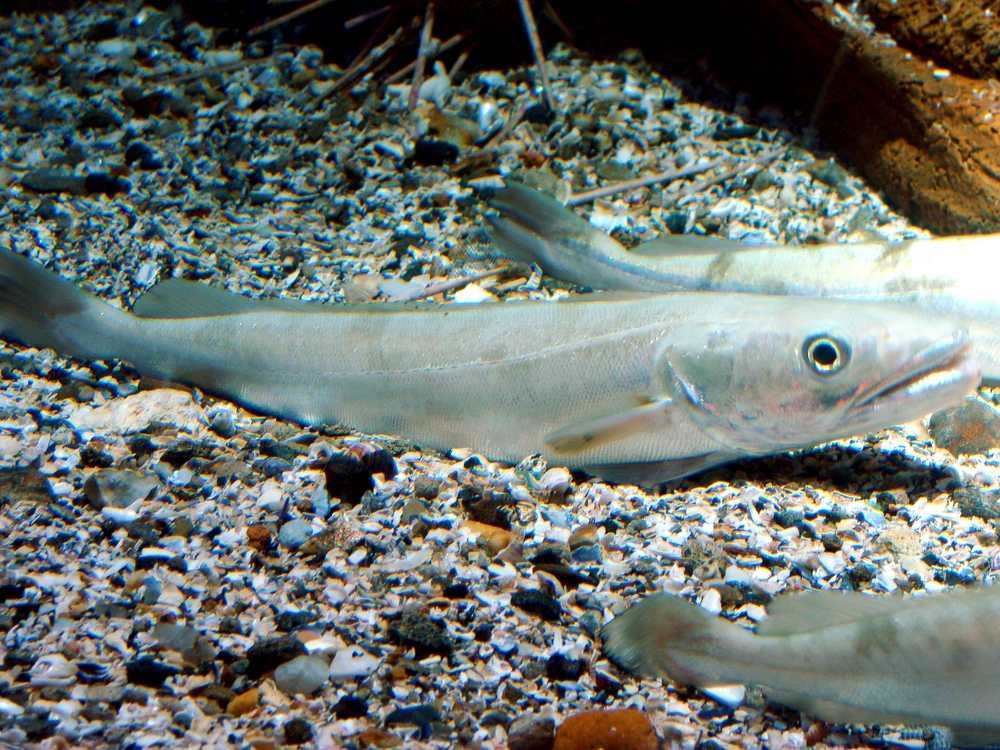
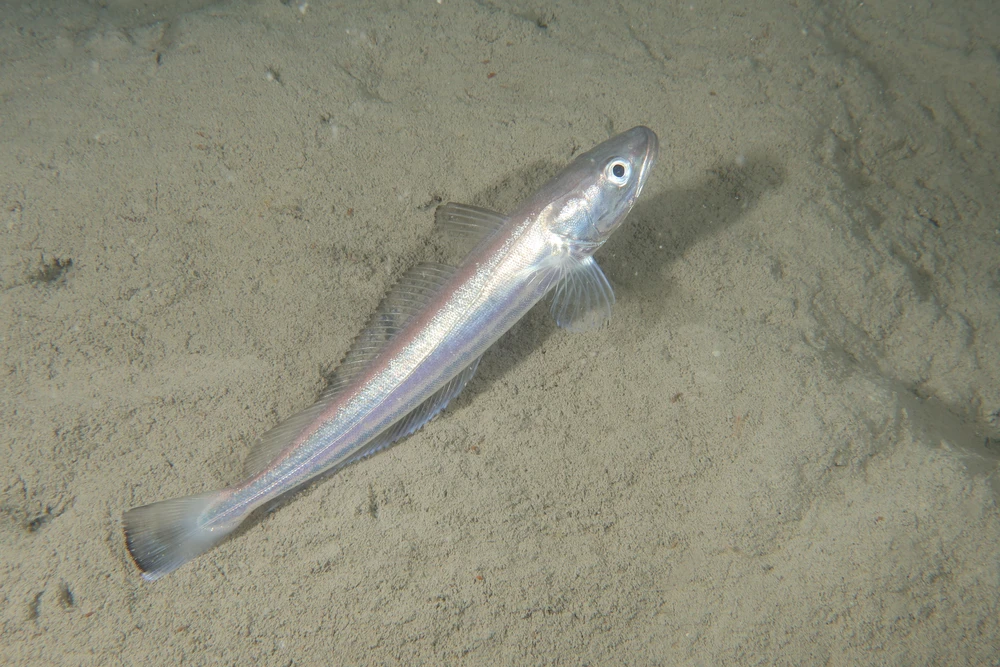
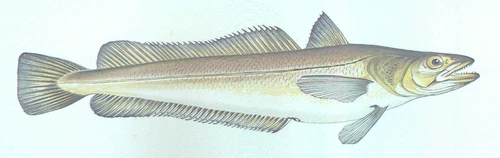
European hake

Merluccius merluccius

Merluccius merluccius (European hake)
enlarge button
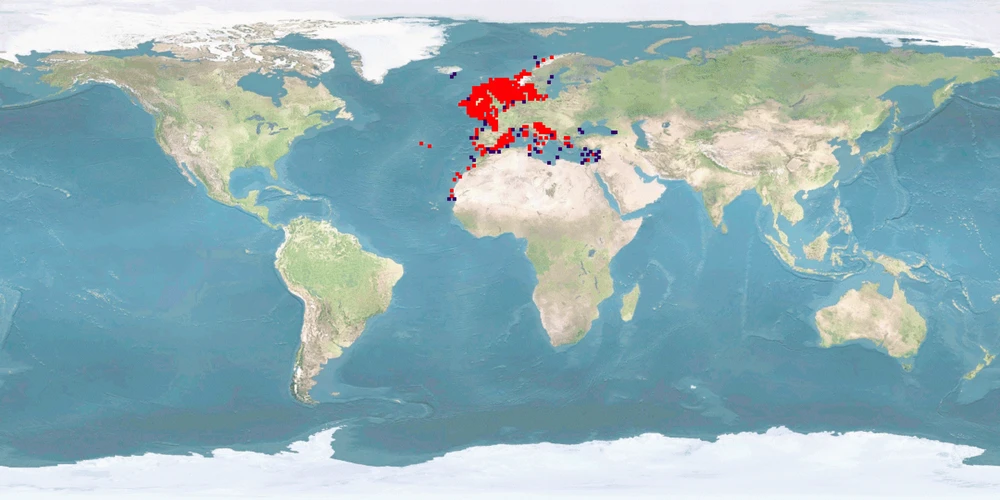
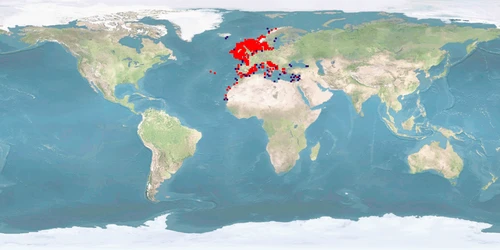
Distribution
Distribution
Distribution map: Merluccius merluccius (European hake)


Information


Authors: Jenny Volstorf, Joly Ghanawi

Version: A | 1.0
Published: 2026-03-03


Reviewer: Jenny Volstorf
Editor: Jenny Volstorf

Version information:
  • Initial release: 2024-06-08
  • Appearance version: 2024-06-08
  • Major version: 2026-03-03

Cite as: »Volstorf, Jenny, and Joly Ghanawi. 2026. Merluccius merluccius (WelfareCheck | catch: Set nets). In: fair-fish database, ed. fair-fish international association. World Wide Web electronic publication. Version A | 1.0. CC BY 4.0. https://fair-fish-database.net/db/species/merluccius-merluccius/catch/welfarecheck/set-nets/«


WelfareScore | catch

Merluccius merluccius
× Set nets
LiPoCe
Criteria


Legend

The score card gives our welfare assessments for aquatic species in 10 criteria.

For each criterion, we score the probability to experience good welfare under minimal catching conditions ("Likelihood") and under high-standard catching conditions ("Potential") representing the worst and best case scenario. The third dimension scores how certain we are of our assessments based on the number and quality of sources we found ("Certainty").

The WelfareScore sums just the "High" scores in each dimension. Although good welfare ("High") seems not possible in some criteria, there could be at least a potential improvement from low to medium welfare (indicated by ➚ and the number of criteria).

  • Li = Likelihood that the individuals of the species experience good welfare under minimal catching conditions
  • Po = Potential of the individuals of the species to experience good welfare under high-standard catching conditions
    = potential improvements not reaching "High"
  • Ce = Certainty of our findings in Likelihood and Potential

WelfareScore = Sum of criteria scoring "High" (max. 10 per dimension)

score-legend
High
score-legend
Medium
score-legend
Low
score-legend
Unclear
score-legend
No findings


General remarks

Merluccius merluccius is a DEMERSAL fish species that has been found in depths ranging from 30 to 1,075 m. It is heavily exploited in the northern Atlantic Ocean and is a target species in most Mediterranean fisheries for its high economic value. Although on a global level, the IUCN status is “least concern”, in the Mediterranean, it is considered an overfished species. Among all catching methods used to catch M. merluccius, set nets – more specifically gillnets – are the most frequently used in small-scale European fisheries.

The principle of gillnets is to catch and hold IND for hours, e.g., by the gills (called “gilling”), by the head region (called “snagging”), by the mid body (called “wedging”), or by wrapping the whole body or attaching protruding body parts including teeth (called “entangling”), resulting in stress and injuries up to mortality, so there is no way to avoid this decrease in welfare except for shorter soak times. This may be a solution to IND being depredated by predators, too. Since catching of M. merluccius takes place in great depths, there is the risk of barotrauma and osmoregulatory distress. After hauling the net, IND are subjected to exposure to air, contact with the gear, experiencing their own weight, and handling (including dropping and throwing) through emersion, release from the gear, and sorting. For storing, they might already be dead which prevents prolonged suffering by asphyxia or hypothermia, but a stunning step is missing.

Accidentally caught M. merluccius experience the same treatment until they are discarded after sorting. Avoiding bycatch may be managed through mesh size, although undersized IND may still be entangled by their teeth. Closure of fishing areas or seasons might be more successful. The set net’s impact on the benthos is relatively low, as set nets are usually not dragged along the seafloor.


1  Prospection

To find the fishes in their habitat, there are different techniques to localise them (e.g., echosound/sonar, chasing).

What is the probability of avoiding a decrease in welfare during the process of searching for the species?

There are no findings for minimal and high-standard catching conditions.

Likelihoodscore-li
Potentialscore-po
Certaintyscore-ce

Noise: no data found yet.

Echosound/sonar: no data found yet.

Chasing: no data found yet.

Decreasing distance to neighbour: no data found yet.

Contact with the vessel/gear: no data found yet.

Other: no data found yet.


2  Setting

Catching methods differ in the way they are set up and consequently in the time it takes for setting them.

What is the probability of avoiding a decrease in welfare during the process of setting the catching method?

There are no findings for minimal and high-standard catching conditions.

Likelihoodscore-li
Potentialscore-po
Certaintyscore-ce

Noise: no data found yet.

Escape avoidance measures: no data found yet.

Decreasing distance to neighbour: no data found yet.

Predation pressure: no data found yet.

Other: no data found yet.


3  Catching

Given the principle of the catching method, the gear (with the fishes caught) may be hauled vertically or horizontally in the water for a certain amount of time and distance.

What is the probability of avoiding a decrease in welfare during catching?

It is low for minimal catching conditions, as the principle of set nets is to catch and hold IND for hours and in great depths most likely resulting in stress and damages including barotrauma and osmoregulatory distress. It is medium for high-standard catching conditions given a) mesh size that reduces (but does not avoid) catching undersized IND or large sexually productive females (given body ∅ in season and region), b) no risk of decreasing distance to neighbour, and c) shorter soak time. Our conclusion is based on a low amount of evidence due to a general lack of information on hazard consequences and on how to reduce or avoid them.

Likelihoodscore-li
Potentialscore-po
Certaintyscore-ce

Contact with the gear (hooking, contact with the net/trap):
  • Given the principle of set nets to catch IND 1 2 3 4 5 by the head region (called "snagging") 6, by the gills (called "gilling") 6 7 8 9, by the mid body (called “wedging”) 6 8 9, or by wrapping the whole body or attaching protruding body parts like teeth (called “entangling”) 6 7 8, hazard consequences are probable 0. Further research needed on types of hazard consequences.
    • Circumstances: off the southern Portuguese coast (the Algarve) 6, northern Atlantic off south-west of England and Ireland, steel-hulled gillnetter of 17.5 m 7, northern Tyrrhenian sea 8, south-eastern Sea of Marmara, 9.5 m wooden boat (small-scale fisheries) 9, northern Atlantic 1 2 3 4 5
    • Related to consequences:    
  • The following mesh sizes assure good size selectivity, i.e., the listed sizes of IND will have contact with the gear:
    Gillnets in 500-700 m depth after 7-12 h soak time: 81 mm mesh size (commercially used) caught IND of 30-65 cm TOTAL LENGTH and avoided catch of IND <27 cm minimum landing size, avoiding bycatch 10.
    Commercial gillnets in 150-300 m depth: decreasing number of IND and increasing catching length with increasing mesh size (69.5, 81, 88.5 mm), no difference between 88.5 mm commercial and 96.3 mm experimental mesh size. Decreasing number of males, increasing number of females with increasing length. Of 17-65 cm TOTAL LENGTH caught, increasing frequency of IND <27 cm minimal catch size with increasing mesh size (0.6-2.1%), but also lower number of IND <45.3 cm size at maturity 116, prompting recommendation to increase minimum mesh size to 81 mm even though minimum mesh size cannot avoid entangling of small IND by teeth 6.
    Experimental gillnets in mostly <100 m depth: highest number and weight of IND at mesh size 60, 70, 80 mm with best combination at 70 mm; largest IND but lower number at 90 mm. Of 19-67 cm TOTAL LENGTH caught, 5% IND <27 cm (minimal landing size) at 60-80 mm mesh size 12. Corresponds with legally enforced mesh size ≥80 mm given maturity in females at 45.3 cm 1112.
    In experimental bottom-set gillnets after average 23.3 h soak time, tendency of increasing size of caught IND with increasing mesh size (80, 100, 120 mm) when caught by gills (majority of cases); no effect when caught by teeth. Lower catch rate at 140 mm mesh size. At 120 mm mesh size (commercial size), small frequency of IND <60 cm and majority of IND 70-85 cm, indicating good size selectivity of currently used mesh size 7.
    Experimental gillnets in 95-256 m depth: tendency of increasing weight and length and decreasing number of IND with increasing mesh size (53, 62.5, 70, 82 mm). Best combination and lowest risk for catching large sexually productive females at 62.5 mm – larger than the commercially used 53 mm mesh size 8.
    Bottom-set gillnets with 28, 30, 32 mm mesh size in 50-70 m depth after 22 h soak time: highest weight and number of IND caught and of 23.5-41.0 cm TOTAL LENGTH, tendency of lowest percentage (2.7%) of IND <25 cm minimal landing size 1314 at 30 mm mesh size (commercially used), indicating good size selectivity of currently used mesh size 14.
    With bottom gillnets in 50-70 m depth at soak time 20-22 h, no difference in catching size between mesh sizes 28, 30, 33 mm: 23.5-41 cm TOTAL LENGTH, indicating that commercial mesh size 30 mm assures exceeding minimal landing size 9 of 20 cm TOTAL LENGTH in Turkey 159.
    • Circumstances: off the southern Portuguese coast (the Algarve) 10 6, western Portuguese coast, 27 m stern trawler 12, northern Atlantic off south-west of England and Ireland, steel-hulled gillnetter of 17.5 m 7, northern Tyrrhenian sea 8, south-eastern Sea of Marmara 14 9, 9.5 m wooden boat (small-scale fisheries) 9
    • Related to consequences:    
    • How to improve: prefer mesh size that assures good size selectivity given body ∅ in season and region
  • The following mesh sizes potentially cause bycatch, i.e., they should be avoided to prevent those IND from having contact with the gear:
    70 mm commercial mesh size with highest number of IND caught, but also high number of IND <45.3 cm size at maturity 116 and high discard and scavenging rate in gillnets in 150-300 m depth, prompting recommendation to cease using 70 mm mesh size commercially 6.
    Of 19-67 cm TOTAL LENGTH caught, IND <27 cm (minimal landing size) mainly at 40 mm mesh size in experimental gillnets in mostly <100 m depth, decreasing percentage with increasing mesh size 12.
    At 80 mm mesh size, IND <60 cm caught in experimental bottom-set gillnets after average 23.3 h soak time, increasing size of caught IND with increasing mesh size 7.
    No IND <20 cm minimal landing size and no males below size at maturity (19 cm TOTAL LENGTH 178), but 32.5% immature females (<35.1 cm TOTAL LENGTH 178) caught at 53 mm mesh size (commercially used). Higher number of larger (potentially very sexually productive) females than males at mesh sizes 70 and 82 mm mean potentially big risk to overexploitation of population in experimental gillnets in 95-256 m depth 8.
    Lowest number of IND and weight caught and tendency of highest percentage (4.4%) of IND <25 cm minimal landing size 1314 at 32 mm mesh size in bottom-set gillnets in 50-70 m depth after 22 h soak time 14.
    Assuming maturity in females at 21.5 cm, in males at 25.7-27.7 cm 189 199, females were caught above length at maturity, but males were caught below length at maturity in 4.5-8% at mesh sizes 28, 30, 32 mm with bottom gillnets in 50-70 m depth at soak time 20-22 h 9.
    • Circumstances: off the southern Portuguese coast (the Algarve) 6, western Portuguese coast, 27 m stern trawler 12, northern Atlantic off south-west of England and Ireland, steel-hulled gillnetter of 17.5 m 7, northern Tyrrhenian sea 8, south-eastern Sea of Marmara 14 9, 9.5 m wooden boat (small-scale fisheries) 9
    • Related to consequences:    
    • How to improve: prefer mesh size that reduces catching undersized IND or large sexually productive females given body ∅ in season and region
Speed:
  • Catching depth with gillnets in 24-250 m, mostly <100 m 12, 38-327 m 20, 50-70 m 14 9, 65-78 m 6, 68-405 m 21, 95-256 m 8, 150-300 m 6, 500-700 m 10 and unknown speed of hauling in nets results in barotrauma 3 22 4 5 23. Further research needed on how to avoid this.
    • Circumstances: western Portuguese coast, 27 m stern trawler 12, northern Atlantic off south-west of England and Ireland 20, 14.7-26.2 m boats 20, south-eastern Sea of Marmara 14 9, 9.5 m wooden boat (small-scale fisheries) 9, off the southern Portuguese coast (the Algarve) 10 6, off south Lebanon, 10 m wooden boats 21, northern Tyrrhenian sea 8, northern Atlantic 3 22 4 5
    • Related to consequence:  
Duration:
  • Given soak times of 1.5-3 h (end of lowering to end of picking up: 4.9-6.3 h), sometimes >12 h (end of lowering to end of picking up: 15-16.3 h) 21, 3-24+ h, mean 13-18 h 12, 5 h 8, 7-12 h 10, 10 h 4, average 17.2-22.1 h 20, or 20-22 h 14 9, hazard consequences are probable 0.
    In gillnets in 500-700 m depth, condition of IND decreased with increasing soak time: from 77% IND in good condition after 7 h soak time to 35% in good condition after 12 h, probably due to scavenging crustaceans 10. Further research needed on types of hazard consequences.
    • Circumstances: off south Lebanon, 10 m wooden boats 21, western Portuguese coast, 27 m stern trawler 12, northern Tyrrhenian sea 8, off the southern Portuguese coast (the Algarve) 10, northern Atlantic 4, northern Atlantic off south-west of England and Ireland, 14.7-26.2 m boats 20, south-eastern Sea of Marmara 14 9, 9.5 m wooden boat (small-scale fisheries) 9
    • Related to consequences:    
    • How to improve: prefer 7 h soak time over 12 h
Decreasing distance to neighbour (continuum up to crushing):
  • No crowding step before hauling the net on board, but IND remained caught and with the same distance to other con-specifics under and above water when net was continuously hauled 1 2 3 4 5, probably not resulting in decreasing distance to neighbour 0.
    • Circumstances: northern Atlantic 1 2 3 4 5
    • Related to consequences:   
    • How to improve: no risk of hazard consequences, as decreasing distance to neighbour is unlikely compared to catching methods with crowding step

Abrupt temperature change: no data found yet.

Abrupt salinity change:
  • In ca 25 m depth, low salinity (ca 18 ppt) water from Black Sea meets high salinity (ca 38 ppt) water from Mediterranean. By fishing depth of 50-70 m 9, IND are hauled from one layer to the other, and hazard consequences are probable 0. Further research needed on the rate M. merluccius adapts to osmotic changes without decreasing welfare and on reports of osmoregulatory distress after gillnetting.
    • Circumstances: south-eastern Sea of Marmara, 9.5 m wooden boat (small-scale fisheries)
    • Related to consequence:  
Predation pressure:
  • During soaking, depredation rate by Tursiops truncatus 25%/haul 24. Given that depredated IND are discarded after manual disentangling 2, depradation should be avoided or at least decreased 0.
    In gillnets in 500-700 m depth, condition of IND decreased with increasing soak time: from 77% IND in good condition after 7 h soak time to 35% in good condition after 12 h, probably due to scavenging crustaceans 10. Further research needed on types of hazard consequences.
    • Circumstances: northern Atlantic 2, bottom-set gillnets: 80 mm mesh size 24, off the southern Portuguese coast (the Algarve) 10 24
    • Related to consequences:    
    • How to improve: prefer 7 h soak time over 12 h

Other: no data found yet.


4  Bycatch avoidance

Not all specimens of the target species are equally sought after, e.g., when they are undersized, of wrong sex, wrong age, damaged, over quota, or mixed with a high proportion of undersized or unwanted non-target fishes. Measures to prevent this bycatch still in the water may include slipping in purse seine, window in net, opening in trap, etc.

What is the probability of avoiding a decrease in welfare with the help of bycatch-avoiding measures?

It is low for minimal catching conditions, as avoiding bycatch in the water is impossible in set nets as long as the mesh size overlaps with the body ∅ of undersized IND and given depredated IND. It is medium for high-standard catching methods given mesh size that reduces (but does not avoid) catching undersized IND or large sexually productive females (given body ∅ in season and region) and given shorter soak time that reduces (but does not avoid) depredated IND. Our conclusion is based on a low amount of evidence.

Likelihoodscore-li
Potentialscore-po
Certaintyscore-ce

Lack of oxygen: no data found yet.

Contact with the gear:
  • Given the principle of set nets to catch IND 1 2 3 4 5 by the head region (called "snagging") 6, by the gills (called "gilling") 6 7 8 9, by the mid body (called “wedging”) 6 8 9, or by wrapping the whole body or attaching protruding body parts like teeth (called “entangling”) 6 7 8, hazard consequences are probable 0. Further research needed on types of hazard consequences.
    • Circumstances: off the southern Portuguese coast (the Algarve) 6, northern Atlantic off south-west of England and Ireland, steel-hulled gillnetter of 17.5 m 7, northern Tyrrhenian sea 8, south-eastern Sea of Marmara, 9.5 m wooden boat (small-scale fisheries) 9, northern Atlantic 1 2 3 4 5
    • Related to consequences:    
  • The following mesh sizes assure good size selectivity, i.e., the listed sizes of IND will have contact with the gear:
    Gillnets in 500-700 m depth after 7-12 h soak time: 81 mm mesh size (commercially used) caught IND of 30-65 cm TOTAL LENGTH and avoided catch of IND <27 cm minimum landing size, avoiding bycatch 10.
    Commercial gillnets in 150-300 m depth: decreasing number of IND and increasing catching length with increasing mesh size (69.5, 81, 88.5 mm), no difference between 88.5 mm commercial and 96.3 mm experimental mesh size. Decreasing number of males, increasing number of females with increasing length. Of 17-65 cm TOTAL LENGTH caught, increasing frequency of IND <27 cm minimal catch size with increasing mesh size (0.6-2.1%), but also lower number of IND <45.3 cm size at maturity 116, prompting recommendation to increase minimum mesh size to 81 mm even though minimum mesh size cannot avoid entangling of small IND by teeth 6.
    Experimental gillnets in mostly <100 m depth: highest number and weight of IND at mesh size 60, 70, 80 mm with best combination at 70 mm; largest IND but lower number at 90 mm. Of 19-67 cm TOTAL LENGTH caught, 5% IND <27 cm (minimal landing size) at 60-80 mm mesh size 12. Corresponds with legally enforced mesh size ≥80 mm given maturity in females at 45.3 cm 1112.
    In experimental bottom-set gillnets after average 23.3 h soak time, tendency of increasing size of caught IND with increasing mesh size (80, 100, 120 mm) when caught by gills (majority of cases); no effect when caught by teeth. Lower catch rate at 140 mm mesh size. At 120 mm mesh size (commercial size), small frequency of IND <60 cm and majority of IND 70-85 cm, indicating good size selectivity of currently used mesh size 7.
    Experimental gillnets in 95-256 m depth: tendency of increasing weight and length and decreasing number of IND with increasing mesh size (53, 62.5, 70, 82 mm). Best combination and lowest risk for catching large sexually productive females at 62.5 mm – larger than the commercially used 53 mm mesh size 8.
    Bottom-set gillnets with 28, 30, 32 mm mesh size in 50-70 m depth after 22 h soak time: highest weight and number of IND caught and of 23.5-41.0 cm TOTAL LENGTH, tendency of lowest percentage (2.7%) of IND <25 cm minimal landing size 1314 at 30 mm mesh size (commercially used), indicating good size selectivity of currently used mesh size 14.
    With bottom gillnets in 50-70 m depth at soak time 20-22 h, no difference in catching size between mesh sizes 28, 30, 33 mm: 23.5-41 cm TOTAL LENGTH, indicating that commercial mesh size 30 mm assures exceeding minimal landing size 9 of 20 cm TOTAL LENGTH in Turkey 159.
    • Circumstances: off the southern Portuguese coast (the Algarve) 10 6, western Portuguese coast, 27 m stern trawler 12, northern Atlantic off south-west of England and Ireland, steel-hulled gillnetter of 17.5 m 7, northern Tyrrhenian sea 8, south-eastern Sea of Marmara 14 9, 9.5 m wooden boat (small-scale fisheries) 9
    • Related to consequences:    
    • How to improve: prefer mesh size that assures good size selectivity given body ∅ in season and region
  • The following mesh sizes potentially cause bycatch, i.e., they should be avoided to prevent those IND from having contact with the gear:
    70 mm commercial mesh size with highest number of IND caught, but also high number of IND <45.3 cm size at maturity 116 and high discard and scavenging rate in gillnets in 150-300 m depth, prompting recommendation to cease using 70 mm mesh size commercially 6.
    Of 19-67 cm TOTAL LENGTH caught, IND <27 cm (minimal landing size) mainly at 40 mm mesh size in experimental gillnets in mostly <100 m depth, decreasing percentage with increasing mesh size 12.
    At 80 mm mesh size, IND <60 cm caught in experimental bottom-set gillnets after average 23.3 h soak time, increasing size of caught IND with increasing mesh size 7.
    No IND <20 cm minimal landing size and no males below size at maturity (19 cm TOTAL LENGTH 178), but 32.5% immature females (<35.1 cm TOTAL LENGTH 178) caught at 53 mm mesh size (commercially used). Higher number of larger (potentially very sexually productive) females than males at mesh sizes 70 and 82 mm mean potentially big risk to overexploitation of population in experimental gillnets in 95-256 m depth 8.
    Lowest number of IND and weight caught and tendency of highest percentage (4.4%) of IND <25 cm minimal landing size 1314 at 32 mm mesh size in bottom-set gillnets in 50-70 m depth after 22 h soak time 14.
    Assuming maturity in females at 21.5 cm, in males at 25.7-27.7 cm 189 199, females were caught above length at maturity, but males were caught below length at maturity in 4.5-8% at mesh sizes 28, 30, 32 mm with bottom gillnets in 50-70 m depth at soak time 20-22 h 9.
    • Circumstances: off the southern Portuguese coast (the Algarve) 6, western Portuguese coast, 27 m stern trawler 12, northern Atlantic off south-west of England and Ireland, steel-hulled gillnetter of 17.5 m 7, northern Tyrrhenian sea 8, south-eastern Sea of Marmara 14 9, 9.5 m wooden boat (small-scale fisheries) 9
    • Related to consequences:    
    • How to improve: prefer mesh size that reduces catching undersized IND or large sexually productive females given body ∅ in season and region

Decreasing distance to neighbour (continuum up to crushing): no data found yet.

Handling (unhooking/touching/disentangling): no data found yet.

Displacement: no data found yet.

Predation pressure:
  • During soaking, depredation rate by Tursiops truncatus 25%/haul 24. Given that depredated IND are discarded after manual disentangling 2, depradation should be avoided or at least decreased 0.
    In gillnets in 500-700 m depth, condition of IND decreased with increasing soak time: from 77% IND in good condition after 7 h soak time to 35% in good condition after 12 h, probably due to scavenging crustaceans 10. Further research needed on types of hazard consequences.
    • Circumstances: northern Atlantic 2, bottom-set gillnets: 80 mm mesh size 24, off the southern Portuguese coast (the Algarve) 10 24
    • Related to consequences:    
    • How to improve: prefer 7 h soak time over 12 h

Other: no data found yet.


5  Emersion

The process of bringing the fishes out of the water also depends on the catching method and may, thus, differ in duration and impact (e.g., netting, brailing, pumping, lifting).

What is the probability of avoiding a decrease in welfare during emersion?

It is low for minimal catching conditions given exposure to air, contact with the gear (also on deck), and experiencing its own weight. It is medium for high-standard catching conditions given no crowding, low predation pressure, and no decreasing distance to neighbour. Our conclusion is based on a low amount of evidence due to a general lack of information on hazard consequences and on how to reduce or avoid them.

Likelihoodscore-li
Potentialscore-po
Certaintyscore-ce

Crowding (deliberate step before getting the fishes out of the water):
  • No crowding step before hauling the net on board, but IND remained caught and with the same distance to other con-specifics under and above water when net was continuously hauled 1 2 3 4 5, probably not resulting in decreasing distance to neighbour 0.
    • Circumstances: northern Atlantic 1 2 3 4 5
    • Related to consequences:   
    • How to improve: continuous hauling instead of crowding the net prevents decreasing distance to neighbour
Predation pressure:
  • Given short distance between water surface and aboard vessel and thus hardly any occasion 1 2 3 4 5, predation pressure during emersion is probably low 0. More time and more convenient occasion during soak time or hauling →3.7. Predation pressure.

Attacks by con-specifics: no data found yet.

Exposure to light: no data found yet.

Exposure to air:
  • Given that when the net is hauled on board, IND are exposed to air 1 2 3 4 5, hazard consequences are probable 0. Further research needed on types of hazard consequences and on how to avoid or decrease them.
Contact with the gear:
  • Given the principle of set nets to catch IND 1 2 3 4 5 by the head region (called "snagging") 6, by the gills (called "gilling") 6 7 8 9, by the mid body (called “wedging”) 6 8 9, or by wrapping the whole body or attaching protruding body parts like teeth (called “entangling”) 6 7 8, hazard consequences are probable 0. Further research needed on types of hazard consequences.
    • Circumstances: off the southern Portuguese coast (the Algarve) 6, northern Atlantic off south-west of England and Ireland, steel-hulled gillnetter of 17.5 m 7, northern Tyrrhenian sea 8, south-eastern Sea of Marmara, 9.5 m wooden boat (small-scale fisheries) 9, northern Atlantic 1 2 3 4 5
    • Related to consequences:    
  • When the net is hauled on board, IND may be catapulted on deck, and given how the effect of gravity interacts with the type of catching (snagging, gilling, wedging, entangling) and therefore how the net affects the skin and given contact with several reels along which the net is guided 1 2 3 4 5, hazard consequences are probable 0. Further research needed on types of hazard consequences and on how to avoid or decrease them.
Experience its own weight:
  • Given that when the net is hauled on board 1 2 3 4 5, IND are exposed to gravity and given no evolutionary adaptation to experiencing own weight in air 25, hazard consequences following emersion are probable 0. Further research needed on types of hazard consequences and on how to avoid or decrease them.
    • Related to consequence:  
Decreasing distance to neighbour (continuum up to crushing):
  • No crowding step before hauling the net on board, but IND remained caught and with the same distance to other con-specifics under and above water when net was continuously hauled 1 2 3 4 5, probably not resulting in decreasing distance to neighbour 0.
    • Circumstances: northern Atlantic 1 2 3 4 5
    • Related to consequences:   
    • How to improve: continuous hauling instead of crowding the net prevents decreasing distance to neighbour

Other: no data found yet.


6  Release from gear

There are different ways to remove the fishes from the gear (e.g., unhooking, disentangling, dropping).

What is the probability of avoiding a decrease in welfare during release from the gear?

It is low for minimal catching conditions given exposure to air and rough disentangling that may include dropping and throwing. It is medium for high-standard catching conditions given mesh size that reduces (but does not avoid) catching undersized IND (given body ∅ in season and region). Our conclusion is based on a low amount of evidence due to a general lack of information on hazard consequences and on how to reduce or avoid them.

Likelihoodscore-li
Potentialscore-po
Certaintyscore-ce

Lack of oxygen:
  • Given that during manual disentangling, IND are exposed to air 1 2 3 4 5, hazard consequences are probable 0. Further research needed on types of hazard consequences and on how to avoid or decrease them.
Dropping (from net/hook to deck/storage):
  • Given that during manual disentangling, IND may fall to the floor 5 and that after disentangling, IND are thrown into trays 1 3 5, hazard consequences are probable 0. Further research needed on types of hazard consequences and on how to avoid or decrease them.
Handling (unhooking/touching/disentangling):
  • Given that manual disentangling happens fast and rough 1 2 3 4 5, hazard consequences are probable 0. Further research needed on types of hazard consequences and on how to avoid or decrease them.
Other:


7  Sorting

Given the species specificity of the method, sorting might be necessary once the catch arrives on deck.

What is the probability of avoiding a decrease in welfare during sorting?

It is low for minimal catching conditions given exposure to air and rough disentangling that may include dropping and throwing. It is medium for high-standard catching conditions given mesh size that reduces (but does not avoid) catching undersized IND (given body ∅ in season and region). Our conclusion is based on a low amount of evidence due to a general lack of information on hazard consequences and on how to reduce or avoid them.

Likelihoodscore-li
Potentialscore-po
Certaintyscore-ce

Lack of oxygen:
  • Given that during manual disentangling, IND are exposed to air 1 2 3 4 5, hazard consequences are probable 0. Further research needed on types of hazard consequences and on how to avoid or decrease them.
Handling:
  • Given that manual disentangling happens fast and rough 1 2 3 4 5, hazard consequences are probable 0. Further research needed on types of hazard consequences and on how to avoid or decrease them.
Dropping (from deck to storage):
  • Given that during manual disentangling, IND may fall to the floor 5 and that after disentangling, IND are thrown into trays 1 3 5, hazard consequences are probable 0. Further research needed on types of hazard consequences and on how to avoid or decrease them.
Other:


8  Discarding

If bycatch of the target species could not be prevented, the individuals could still be returned from the gear/deck to the water.

What is the probability of avoiding a decrease in welfare during discarding?

It is low for minimal catching conditions given discards of undersized and depredated IND and given exposure to air and rough disentangling (that may include dropping and throwing) before as well as displacement and predation pressure after discarding. It is medium for high-standard catching conditions given mesh size that reduces (but does not avoid) catching undersized IND (given body ∅ in season and region) and given shorter soak time that reduces (but does not avoid) depredated IND so that fewer IND need to be discarded. Our conclusion is based on a low amount of evidence.

Likelihoodscore-li
Potentialscore-po
Certaintyscore-ce

Lack of oxygen:
  • Given that during manual disentangling, IND are exposed to air 1 2 3 4 5, hazard consequences are probable 0. Further research needed on types of hazard consequences and on how to avoid or decrease them.
Handling:
  • Given that manual disentangling happens fast and rough 1 2 3 4 5, hazard consequences are probable 0. Further research needed on types of hazard consequences and on how to avoid or decrease them.
  • Given that undersized IND are discarded after manual disentangling 1 3 5, hazard consequences are probable 0. Further research needed on types of hazard consequences.
  • During soaking, depredation rate by Tursiops truncatus 25%/haul 24. Given that depredated IND are discarded after manual disentangling 2, depradation should be avoided or at least decreased 0.
    In gillnets in 500-700 m depth, condition of IND decreased with increasing soak time: from 77% IND in good condition after 7 h soak time to 35% in good condition after 12 h, probably due to scavenging crustaceans 10. Further research needed on types of hazard consequences.
    • Circumstances: northern Atlantic 2, bottom-set gillnets: 80 mm mesh size 24, off the southern Portuguese coast (the Algarve) 10 24
    • Related to consequences:    
    • How to improve: prefer 7 h soak time over 12 h
Displacement:
  • Given that surviving discarded IND will have to return to their natural living depth, vertical displacement is probable 25. Further research needed on types of hazard consequences and on how to avoid or decrease them.
    • Related to consequence:  
Predation pressure:
  • Gillnets in 500-700 m depth: 42% biomass of caught IND were discarded due to being partially or completely deteriorated by scavenging crustaceans. Condition decreased with increasing soak time: from 77% IND in good condition after 7 h soak time to 35% in good condition after 12 h 10.
    • Circumstances: off the southern Portuguese coast (the Algarve)
    • Related to consequences:    
    • How to improve: prefer 7 h soak time over 12 h
  • Given that surviving discarded IND are probably disoriented, stressed, and weakened after the catching process and release, and given that seabirds and other predators might gather near fishing boats, predation pressure is probable 25. Further research needed on how to avoid or decrease this.
Other:
  • Higher discard rate from gillnetting than longline (42% versus 7% biomass) in 500-700 m depth, together with lower catch and yield and lower quality, led to ban of gillnets in favour of longlines 10.
    • Circumstances: off the southern Portuguese coast (the Algarve)
    • Related to consequence:  
    • How to improve: potentially prefer longlines over gillnets (further research needed)


9  Storing

Given how long it takes the vessel to return to the harbour, the caught fishes have to be stored for a certain amount of time. This storing happens most frequently with the fishes still being alive, but differing in the type of storage containers and medium (ice, brine, air, etc.).

What is the probability of avoiding a decrease in welfare during storing?

It is low for minimal catching conditions if IND have to wait in a holding container for slaughter and are subjected to emersion to air, decreasing distance to neighbour, and contact with the storing container. It is high for high-standard catching conditions if slaughtered immediately after disentangling and sorting and stored dead (although stunning needs to be added before slaughter → 10.1. Stunning). Our conclusion is based on a low amount of evidence.

Likelihoodscore-li
Potentialscore-po
Certaintyscore-ce

Lack of oxygen:
  • IND were immediately gutted alive and placed in cleaning bath after disentangling and sorting 1 2 3. Given that in busy times with a full net, gutting might take place only after a waiting time in a holding container, hazard consequences are probable 0. Further research needed on types of hazard consequences and on how to avoid or decrease them.
    • Circumstances: northern Atlantic 1 2 3
    • Related to consequence:  
    • How to improve: prefer immediate stunning followed by slaughter while still unconscious
Decreasing distance to neighbour (continuum up to crushing):
  • IND were immediately gutted alive and placed in cleaning bath after disentangling and sorting 1 2 3. Given that in busy times with a full net, gutting might take place only after a waiting time in a holding container, hazard consequences are probable 0. Further research needed on types of hazard consequences and on how to avoid or decrease them.
    • Circumstances: northern Atlantic 1 2 3
    • Related to consequence:  
    • How to improve: prefer immediate stunning followed by slaughter while still unconscious
Contact with the storing container:
  • IND were immediately gutted alive and placed in cleaning bath after disentangling and sorting 1 2 3. Given that in busy times with a full net, gutting might take place only after a waiting time in a holding container, hazard consequences are probable 0. Further research needed on types of hazard consequences and on how to avoid or decrease them.
    • Circumstances: northern Atlantic 1 2 3
    • Related to consequences:   
    • How to improve: prefer immediate stunning followed by slaughter while still unconscious
Exposure to the storing medium (slurry, ice, brine etc.):
  • IND were immediately gutted alive and placed in cleaning bath after disentangling and sorting, then transferred to storing containers initially without ice 1 2 3, eventually with ice 4. Given that IND are already dead when stored in containers, hazard consequences are improbable 0.

Other: no data found yet.


10  Slaughter

Ideally, slaughter a) immediately follows stunning (i.e., while the individual is unconscious), b) happens according to a clear and reproducible set of instructions verified under catching conditions, and c) avoids pain, suffering, and distress.

What is the probability of avoiding a decrease in welfare during stunning/slaughter?

It is low for minimal catching conditions, as there is no protocol for immediate stunning. It is medium for high-standard catching conditions given slaughter that prevents live storage and prolonged suffering but probably inflicts suffering itself (live gutting). Our conclusion is based on a low amount of evidence.

Likelihoodscore-li
Potentialscore-po
Certaintyscore-ce

Stunning:
  • Given that IND were immediately gutted alive after disentangling and sorting without prior stunning 1 2 3, hazard consequences are probable 0. Further research needed on types of hazard consequences and on quick and painless stunning methods.
    • Circumstances: northern Atlantic 1 2 3
    • Related to consequences:   
    • How to improve: prefer immediate stunning followed by slaughter while still unconscious
Slaughter:
  • IND were immediately gutted alive after disentangling and sorting without prior stunning 1 2 3 and placed in ice 4, which prevents live storage and prolonged suffering. Given that stunning is lacking, hazard consequences are probable 0. Further research needed on types of hazard consequences and on quick and painless stunning methods.
    • Circumstances: northern Atlantic 1 2 3
    • Related to consequences:   
    • How to improve: prefer immediate stunning followed by slaughter while still unconscious


Side note: Uncategorised catching step

Sometimes the literature does not specify the welfare hazards and the catching step that lead to hazard consequences.

What are consequences that decrease welfare during uncategorised steps of the catching process?

No data found yet.


Side note: General improvements of the method

The focus of this WelfareCheck | catch is the welfare of the target species. There could be improvements to the catching method that are not covered by the criteria and could include prevention of overexploitation, prevention of bycatch of non-target species, e.g., pingers to deter cetaceans, and avoiding damage to the environment, though.

What are these improvements?

To decrease suffering, the best is to avoid catching IND – that would be discarded – in the first place which could mean for the target species to regulate net length, fishing days per year, total allowable catch, and close fishery in certain areas or during the spawning season. For non-target species, it could mean preferring mesh size that avoids catching these species, and in terms of avoiding ghost fishing, it could mean a Code of Good Practice, closure of areas where active and passive gear interact for one gear at a time, biodegradable nets, lower number of nets, soak time, and vessels, making reporting of lost gear mandatory, regular gear recovery attempts, and gear retrieval during DEMERSAL trawl surveys. Impact on benthos is most likely low, as set nets are usually not dragged along the seafloor.
  • Target species: measures to manage population besides minimal landing size and minimum mesh size (→ 4.2. Contact with the gear 4.2. Contact with the gear): total allowable catch, closure of areas to prevent catch of JUVENILES because minimum mesh size cannot avoid entangling of small IND by teeth 6.
    Fishing season off the southern Portuguese coast (the Algarve): first semester 6, in Sea of Marmara: April-May 14, March-May 9. To avoid overexploitation, recommended to regulate length of nets, fishing days per year, close areas or seasons, especially during catching season winter-spring which corresponds with reproductive period in northern Tyrrhenian sea 8.
    In simulation of management strategies for Mediterranean coast off Spain, only 83% reduction in fishing days for multispecies and multigear fisheries (set nets, longline, bottom trawl) during 5 years of simulation achieved maximum sustainable yield, which the authors consider an unrealistic decrease in fishery activity throughout the year 26.
    • How to improve: total allowable catch, regulate net length and fishing days per year, closure areas or seasons
  • Non-target species: given the principle of set nets to be passive gear floating or standing in habitat that other species use or traverse, there is the risk to also catch co-existing, preyed-on, and predating species 0.
    Usable bycatch: bottom gillnets in northern Atlantic off south-west of England and Ireland in 38-327 m depth with 100-150 mm, mostly 120 mm mesh sizes, caught Pollachius pollachius, Pollachius virens, Molva molva, Gadus morhua besides target M. merluccius 20.
    Gillnets off the southern Portuguese coast (the Algarve) in 500-700 m depth with 81 mm mesh size (commercially used): 14% of biomass commercially valuable of which very commonly Micromesistius poutassou, commonly Galeus melastomus, uncommonly Brama brama, Phycis blennoides, Ruvettus pretiosus, Scyliorhinus canicula, rarely Auxis rochei, Beryx decadactylus, Helicolenus dactylopterus, Lepidopus caudatus, Lophius piscatorius, Raja clavata, Nephrops norvegicus 10.
    Multispecies fisheries off western Portuguese coast, experimental gillnets in mostly <100 m depth: commercial species Pagellus acarne, Mullus surmuletus, Trisopterus luscus, Trachurus trachurus, almost no bycatch at 90 mm 12.
    In experimental gillnets in northern Tyrrhenian sea in 95-256 m depth with mesh sizes 53, 62.5, 70, 82 mm: decreasing biomass of Trachurus trachurus (72.5% → 36.1%), increasing biomass of Chelidonichthys lucerna (2.4-9.8%), small biomass of 16-20 other species 8.
    Bottom-set gillnets in south-eastern Sea of Marmara in 50-70 m depth with mesh size 28, 30, 32 mm contained commercial species Solea solea (39.4%) 14.
    Non-usable bycatch: bottom gillnets in northern Atlantic off south-west of England and Ireland in 38-327 m depth with 100-150 mm, mostly 120 mm mesh sizes, caught Phocoena phocoena (0.4-0.7 IND/trip or 15 IND/1,000 km net set), which were already dead or dying, detangled themselves or got detangled, and Delphinus delphis. Per year, estimated 2,200 Phocoena phocoena in vessels ≥15 m or 6.2% of porpoise population in Celtic sea 20 exceeds proposed 1% rate 2720.
    Gillnets off the southern Portuguese coast (the Algarve) in 500-700 m depth and 81 mm mesh size (commercially used): 1% of biomass non-commercial species of which commonly Todaropsis eblanae, rarely Benthodesmus elongatus, Centrolophus niger, Chimaera monstrosa, Dalatias licha, Etmopterus pusillus, Etmopterus spinax, Hoplostethus mediterraneus, Hymenocephalus italicus, Naucrates ductor, Illex coindetii 10.
    Multispecies fisheries off western Portuguese coast, experimental gillnets in mostly <100 m depth: at mesh size 40 mm mainly (84%) low (Dicologlossa cuneata, Scyliorhinus canicula) or non-commercial species (Citharus linguatula) 12.
    Bottom-set gillnets in south-eastern Sea of Marmara in 50-70 m depth with mesh size 28, 30, 32 mm contained non-commercial species Raja clavata (0.1%), Buglossidium luteum (0.1%) which were discarded and Trachurus mediterraneus (8.2%), Chelidonichthys lucerna (2.5%), Lophius piscatorius (0.2%) which fed the crew 14.
    Some bycatch (mackerel) fed the crew 2, large bycatch was disentangled and discarded 3 5, sometimes after being heavily tossed to the floor 2 (probable makeshift stunning 0) or half-eaten by predator 2 which makes survival improbable 0.
    Hazard consequences including mortality are best avoided by preventing bycatch 0. Further research needed on gear settings and on other co-existing, preyed-on, and predating species.
    • How to improve: prefer mesh size that avoids catching non-target species
  • Non-target species: catching takes place at the bottom 20 7 14 9 24. The net is usually not dragged along the seafloor 28, though, so seabed damage or huge impact on benthos is relatively low 0. Recommended to monitor the benthic habitat before deploying the net 29.
    • How to improve: impact on benthos relatively low, recommended to monitor the benthic habitat before deploying the net
  • Non-target species: non-usable bycatch: when gillnets get dragged by a trawl, they may get lost and become "ghost nets". Deliberately "lost" gillnets off the southern Portuguese coast (the Algarve) in 65-78 m depth with mesh size 81 mm (commercially used) started getting holes after 3 months, torn lines after 75 days when set in September or after 248 days when set in spring. May be dragged along the bottom. Catch of number of M. merluccius IND decreased by 5% after 30 days compared to normally fishing gillnets with 24 h soak time, 35% after 90 days, probably due to biofouling on net, amount of hake remains, or strong currents. No more catches after 248 days when set in May, after 75 days when set in autumn. Per year, estimated 7,139 IND or 2,437 t M. merluccius ghost fished off Algarve 30.
    Prominent decrease in number of IND after 30 days, gradual decrease until after 230 days, residual bycatch after 12 months when study stopped. 18 species of which most frequently by number Citharus linguatula (34.2-38.7%), Scorpaena notata (23.7%) in spring, Scomber scombrus (30.7%) in autumn, most frequently by weight Lophius piscatorius, Microchirus azevia, Scorpaena notata (in sum 58.1%) in spring, Scomber scombrus, Auxis rochei, Scyliorhinus canicula (in sum 68.1%) in autumn. After 8 months, almost exclusively BENTHIC species. Per year, estimated 20,367 IND or 5.2 t ghost fished off the southern Portuguese coast (the Algarve), equalling 17,213 Euro. Estimated ghost fishing impact of ~25 FISHES or 64.4 kg/100 m of net in ~430 days of active fishing life of the ghost net. To reduce ghost fishing and the loss of nets, the following measures are recommended: implementing a Code of Good Practice, closure of areas where active and passive gear interact for one gear at a time, biodegradable nets, lower number of nets, soak time, and vessels, making reporting of lost gear mandatory, regular gear recovery attempts, gear retrieval during DEMERSAL trawl surveys 31.
    • How to improve: prevent ghost fishing: implement a Code of Good Practice, close areas where active and passive gear interact for one gear at a time, use biodegradable nets, reduce number of nets, soak time, and vessels, make reporting of lost gear mandatory, regularly attempt gear recovery, apply gear retrieval during DEMERSAL trawl surveys


Side note: Commercial relevance

How much is this species targeted annually?

97,603 t/year 2000-2019 (across all catching methods) amounting to estimated 70,000,000-560,000,000 IND/year 2000-2019 32.


Glossary

BENTHIC = living at the bottom of a body of water, able to rest on the floor
DEMERSAL = living and feeding on or near the bottom of a body of water, mostly benthopelagic, some benthic
FISHES = using "fishes" instead of "fish" for more than one individual - whether of the same species or not - is inspired by Jonathan Balcombe who proposed this usage in his book "What a fish knows". By referring to a group as "fishes", we acknowledge the individuals with their personalities and needs instead of an anonymous mass of "fish".
IND = individuals
JUVENILES = fully developed but immature individuals
TOTAL LENGTH = from snout to tip of caudal fin as compared to fork length (from snout to fork of caudal fin) 16 or standard length (from head to base of tail fin) or body length (from the base of the eye notch to the posterior end of the telson)


Bibliography

0 Own conclusion
1 Charbike Tv. 2021. Amanda Of ladram hauling hake nets (YouTube).
2 Charbike Tv. 2021. Hauling our hake nets/ gillnet fishing (YouTube).
3 Charbike Tv. 2021. Hauling our hake nets @ North Atlantic Ocean (YouTube).
4 Charbike Tv. 2022. Hunting hakes at North Atlantic ocean  gillnet fishing (YouTube).
5 Charbike Tv. 2023. Hunting for hake (YouTube).
6 Santos, Miguel Neves Dos, Miguel Gaspar, Carlos Costa Monteiro, and Karim Erzini. 2003. Gill net selectivity for European hake Merluccius merluccius from southern Portugal: implications for fishery management. Fisheries Science 69: 873–882. https://doi.org/10.1046/j.1444-2906.2003.00702.x.
7 Revill, Andrew, John Cotter, Mike Armstrong, Jon Ashworth, Rob Forster, Gus Caslake, and Rene Holst. 2007. The selectivity of the gill-nets used to target hake (Merluccius merluccius) in the Cornish and Irish offshore fisheries. Fisheries Research 85: 142–147. https://doi.org/10.1016/j.fishres.2007.01.008.
8 Sbrana, Mario, Paola Belcari, Stefano de Ranieri, Paolo Sartor, and Claudio Viva. 2007. Comparison of the catches of European hake (Merluccius merluccius, L. 1758) taken with experimental gillnets of different mesh sizes in the northern Tyrrhenian Sea (western Mediterranean). Scientia Marina 71: 47–56. https://doi.org/10.3989/scimar.2007.71n147.
9 Deniz, Tomris, Didem Göktürk, and Celal Ateş. 2020. Selectivity parameters of European hake gillnets for target and by-catch species with a perspective on small-scale fisheries management in the Sea of Marmara, Turkey. Regional Studies in Marine Science 33: 100934. https://doi.org/10.1016/j.rsma.2019.100934.
10 Santos, Miguel N., Miguel B. Gaspar, Carlos C. Monteiro, and Paulo Vasconcelos. 2002. Gill net and long-line catch comparisons in a hake fishery: the case of southern Portugal. Scientia Marina 66: 433–441. https://doi.org/10.3989/scimar.2002.66n4433.
11 Cardador, F., C. Morgado, P. Lúcio, C. Pinero, M. Sainza, and M. Santurtun. 2000. New maturity ogive for the southern stock of hake (ICES Divisions VIIIc+IXa). ICES CM 2000/ACFM:04. International Council for the Exploration of the Sea.
12 Fonseca, Paulo, Rogélia Martins, Aida Campos, and Preciosa Sobral. 2005. Gill-net selectivity off the Portuguese western coast. Fisheries Research 73: 323–339. https://doi.org/10.1016/j.fishres.2005.01.015.
13 Minister of Food, Agriculture, and Livestock. 2012. The Commercial Fish Catching Regulations in Seas and Inland Waters in 2012-2016 Fishing Period: Turkish Commercial Fishery Regulations 3/1, Numbered 2012/65. Ankara, Turkey: Ministry of Food, Agriculture and Livestock, General Directorate of Fisheries and Aquaculture.
14 Göktürk, Didem, Tomris Deniz, and Celal Ateş. 2016. A case study on catch characteristics of European hake gillnet fishery in the southern Sea of Marmara, Turkey. Cah. Biol. Mar. 57. Cahiers de Biologie Marine: 343–354.
15 Minister of Food, Agriculture, and Livestock. 2016. The Commercial Fish Catching Regulations in Seas and Inland Waters in 2016-2020 Fishing Period: Turkish Commercial Fishery Regulations 4/1, Numbered 2016/35. Ankara, Turkey: Ministry of Food, Agriculture and Livestock, General Directorate of Fisheries and Aquaculture.
16 Pawson, M.G., and G.D. Pickett. 1996. The Annual Pattern of Condition and Maturity in Bass, Dicentrarchus Labrax, in Waters Around England and Wales. Journal of the Marine Biological Association of the United Kingdom 76: 107. https://doi.org/10.1017/S0025315400029040.
17 Belcari, P. Unpublished data.
18 Kınacıgil, H. T., A. T. İlkyaz, G. Metin, A. Ulaş, O. Soykan, O. Akyol, and R. Gurbet. 2008. Determination of the First Maturity Length/Age and Growth Parameters of Demersal Fish Stock in the Aegean Sea from the Fishery Management Point of View. 103Y132. Ankara, Turkey: The Scientific and Technological Research Council of Turkey (TUBITAK).
19 Soykan, Ozan, Akin T. İlkyaz, Gülnur Metın, and H. Tuncay Kinacigıl. 2015. Age, growth and reproduction of European hake (Merluccius merluccius (Linn., 1758)) in the Central Aegean Sea, Turkey. Journal of the Marine Biological Association of the United Kingdom 95: 829–837. https://doi.org/10.1017/S002531541400201X.
20 Tregenza, N. J. C., S. D. Berrow, P. S. Hammond, and R. Leaper. 1997. Harbour porpoise (Phocoena phocoena L.) by-catch in set gillnets in the Celtic Sea. ICES Journal of Marine Science 54: 896–904. https://doi.org/10.1006/jmsc.1996.0212.
21 Lelli, Stefano. 2006. Evaluation and development of two fishing métiers within the Tyre fishery sector: Report on field survey carried out in June and July 2006. AID 7461/RC/LBN. Socioeconomic Development of the Fishing Community of Tyre, Lebanon. Italy: Ricerca e Cooperazione.
22 Charbike Tv. 2021. Hake (YouTube).
23 Rohrer, Yannick. 2024. Conclusion.
24 Marçalo, Ana, Vighnesh Samel, Flávia Carvalho, Magda Frade, Karim Erzini, and Jorge MS Gonçalves. 2024. Evaluating dolphin interactions with bottom-set net fisheries off Southern Iberian Atlantic waters. Fisheries Research 278: 107100. https://doi.org/10.1016/j.fishres.2024.107100.
25 Breen, Mike, Neil Anders, Odd-Børre Humborstad, Jonatan Nilsson, Maria Tenningen, and Aud Vold. 2020. Catch Welfare in Commercial Fisheries. In The Welfare of Fish, ed. Tore S. Kristiansen, Anders Fernö, Michail A. Pavlidis, and Hans van de Vis, 401–437. Animal Welfare. Cham: Springer International Publishing. https://doi.org/10.1007/978-3-030-41675-1_17.
26 Martín, Paloma, Francesc Maynou, Mariona Garriga-Panisello, John Ramírez, and Laura Recasens. 2019. Fishing effort alternatives for the management of demersal fisheries in the western Mediterranean. Scientia marina 83. CSIC, Consejo Superior de Investigaciones Científicas: 293–304.
27 International Whaling Commission. 1996. Report of the Scientific Committee: review of harbour porpoises in the North Atlantic region. 46. Reports of the International Whaling Commission.
28 UNUFTP. 2015. Gillnets - application (YouTube).
29 Samel, Vighnesh. 2026. Personal communication.
30 Santos, M. N, H. J Saldanha, M. B Gaspar, and C. C Monteiro. 2003. Hake (Merluccius merluccius L., 1758) ghost fishing by gill nets off the Algarve (southern Portugal). Fisheries Research 64: 119–128. https://doi.org/10.1016/S0165-7836(03)00211-X.
31 Santos, M. N., M. B. Gaspar, and C. C. Monteiro. 2009. Ghost fishing on by‐catch species from a gill net hake fishery. Fisheries Management and Ecology 16: 72–74. https://doi.org/10.1111/j.1365-2400.2008.00642.x.
32 Mood, Alison, and Phil Brooke. 2024. Estimating global numbers of fishes caught from the wild annually from 2000 to 2019. Animal Welfare 33. Cambridge University Press: e6. https://doi.org/10.1017/awf.2024.7.


Information


Authors: Jenny Volstorf, Joly Ghanawi

Version: A | 1.0
Published: 2026-03-03

Please note: This view of the WelfareCheck was generated automatically from the default view.


1  Physical damage

As a consequence of welfare hazards, fishes may suffer from physical damage (e.g., barotrauma, abrasions/lacerations/wounds, ecchymosis, desiccation).

Where in the catching process does physical damage occur and how to avoid it?

Physical damage may occur most frequently through contact with the gear, handling/dropping, and predation pressure. To avoid it during catching/hauling, a) prefer mesh size that assures good size selectivity and that reduces catching undersized IND or large sexually productive females given body ∅ in season and region, b) prefer 7 h soak time over 12 h. To avoid it during release from the gear, sorting, and storing, take more care to avoid a decrease in welfare, but best prefer immediate stunning followed by slaughter while still unconscious. Decreasing distance to neighbour is probably not an issue in set nets. Further research needed.


1.1 Barotrauma

Extruded eyes/guts
  • Catching depth with gillnets in 24-250 m, mostly <100 m 12, 38-327 m 20, 50-70 m 14 9, 65-78 m 6, 68-405 m 21, 95-256 m 8, 150-300 m 6, 500-700 m 10 and unknown speed of hauling in nets results in barotrauma 3 22 4 5 23. Further research needed on how to avoid this.

Ruptured swim bladderno data found yet.

Bleedingno data found yet.

Unspecified

    1.2 Damages/abrasions/lacerations/wounds

    Eye damageno data found yet.

    Skin damageno data found yet.

    Mouth damageno data found yet.

    Opercular/gill damageno data found yet.

    Scale lossno data found yet.

    Broken spineno data found yet.

    Unspecified
    • Given the principle of set nets to catch IND 1 2 3 4 5 by the head region (called "snagging") 6, by the gills (called "gilling") 6 7 8 9, by the mid body (called “wedging”) 6 8 9, or by wrapping the whole body or attaching protruding body parts like teeth (called “entangling”) 6 7 8, hazard consequences are probable 0. Further research needed on types of hazard consequences.
    • The following mesh sizes assure good size selectivity, i.e., the listed sizes of IND will have contact with the gear:
      Gillnets in 500-700 m depth after 7-12 h soak time: 81 mm mesh size (commercially used) caught IND of 30-65 cm TOTAL LENGTH and avoided catch of IND <27 cm minimum landing size, avoiding bycatch 10.
      Commercial gillnets in 150-300 m depth: decreasing number of IND and increasing catching length with increasing mesh size (69.5, 81, 88.5 mm), no difference between 88.5 mm commercial and 96.3 mm experimental mesh size. Decreasing number of males, increasing number of females with increasing length. Of 17-65 cm TOTAL LENGTH caught, increasing frequency of IND <27 cm minimal catch size with increasing mesh size (0.6-2.1%), but also lower number of IND <45.3 cm size at maturity 116, prompting recommendation to increase minimum mesh size to 81 mm even though minimum mesh size cannot avoid entangling of small IND by teeth 6.
      Experimental gillnets in mostly <100 m depth: highest number and weight of IND at mesh size 60, 70, 80 mm with best combination at 70 mm; largest IND but lower number at 90 mm. Of 19-67 cm TOTAL LENGTH caught, 5% IND <27 cm (minimal landing size) at 60-80 mm mesh size 12. Corresponds with legally enforced mesh size ≥80 mm given maturity in females at 45.3 cm 1112.
      In experimental bottom-set gillnets after average 23.3 h soak time, tendency of increasing size of caught IND with increasing mesh size (80, 100, 120 mm) when caught by gills (majority of cases); no effect when caught by teeth. Lower catch rate at 140 mm mesh size. At 120 mm mesh size (commercial size), small frequency of IND <60 cm and majority of IND 70-85 cm, indicating good size selectivity of currently used mesh size 7.
      Experimental gillnets in 95-256 m depth: tendency of increasing weight and length and decreasing number of IND with increasing mesh size (53, 62.5, 70, 82 mm). Best combination and lowest risk for catching large sexually productive females at 62.5 mm – larger than the commercially used 53 mm mesh size 8.
      Bottom-set gillnets with 28, 30, 32 mm mesh size in 50-70 m depth after 22 h soak time: highest weight and number of IND caught and of 23.5-41.0 cm TOTAL LENGTH, tendency of lowest percentage (2.7%) of IND <25 cm minimal landing size 1314 at 30 mm mesh size (commercially used), indicating good size selectivity of currently used mesh size 14.
      With bottom gillnets in 50-70 m depth at soak time 20-22 h, no difference in catching size between mesh sizes 28, 30, 33 mm: 23.5-41 cm TOTAL LENGTH, indicating that commercial mesh size 30 mm assures exceeding minimal landing size 9 of 20 cm TOTAL LENGTH in Turkey 159.
      • Catching steps:   
      • How to improve: prefer mesh size that assures good size selectivity given body ∅ in season and region
    • The following mesh sizes potentially cause bycatch, i.e., they should be avoided to prevent those IND from having contact with the gear:
      70 mm commercial mesh size with highest number of IND caught, but also high number of IND <45.3 cm size at maturity 116 and high discard and scavenging rate in gillnets in 150-300 m depth, prompting recommendation to cease using 70 mm mesh size commercially 6.
      Of 19-67 cm TOTAL LENGTH caught, IND <27 cm (minimal landing size) mainly at 40 mm mesh size in experimental gillnets in mostly <100 m depth, decreasing percentage with increasing mesh size 12.
      At 80 mm mesh size, IND <60 cm caught in experimental bottom-set gillnets after average 23.3 h soak time, increasing size of caught IND with increasing mesh size 7.
      No IND <20 cm minimal landing size and no males below size at maturity (19 cm TOTAL LENGTH 178), but 32.5% immature females (<35.1 cm TOTAL LENGTH 178) caught at 53 mm mesh size (commercially used). Higher number of larger (potentially very sexually productive) females than males at mesh sizes 70 and 82 mm mean potentially big risk to overexploitation of population in experimental gillnets in 95-256 m depth 8.
      Lowest number of IND and weight caught and tendency of highest percentage (4.4%) of IND <25 cm minimal landing size 1314 at 32 mm mesh size in bottom-set gillnets in 50-70 m depth after 22 h soak time 14.
      Assuming maturity in females at 21.5 cm, in males at 25.7-27.7 cm 189 199, females were caught above length at maturity, but males were caught below length at maturity in 4.5-8% at mesh sizes 28, 30, 32 mm with bottom gillnets in 50-70 m depth at soak time 20-22 h 9.
      • Catching steps:   
      • How to improve: prefer mesh size that reduces catching undersized IND or large sexually productive females given body ∅ in season and region
    • Given soak times of 1.5-3 h (end of lowering to end of picking up: 4.9-6.3 h), sometimes >12 h (end of lowering to end of picking up: 15-16.3 h) 21, 3-24+ h, mean 13-18 h 12, 5 h 8, 7-12 h 10, 10 h 4, average 17.2-22.1 h 20, or 20-22 h 14 9, hazard consequences are probable 0.
      In gillnets in 500-700 m depth, condition of IND decreased with increasing soak time: from 77% IND in good condition after 7 h soak time to 35% in good condition after 12 h, probably due to scavenging crustaceans 10. Further research needed on types of hazard consequences.
      • Catching step:  
      • How to improve: prefer 7 h soak time over 12 h
    • No crowding step before hauling the net on board, but IND remained caught and with the same distance to other con-specifics under and above water when net was continuously hauled 1 2 3 4 5, probably not resulting in decreasing distance to neighbour 0.
      • Catching steps:   
      • How to improve:
        • no risk of hazard consequences, as decreasing distance to neighbour is unlikely compared to catching methods with crowding step
        • continuous hauling instead of crowding the net prevents decreasing distance to neighbour
    • During soaking, depredation rate by Tursiops truncatus 25%/haul 24. Given that depredated IND are discarded after manual disentangling 2, depradation should be avoided or at least decreased 0.
      In gillnets in 500-700 m depth, condition of IND decreased with increasing soak time: from 77% IND in good condition after 7 h soak time to 35% in good condition after 12 h, probably due to scavenging crustaceans 10. Further research needed on types of hazard consequences.
    • Given short distance between water surface and aboard vessel and thus hardly any occasion 1 2 3 4 5, predation pressure during emersion is probably low 0. More time and more convenient occasion during soak time or hauling →3.7. Predation pressure.
    • When the net is hauled on board, IND may be catapulted on deck, and given how the effect of gravity interacts with the type of catching (snagging, gilling, wedging, entangling) and therefore how the net affects the skin and given contact with several reels along which the net is guided 1 2 3 4 5, hazard consequences are probable 0. Further research needed on types of hazard consequences and on how to avoid or decrease them.
    • Given that during manual disentangling, IND may fall to the floor 5 and that after disentangling, IND are thrown into trays 1 3 5, hazard consequences are probable 0. Further research needed on types of hazard consequences and on how to avoid or decrease them.
    • Given that manual disentangling happens fast and rough 1 2 3 4 5, hazard consequences are probable 0. Further research needed on types of hazard consequences and on how to avoid or decrease them.
    • Given that undersized IND are discarded after manual disentangling 1 3 5, hazard consequences are probable 0. Further research needed on types of hazard consequences.
    • Gillnets in 500-700 m depth: 42% biomass of caught IND were discarded due to being partially or completely deteriorated by scavenging crustaceans. Condition decreased with increasing soak time: from 77% IND in good condition after 7 h soak time to 35% in good condition after 12 h 10.
      • Catching step:  
      • How to improve: prefer 7 h soak time over 12 h
    • IND were immediately gutted alive and placed in cleaning bath after disentangling and sorting 1 2 3. Given that in busy times with a full net, gutting might take place only after a waiting time in a holding container, hazard consequences are probable 0. Further research needed on types of hazard consequences and on how to avoid or decrease them.
      • Catching step:  
      • How to improve: prefer immediate stunning followed by slaughter while still unconscious
    • IND were immediately gutted alive and placed in cleaning bath after disentangling and sorting, then transferred to storing containers initially without ice 1 2 3, eventually with ice 4. Given that IND are already dead when stored in containers, hazard consequences are improbable 0.
      • Catching step:  
      • How to improve: prefer immediate stunning followed by slaughter while still unconscious
    • Given that IND were immediately gutted alive after disentangling and sorting without prior stunning 1 2 3, hazard consequences are probable 0. Further research needed on types of hazard consequences and on quick and painless stunning methods.
      • Catching step:  
      • How to improve: prefer immediate stunning followed by slaughter while still unconscious
    • IND were immediately gutted alive after disentangling and sorting without prior stunning 1 2 3 and placed in ice 4, which prevents live storage and prolonged suffering. Given that stunning is lacking, hazard consequences are probable 0. Further research needed on types of hazard consequences and on quick and painless stunning methods.
      • Catching step:  
      • How to improve: prefer immediate stunning followed by slaughter while still unconscious

    1.3 Ecchymosis

    Bruising and discoloration of the skin due to squeezingno data found yet.


    1.4 Desiccation (surface issue)

    Unspecifiedno data found yet.


    2  Stress

    Stress is a likely consequence of various welfare hazards. It may be measured via physiological parameters (cortisol, glucose, lactate, etc.) or behavioural observations (e.g., opercular movement).

    Where in the catching process does stress occur and how to avoid it?

    Stress may occur most frequently through contact with the gear, lack of oxygen, handling/dropping, and predation pressure. To avoid it during catching/hauling, a) prefer mesh size that assures good size selectivity and that reduces catching undersized IND or large sexually productive females given body ∅ in season and region, b) prefer 7 h soak time over 12 h. To avoid it during emersion, further research needed. To avoid it during release from the gear, sorting, and storing, take more care to avoid a decrease in welfare, but best prefer immediate stunning followed by slaughter while still unconscious. Decreasing distance to neighbour is probably not an issue in set nets. Further research needed.

    Cortisol, glucose, lactate, other physiological stress parametersno data found yet.

    Opercular movementno data found yet.

    Unspecified
    • Given the principle of set nets to catch IND 1 2 3 4 5 by the head region (called "snagging") 6, by the gills (called "gilling") 6 7 8 9, by the mid body (called “wedging”) 6 8 9, or by wrapping the whole body or attaching protruding body parts like teeth (called “entangling”) 6 7 8, hazard consequences are probable 0. Further research needed on types of hazard consequences.
    • The following mesh sizes assure good size selectivity, i.e., the listed sizes of IND will have contact with the gear:
      Gillnets in 500-700 m depth after 7-12 h soak time: 81 mm mesh size (commercially used) caught IND of 30-65 cm TOTAL LENGTH and avoided catch of IND <27 cm minimum landing size, avoiding bycatch 10.
      Commercial gillnets in 150-300 m depth: decreasing number of IND and increasing catching length with increasing mesh size (69.5, 81, 88.5 mm), no difference between 88.5 mm commercial and 96.3 mm experimental mesh size. Decreasing number of males, increasing number of females with increasing length. Of 17-65 cm TOTAL LENGTH caught, increasing frequency of IND <27 cm minimal catch size with increasing mesh size (0.6-2.1%), but also lower number of IND <45.3 cm size at maturity 116, prompting recommendation to increase minimum mesh size to 81 mm even though minimum mesh size cannot avoid entangling of small IND by teeth 6.
      Experimental gillnets in mostly <100 m depth: highest number and weight of IND at mesh size 60, 70, 80 mm with best combination at 70 mm; largest IND but lower number at 90 mm. Of 19-67 cm TOTAL LENGTH caught, 5% IND <27 cm (minimal landing size) at 60-80 mm mesh size 12. Corresponds with legally enforced mesh size ≥80 mm given maturity in females at 45.3 cm 1112.
      In experimental bottom-set gillnets after average 23.3 h soak time, tendency of increasing size of caught IND with increasing mesh size (80, 100, 120 mm) when caught by gills (majority of cases); no effect when caught by teeth. Lower catch rate at 140 mm mesh size. At 120 mm mesh size (commercial size), small frequency of IND <60 cm and majority of IND 70-85 cm, indicating good size selectivity of currently used mesh size 7.
      Experimental gillnets in 95-256 m depth: tendency of increasing weight and length and decreasing number of IND with increasing mesh size (53, 62.5, 70, 82 mm). Best combination and lowest risk for catching large sexually productive females at 62.5 mm – larger than the commercially used 53 mm mesh size 8.
      Bottom-set gillnets with 28, 30, 32 mm mesh size in 50-70 m depth after 22 h soak time: highest weight and number of IND caught and of 23.5-41.0 cm TOTAL LENGTH, tendency of lowest percentage (2.7%) of IND <25 cm minimal landing size 1314 at 30 mm mesh size (commercially used), indicating good size selectivity of currently used mesh size 14.
      With bottom gillnets in 50-70 m depth at soak time 20-22 h, no difference in catching size between mesh sizes 28, 30, 33 mm: 23.5-41 cm TOTAL LENGTH, indicating that commercial mesh size 30 mm assures exceeding minimal landing size 9 of 20 cm TOTAL LENGTH in Turkey 159.
      • Catching steps:   
      • How to improve: prefer mesh size that assures good size selectivity given body ∅ in season and region
    • The following mesh sizes potentially cause bycatch, i.e., they should be avoided to prevent those IND from having contact with the gear:
      70 mm commercial mesh size with highest number of IND caught, but also high number of IND <45.3 cm size at maturity 116 and high discard and scavenging rate in gillnets in 150-300 m depth, prompting recommendation to cease using 70 mm mesh size commercially 6.
      Of 19-67 cm TOTAL LENGTH caught, IND <27 cm (minimal landing size) mainly at 40 mm mesh size in experimental gillnets in mostly <100 m depth, decreasing percentage with increasing mesh size 12.
      At 80 mm mesh size, IND <60 cm caught in experimental bottom-set gillnets after average 23.3 h soak time, increasing size of caught IND with increasing mesh size 7.
      No IND <20 cm minimal landing size and no males below size at maturity (19 cm TOTAL LENGTH 178), but 32.5% immature females (<35.1 cm TOTAL LENGTH 178) caught at 53 mm mesh size (commercially used). Higher number of larger (potentially very sexually productive) females than males at mesh sizes 70 and 82 mm mean potentially big risk to overexploitation of population in experimental gillnets in 95-256 m depth 8.
      Lowest number of IND and weight caught and tendency of highest percentage (4.4%) of IND <25 cm minimal landing size 1314 at 32 mm mesh size in bottom-set gillnets in 50-70 m depth after 22 h soak time 14.
      Assuming maturity in females at 21.5 cm, in males at 25.7-27.7 cm 189 199, females were caught above length at maturity, but males were caught below length at maturity in 4.5-8% at mesh sizes 28, 30, 32 mm with bottom gillnets in 50-70 m depth at soak time 20-22 h 9.
      • Catching steps:   
      • How to improve: prefer mesh size that reduces catching undersized IND or large sexually productive females given body ∅ in season and region
    • Given soak times of 1.5-3 h (end of lowering to end of picking up: 4.9-6.3 h), sometimes >12 h (end of lowering to end of picking up: 15-16.3 h) 21, 3-24+ h, mean 13-18 h 12, 5 h 8, 7-12 h 10, 10 h 4, average 17.2-22.1 h 20, or 20-22 h 14 9, hazard consequences are probable 0.
      In gillnets in 500-700 m depth, condition of IND decreased with increasing soak time: from 77% IND in good condition after 7 h soak time to 35% in good condition after 12 h, probably due to scavenging crustaceans 10. Further research needed on types of hazard consequences.
      • Catching step:  
      • How to improve: prefer 7 h soak time over 12 h
    • No crowding step before hauling the net on board, but IND remained caught and with the same distance to other con-specifics under and above water when net was continuously hauled 1 2 3 4 5, probably not resulting in decreasing distance to neighbour 0.
      • Catching steps:   
      • How to improve:
        • no risk of hazard consequences, as decreasing distance to neighbour is unlikely compared to catching methods with crowding step
        • continuous hauling instead of crowding the net prevents decreasing distance to neighbour
    • During soaking, depredation rate by Tursiops truncatus 25%/haul 24. Given that depredated IND are discarded after manual disentangling 2, depradation should be avoided or at least decreased 0.
      In gillnets in 500-700 m depth, condition of IND decreased with increasing soak time: from 77% IND in good condition after 7 h soak time to 35% in good condition after 12 h, probably due to scavenging crustaceans 10. Further research needed on types of hazard consequences.
    • Given short distance between water surface and aboard vessel and thus hardly any occasion 1 2 3 4 5, predation pressure during emersion is probably low 0. More time and more convenient occasion during soak time or hauling →3.7. Predation pressure.
    • Given that when the net is hauled on board, IND are exposed to air 1 2 3 4 5, hazard consequences are probable 0. Further research needed on types of hazard consequences and on how to avoid or decrease them.
    • When the net is hauled on board, IND may be catapulted on deck, and given how the effect of gravity interacts with the type of catching (snagging, gilling, wedging, entangling) and therefore how the net affects the skin and given contact with several reels along which the net is guided 1 2 3 4 5, hazard consequences are probable 0. Further research needed on types of hazard consequences and on how to avoid or decrease them.
    • Given that when the net is hauled on board 1 2 3 4 5, IND are exposed to gravity and given no evolutionary adaptation to experiencing own weight in air 25, hazard consequences following emersion are probable 0. Further research needed on types of hazard consequences and on how to avoid or decrease them.
    • Given that during manual disentangling, IND are exposed to air 1 2 3 4 5, hazard consequences are probable 0. Further research needed on types of hazard consequences and on how to avoid or decrease them.
    • Given that during manual disentangling, IND may fall to the floor 5 and that after disentangling, IND are thrown into trays 1 3 5, hazard consequences are probable 0. Further research needed on types of hazard consequences and on how to avoid or decrease them.
    • Given that manual disentangling happens fast and rough 1 2 3 4 5, hazard consequences are probable 0. Further research needed on types of hazard consequences and on how to avoid or decrease them.
    • Given that undersized IND are discarded after manual disentangling 1 3 5, hazard consequences are probable 0. Further research needed on types of hazard consequences.
    • Given that surviving discarded IND will have to return to their natural living depth, vertical displacement is probable 25. Further research needed on types of hazard consequences and on how to avoid or decrease them.
    • Gillnets in 500-700 m depth: 42% biomass of caught IND were discarded due to being partially or completely deteriorated by scavenging crustaceans. Condition decreased with increasing soak time: from 77% IND in good condition after 7 h soak time to 35% in good condition after 12 h 10.
      • Catching step:  
      • How to improve: prefer 7 h soak time over 12 h
    • Given that surviving discarded IND are probably disoriented, stressed, and weakened after the catching process and release, and given that seabirds and other predators might gather near fishing boats, predation pressure is probable 25. Further research needed on how to avoid or decrease this.
    • IND were immediately gutted alive and placed in cleaning bath after disentangling and sorting 1 2 3. Given that in busy times with a full net, gutting might take place only after a waiting time in a holding container, hazard consequences are probable 0. Further research needed on types of hazard consequences and on how to avoid or decrease them.
      • Catching step:  
      • How to improve: prefer immediate stunning followed by slaughter while still unconscious
    • IND were immediately gutted alive and placed in cleaning bath after disentangling and sorting, then transferred to storing containers initially without ice 1 2 3, eventually with ice 4. Given that IND are already dead when stored in containers, hazard consequences are improbable 0.
      • Catching step:  
      • How to improve: prefer immediate stunning followed by slaughter while still unconscious
    • Given that IND were immediately gutted alive after disentangling and sorting without prior stunning 1 2 3, hazard consequences are probable 0. Further research needed on types of hazard consequences and on quick and painless stunning methods.
      • Catching step:  
      • How to improve: prefer immediate stunning followed by slaughter while still unconscious
    • IND were immediately gutted alive after disentangling and sorting without prior stunning 1 2 3 and placed in ice 4, which prevents live storage and prolonged suffering. Given that stunning is lacking, hazard consequences are probable 0. Further research needed on types of hazard consequences and on quick and painless stunning methods.
      • Catching step:  
      • How to improve: prefer immediate stunning followed by slaughter while still unconscious


    3  Temperature shock

    The difference between temperature in water and air may induce a thermal shock.

    Where in the catching process does temperature shock occur and how to avoid it?

    Temperature shock during storing is probably not an issue in set nets, as IND are likely already dead. To be sure, prefer immediate stunning followed by slaughter while still unconscious. Further research needed.

    Unspecified
    • IND were immediately gutted alive and placed in cleaning bath after disentangling and sorting, then transferred to storing containers initially without ice 1 2 3, eventually with ice 4. Given that IND are already dead when stored in containers, hazard consequences are improbable 0.
      • Catching step:  
      • How to improve: prefer immediate stunning followed by slaughter while still unconscious


    4  Osmoregulatory distress

    The quick transition from one salinity level to another may lead to osmoregulatory distress.

    Where in the catching process does osmoregulatory distress occur and how to avoid it?

    Osmoregulatory distress may occur during catching/hauling. Further research needed for ways to avoid it.

    Unspecified
    • In ca 25 m depth, low salinity (ca 18 ppt) water from Black Sea meets high salinity (ca 38 ppt) water from Mediterranean. By fishing depth of 50-70 m 9, IND are hauled from one layer to the other, and hazard consequences are probable 0. Further research needed on the rate M. merluccius adapts to osmotic changes without decreasing welfare and on reports of osmoregulatory distress after gillnetting.


    5  Disorientation

    Removing an individual from its home ground and social group and subjecting it to a potentially stressful catching event may result in disorientation.

    Where in the catching process does disorientation occur and how to avoid it?

    There is no conclusion yet.

    Unspecifiedno data found yet.


    6  Asphyxia

    Lack of oxygen is a likely consequence for aquatic species facing removal from the water.

    Where in the catching process does asphyxia occur and how to avoid it?

    Asphyxia may occur from emersion on. To avoid it, prefer immediate stunning followed by slaughter while still unconscious. Further research needed.

    Behaviour indicating lack of oxygen (gulping, tail beating, etc.)no data found yet.

    Intolerance towards lower concentrations of oxygen
    • Given that when the net is hauled on board, IND are exposed to air 1 2 3 4 5, hazard consequences are probable 0. Further research needed on types of hazard consequences and on how to avoid or decrease them.
    • Given that during manual disentangling, IND are exposed to air 1 2 3 4 5, hazard consequences are probable 0. Further research needed on types of hazard consequences and on how to avoid or decrease them.
    • IND were immediately gutted alive and placed in cleaning bath after disentangling and sorting 1 2 3. Given that in busy times with a full net, gutting might take place only after a waiting time in a holding container, hazard consequences are probable 0. Further research needed on types of hazard consequences and on how to avoid or decrease them.
      • Catching step:  
      • How to improve: prefer immediate stunning followed by slaughter while still unconscious

    Unspecifiedno data found yet.


    7  Dehydration (internal issue)

    Loss of water is another likely consequence of exposing aquatic species to air.

    Where in the catching process does dehydration occur and how to avoid it?

    There is no conclusion yet.

    Unspecifiedno data found yet.


    8  Fatigue/exhaustion

    In an attempt to escape the situation of being caught, many individuals struggle and resist until they are exhausted.

    Where in the catching process does fatigue/exhaustion occur and how to avoid it?

    There is no conclusion yet.

    Inactivity/low vitalityno data found yet.

    Oxidative stressno data found yet.

    Unspecifiedno data found yet.


    9  Emotion-like states

    The process of being caught probably induces states not unlike emotions.

    Where in the catching process do emotion-like states occur and how to avoid them?

    There is no conclusion yet.


    9.1 Fear (continuum up to panic)

    Freezeno data found yet.

    Avoidance behaviourno data found yet.

    Escape manoeuvres

      Startling behaviourno data found yet.

      Unspecifiedno data found yet.


      9.2 Other

      Unspecified


        10  Mortality

        Although killing is the ultimate goal of fisheries, many mortalities happen unwanted - even resulting in discards - and unregulated, without avoiding prolonged suffering.

        Where in the catching process does mortality occur and how to avoid it?

        Mortality may occur most frequently through contact with the gear and predation pressure. To avoid it during catching/hauling, a) prefer mesh size that assures good size selectivity and that reduces catching undersized IND or large sexually productive females given body ∅ in season and region, b) prefer 7 h soak time over 12 h. If bycatch and discards cannot be avoided, longlines may be the better choice compared to gillnets. Further research needed.

        Unspecified
        • Given the principle of set nets to catch IND 1 2 3 4 5 by the head region (called "snagging") 6, by the gills (called "gilling") 6 7 8 9, by the mid body (called “wedging”) 6 8 9, or by wrapping the whole body or attaching protruding body parts like teeth (called “entangling”) 6 7 8, hazard consequences are probable 0. Further research needed on types of hazard consequences.
        • The following mesh sizes assure good size selectivity, i.e., the listed sizes of IND will have contact with the gear:
          Gillnets in 500-700 m depth after 7-12 h soak time: 81 mm mesh size (commercially used) caught IND of 30-65 cm TOTAL LENGTH and avoided catch of IND <27 cm minimum landing size, avoiding bycatch 10.
          Commercial gillnets in 150-300 m depth: decreasing number of IND and increasing catching length with increasing mesh size (69.5, 81, 88.5 mm), no difference between 88.5 mm commercial and 96.3 mm experimental mesh size. Decreasing number of males, increasing number of females with increasing length. Of 17-65 cm TOTAL LENGTH caught, increasing frequency of IND <27 cm minimal catch size with increasing mesh size (0.6-2.1%), but also lower number of IND <45.3 cm size at maturity 116, prompting recommendation to increase minimum mesh size to 81 mm even though minimum mesh size cannot avoid entangling of small IND by teeth 6.
          Experimental gillnets in mostly <100 m depth: highest number and weight of IND at mesh size 60, 70, 80 mm with best combination at 70 mm; largest IND but lower number at 90 mm. Of 19-67 cm TOTAL LENGTH caught, 5% IND <27 cm (minimal landing size) at 60-80 mm mesh size 12. Corresponds with legally enforced mesh size ≥80 mm given maturity in females at 45.3 cm 1112.
          In experimental bottom-set gillnets after average 23.3 h soak time, tendency of increasing size of caught IND with increasing mesh size (80, 100, 120 mm) when caught by gills (majority of cases); no effect when caught by teeth. Lower catch rate at 140 mm mesh size. At 120 mm mesh size (commercial size), small frequency of IND <60 cm and majority of IND 70-85 cm, indicating good size selectivity of currently used mesh size 7.
          Experimental gillnets in 95-256 m depth: tendency of increasing weight and length and decreasing number of IND with increasing mesh size (53, 62.5, 70, 82 mm). Best combination and lowest risk for catching large sexually productive females at 62.5 mm – larger than the commercially used 53 mm mesh size 8.
          Bottom-set gillnets with 28, 30, 32 mm mesh size in 50-70 m depth after 22 h soak time: highest weight and number of IND caught and of 23.5-41.0 cm TOTAL LENGTH, tendency of lowest percentage (2.7%) of IND <25 cm minimal landing size 1314 at 30 mm mesh size (commercially used), indicating good size selectivity of currently used mesh size 14.
          With bottom gillnets in 50-70 m depth at soak time 20-22 h, no difference in catching size between mesh sizes 28, 30, 33 mm: 23.5-41 cm TOTAL LENGTH, indicating that commercial mesh size 30 mm assures exceeding minimal landing size 9 of 20 cm TOTAL LENGTH in Turkey 159.
          • Catching steps:   
          • How to improve: prefer mesh size that assures good size selectivity given body ∅ in season and region
        • The following mesh sizes potentially cause bycatch, i.e., they should be avoided to prevent those IND from having contact with the gear:
          70 mm commercial mesh size with highest number of IND caught, but also high number of IND <45.3 cm size at maturity 116 and high discard and scavenging rate in gillnets in 150-300 m depth, prompting recommendation to cease using 70 mm mesh size commercially 6.
          Of 19-67 cm TOTAL LENGTH caught, IND <27 cm (minimal landing size) mainly at 40 mm mesh size in experimental gillnets in mostly <100 m depth, decreasing percentage with increasing mesh size 12.
          At 80 mm mesh size, IND <60 cm caught in experimental bottom-set gillnets after average 23.3 h soak time, increasing size of caught IND with increasing mesh size 7.
          No IND <20 cm minimal landing size and no males below size at maturity (19 cm TOTAL LENGTH 178), but 32.5% immature females (<35.1 cm TOTAL LENGTH 178) caught at 53 mm mesh size (commercially used). Higher number of larger (potentially very sexually productive) females than males at mesh sizes 70 and 82 mm mean potentially big risk to overexploitation of population in experimental gillnets in 95-256 m depth 8.
          Lowest number of IND and weight caught and tendency of highest percentage (4.4%) of IND <25 cm minimal landing size 1314 at 32 mm mesh size in bottom-set gillnets in 50-70 m depth after 22 h soak time 14.
          Assuming maturity in females at 21.5 cm, in males at 25.7-27.7 cm 189 199, females were caught above length at maturity, but males were caught below length at maturity in 4.5-8% at mesh sizes 28, 30, 32 mm with bottom gillnets in 50-70 m depth at soak time 20-22 h 9.
          • Catching steps:   
          • How to improve: prefer mesh size that reduces catching undersized IND or large sexually productive females given body ∅ in season and region
        • Given soak times of 1.5-3 h (end of lowering to end of picking up: 4.9-6.3 h), sometimes >12 h (end of lowering to end of picking up: 15-16.3 h) 21, 3-24+ h, mean 13-18 h 12, 5 h 8, 7-12 h 10, 10 h 4, average 17.2-22.1 h 20, or 20-22 h 14 9, hazard consequences are probable 0.
          In gillnets in 500-700 m depth, condition of IND decreased with increasing soak time: from 77% IND in good condition after 7 h soak time to 35% in good condition after 12 h, probably due to scavenging crustaceans 10. Further research needed on types of hazard consequences.
          • Catching step:  
          • How to improve: prefer 7 h soak time over 12 h
        • During soaking, depredation rate by Tursiops truncatus 25%/haul 24. Given that depredated IND are discarded after manual disentangling 2, depradation should be avoided or at least decreased 0.
          In gillnets in 500-700 m depth, condition of IND decreased with increasing soak time: from 77% IND in good condition after 7 h soak time to 35% in good condition after 12 h, probably due to scavenging crustaceans 10. Further research needed on types of hazard consequences.
        • Given short distance between water surface and aboard vessel and thus hardly any occasion 1 2 3 4 5, predation pressure during emersion is probably low 0. More time and more convenient occasion during soak time or hauling →3.7. Predation pressure.
        • When the net is hauled on board, IND may be catapulted on deck, and given how the effect of gravity interacts with the type of catching (snagging, gilling, wedging, entangling) and therefore how the net affects the skin and given contact with several reels along which the net is guided 1 2 3 4 5, hazard consequences are probable 0. Further research needed on types of hazard consequences and on how to avoid or decrease them.
        • Given that undersized IND are discarded after manual disentangling 1 3 5, hazard consequences are probable 0. Further research needed on types of hazard consequences.
        • Gillnets in 500-700 m depth: 42% biomass of caught IND were discarded due to being partially or completely deteriorated by scavenging crustaceans. Condition decreased with increasing soak time: from 77% IND in good condition after 7 h soak time to 35% in good condition after 12 h 10.
          • Catching step:  
          • How to improve: prefer 7 h soak time over 12 h
        • Given that surviving discarded IND are probably disoriented, stressed, and weakened after the catching process and release, and given that seabirds and other predators might gather near fishing boats, predation pressure is probable 25. Further research needed on how to avoid or decrease this.
        • Higher discard rate from gillnetting than longline (42% versus 7% biomass) in 500-700 m depth, together with lower catch and yield and lower quality, led to ban of gillnets in favour of longlines 10.
          • Catching step:  
          • How to improve: potentially prefer longlines over gillnets (further research needed)


        11  Uncategorised behavioural changes

        When it is difficult to assign an observed behaviour to one of the above categories, we report it here.

        Where in the catching process do uncategorised behavioural changes occur and how to avoid them?

        There is no conclusion yet.

        Unspecifiedno data found yet.


        Glossary

        BENTHIC = living at the bottom of a body of water, able to rest on the floor
        DEMERSAL = living and feeding on or near the bottom of a body of water, mostly benthopelagic, some benthic
        FISHES = using "fishes" instead of "fish" for more than one individual - whether of the same species or not - is inspired by Jonathan Balcombe who proposed this usage in his book "What a fish knows". By referring to a group as "fishes", we acknowledge the individuals with their personalities and needs instead of an anonymous mass of "fish".
        IND = individuals
        JUVENILES = fully developed but immature individuals
        TOTAL LENGTH = from snout to tip of caudal fin as compared to fork length (from snout to fork of caudal fin) 16 or standard length (from head to base of tail fin) or body length (from the base of the eye notch to the posterior end of the telson)


        Bibliography

        0 Own conclusion
        1 Charbike Tv. 2021. Amanda Of ladram hauling hake nets (YouTube).
        2 Charbike Tv. 2021. Hauling our hake nets/ gillnet fishing (YouTube).
        3 Charbike Tv. 2021. Hauling our hake nets @ North Atlantic Ocean (YouTube).
        4 Charbike Tv. 2022. Hunting hakes at North Atlantic ocean  gillnet fishing (YouTube).
        5 Charbike Tv. 2023. Hunting for hake (YouTube).
        6 Santos, Miguel Neves Dos, Miguel Gaspar, Carlos Costa Monteiro, and Karim Erzini. 2003. Gill net selectivity for European hake Merluccius merluccius from southern Portugal: implications for fishery management. Fisheries Science 69: 873–882. https://doi.org/10.1046/j.1444-2906.2003.00702.x.
        7 Revill, Andrew, John Cotter, Mike Armstrong, Jon Ashworth, Rob Forster, Gus Caslake, and Rene Holst. 2007. The selectivity of the gill-nets used to target hake (Merluccius merluccius) in the Cornish and Irish offshore fisheries. Fisheries Research 85: 142–147. https://doi.org/10.1016/j.fishres.2007.01.008.
        8 Sbrana, Mario, Paola Belcari, Stefano de Ranieri, Paolo Sartor, and Claudio Viva. 2007. Comparison of the catches of European hake (Merluccius merluccius, L. 1758) taken with experimental gillnets of different mesh sizes in the northern Tyrrhenian Sea (western Mediterranean). Scientia Marina 71: 47–56. https://doi.org/10.3989/scimar.2007.71n147.
        9 Deniz, Tomris, Didem Göktürk, and Celal Ateş. 2020. Selectivity parameters of European hake gillnets for target and by-catch species with a perspective on small-scale fisheries management in the Sea of Marmara, Turkey. Regional Studies in Marine Science 33: 100934. https://doi.org/10.1016/j.rsma.2019.100934.
        10 Santos, Miguel N., Miguel B. Gaspar, Carlos C. Monteiro, and Paulo Vasconcelos. 2002. Gill net and long-line catch comparisons in a hake fishery: the case of southern Portugal. Scientia Marina 66: 433–441. https://doi.org/10.3989/scimar.2002.66n4433.
        11 Cardador, F., C. Morgado, P. Lúcio, C. Pinero, M. Sainza, and M. Santurtun. 2000. New maturity ogive for the southern stock of hake (ICES Divisions VIIIc+IXa). ICES CM 2000/ACFM:04. International Council for the Exploration of the Sea.
        12 Fonseca, Paulo, Rogélia Martins, Aida Campos, and Preciosa Sobral. 2005. Gill-net selectivity off the Portuguese western coast. Fisheries Research 73: 323–339. https://doi.org/10.1016/j.fishres.2005.01.015.
        13 Minister of Food, Agriculture, and Livestock. 2012. The Commercial Fish Catching Regulations in Seas and Inland Waters in 2012-2016 Fishing Period: Turkish Commercial Fishery Regulations 3/1, Numbered 2012/65. Ankara, Turkey: Ministry of Food, Agriculture and Livestock, General Directorate of Fisheries and Aquaculture.
        14 Göktürk, Didem, Tomris Deniz, and Celal Ateş. 2016. A case study on catch characteristics of European hake gillnet fishery in the southern Sea of Marmara, Turkey. Cah. Biol. Mar. 57. Cahiers de Biologie Marine: 343–354.
        15 Minister of Food, Agriculture, and Livestock. 2016. The Commercial Fish Catching Regulations in Seas and Inland Waters in 2016-2020 Fishing Period: Turkish Commercial Fishery Regulations 4/1, Numbered 2016/35. Ankara, Turkey: Ministry of Food, Agriculture and Livestock, General Directorate of Fisheries and Aquaculture.
        16 Pawson, M.G., and G.D. Pickett. 1996. The Annual Pattern of Condition and Maturity in Bass, Dicentrarchus Labrax, in Waters Around England and Wales. Journal of the Marine Biological Association of the United Kingdom 76: 107. https://doi.org/10.1017/S0025315400029040.
        17 Belcari, P. Unpublished data.
        18 Kınacıgil, H. T., A. T. İlkyaz, G. Metin, A. Ulaş, O. Soykan, O. Akyol, and R. Gurbet. 2008. Determination of the First Maturity Length/Age and Growth Parameters of Demersal Fish Stock in the Aegean Sea from the Fishery Management Point of View. 103Y132. Ankara, Turkey: The Scientific and Technological Research Council of Turkey (TUBITAK).
        19 Soykan, Ozan, Akin T. İlkyaz, Gülnur Metın, and H. Tuncay Kinacigıl. 2015. Age, growth and reproduction of European hake (Merluccius merluccius (Linn., 1758)) in the Central Aegean Sea, Turkey. Journal of the Marine Biological Association of the United Kingdom 95: 829–837. https://doi.org/10.1017/S002531541400201X.
        20 Tregenza, N. J. C., S. D. Berrow, P. S. Hammond, and R. Leaper. 1997. Harbour porpoise (Phocoena phocoena L.) by-catch in set gillnets in the Celtic Sea. ICES Journal of Marine Science 54: 896–904. https://doi.org/10.1006/jmsc.1996.0212.
        21 Lelli, Stefano. 2006. Evaluation and development of two fishing métiers within the Tyre fishery sector: Report on field survey carried out in June and July 2006. AID 7461/RC/LBN. Socioeconomic Development of the Fishing Community of Tyre, Lebanon. Italy: Ricerca e Cooperazione.
        22 Charbike Tv. 2021. Hake (YouTube).
        23 Rohrer, Yannick. 2024. Conclusion.
        24 Marçalo, Ana, Vighnesh Samel, Flávia Carvalho, Magda Frade, Karim Erzini, and Jorge MS Gonçalves. 2024. Evaluating dolphin interactions with bottom-set net fisheries off Southern Iberian Atlantic waters. Fisheries Research 278: 107100. https://doi.org/10.1016/j.fishres.2024.107100.
        25 Breen, Mike, Neil Anders, Odd-Børre Humborstad, Jonatan Nilsson, Maria Tenningen, and Aud Vold. 2020. Catch Welfare in Commercial Fisheries. In The Welfare of Fish, ed. Tore S. Kristiansen, Anders Fernö, Michail A. Pavlidis, and Hans van de Vis, 401–437. Animal Welfare. Cham: Springer International Publishing. https://doi.org/10.1007/978-3-030-41675-1_17.
        26 Martín, Paloma, Francesc Maynou, Mariona Garriga-Panisello, John Ramírez, and Laura Recasens. 2019. Fishing effort alternatives for the management of demersal fisheries in the western Mediterranean. Scientia marina 83. CSIC, Consejo Superior de Investigaciones Científicas: 293–304.
        27 International Whaling Commission. 1996. Report of the Scientific Committee: review of harbour porpoises in the North Atlantic region. 46. Reports of the International Whaling Commission.
        28 UNUFTP. 2015. Gillnets - application (YouTube).
        29 Samel, Vighnesh. 2026. Personal communication.
        30 Santos, M. N, H. J Saldanha, M. B Gaspar, and C. C Monteiro. 2003. Hake (Merluccius merluccius L., 1758) ghost fishing by gill nets off the Algarve (southern Portugal). Fisheries Research 64: 119–128. https://doi.org/10.1016/S0165-7836(03)00211-X.
        31 Santos, M. N., M. B. Gaspar, and C. C. Monteiro. 2009. Ghost fishing on by‐catch species from a gill net hake fishery. Fisheries Management and Ecology 16: 72–74. https://doi.org/10.1111/j.1365-2400.2008.00642.x.
        32 Mood, Alison, and Phil Brooke. 2024. Estimating global numbers of fishes caught from the wild annually from 2000 to 2019. Animal Welfare 33. Cambridge University Press: e6. https://doi.org/10.1017/awf.2024.7.


        contents
        hazard consequences
        show all details
        FAQ
        «