


Information
Author: Jenny Volstorf
Version: A | 1.0Published: 2025-04-24
Please note: This part of the profile is currently being revised.
General remarks
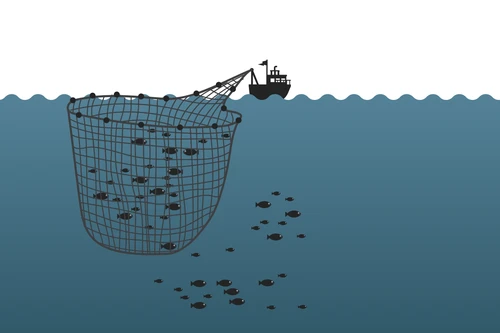
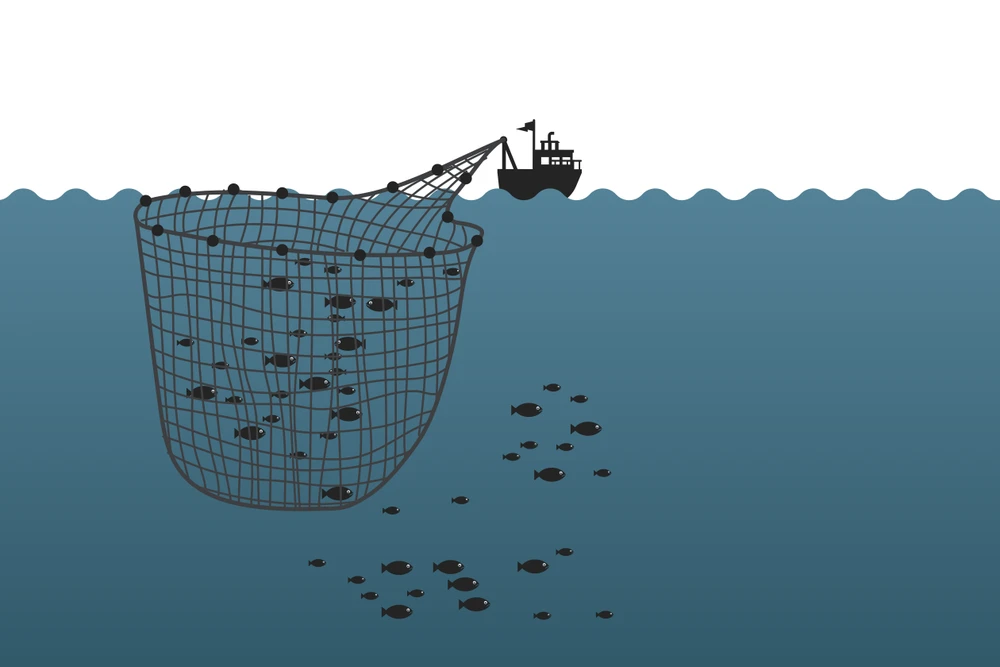
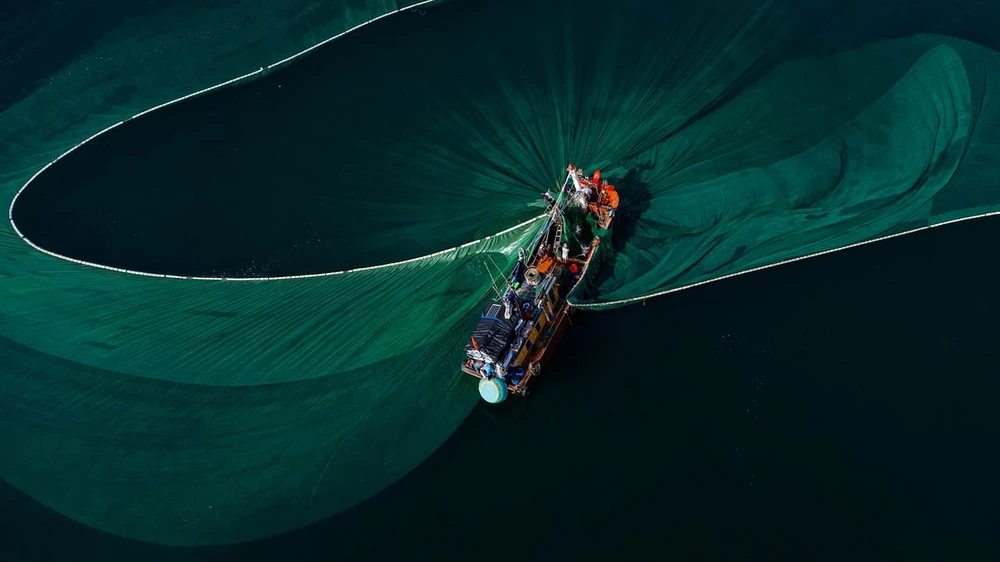
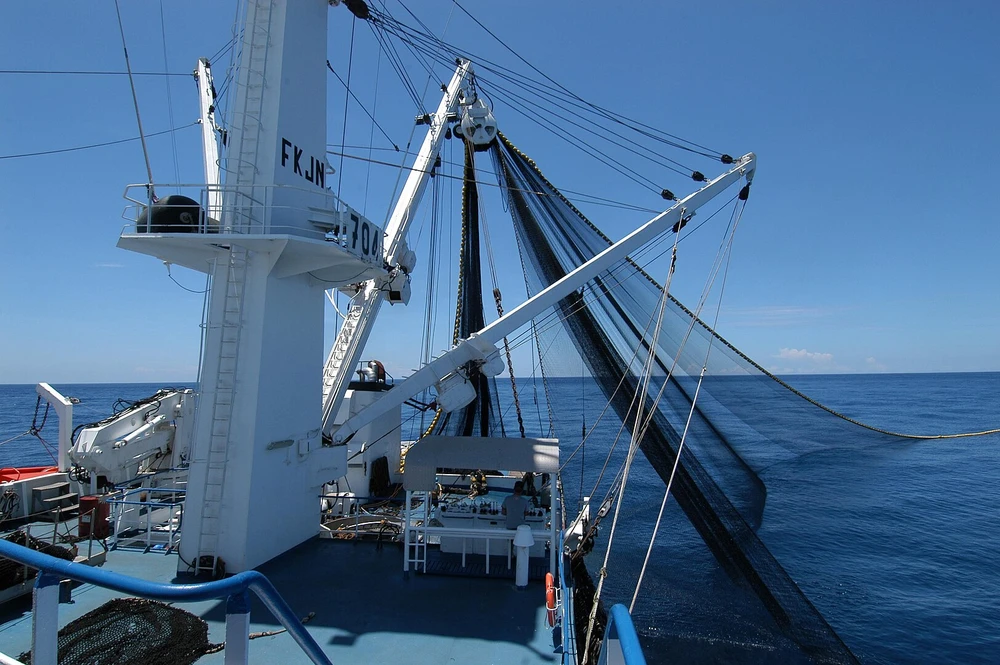
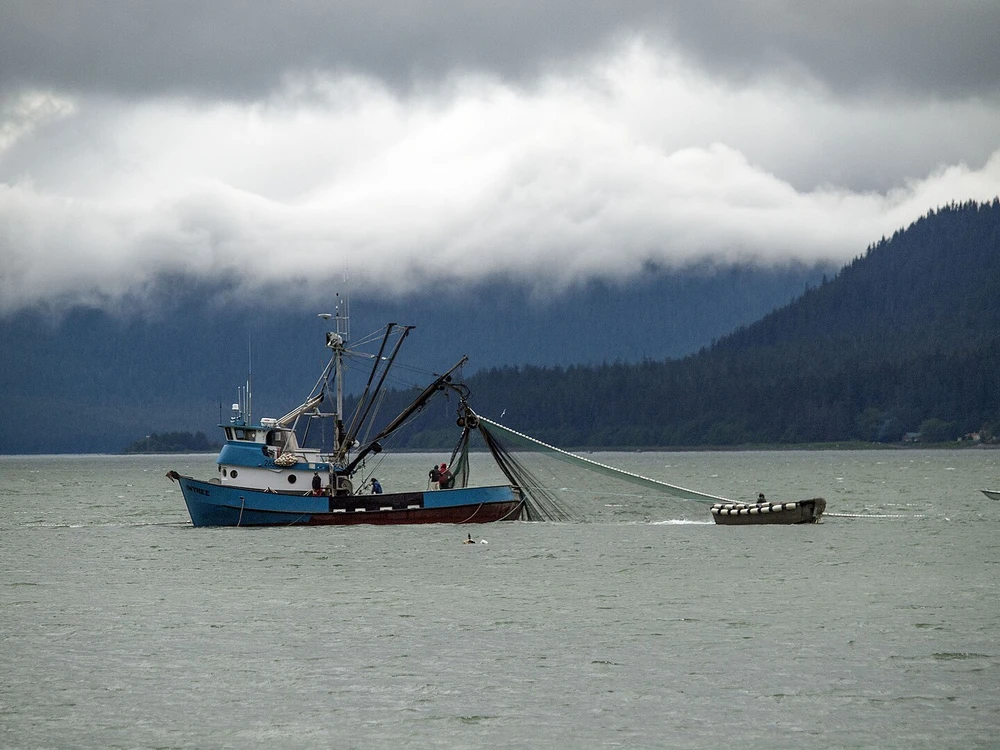
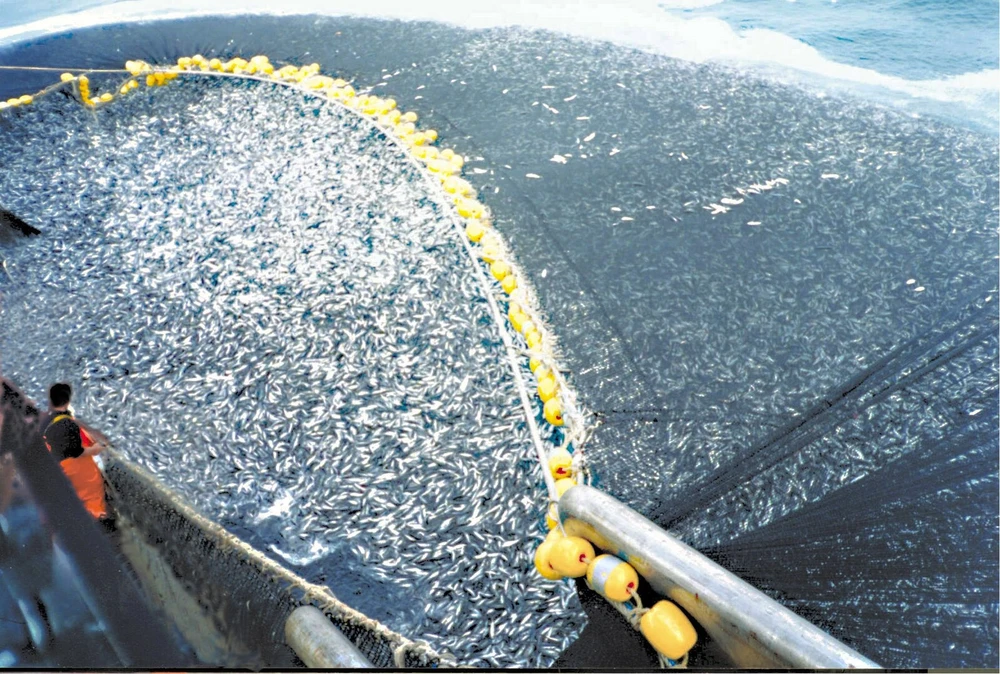
Purse seine is one of the most frequently used catching gears worldwide. The net – usually deployed by a skiff – is carefully placed around a school of FISHES. Once it is closed at the bottom – forming the "purse" – it is hauled close to the ship until it is minimised in size. This crowding step is stressful for the species, resulting in injuries and mortality, and should therefore be kept as short as possible. This can best be assured by targeting smaller catches. If IND need to be released because they exceed the quota, are undersized or of a non-target species, slipping while still in the water is to be preferred over sorting on deck and then discarding. Slipping is stressful, though, and does not always work in schooling species which seek the safety of the group and are reluctant to break away from it.
The IND which are to be retained are pumped or scooped out of the net into the storage space of the vessel. Although pumping is beneficial compared to scooping, as it avoids air and gravity exposure, it is not without drawbacks. A lower pumping velocity and a shorter pumping time will reduce injuries and mortality which again can be achieved by lower catch volumes. Storing often happens with the IND still alive and without the addition of ice. To be preferred is immediate stunning once the IND arrive on board and then slaughter while they are unconscious – something that is not available at the moment. An alternative might be live storage in net pens attached to the vessel which are slowly hauled to shore and then transferred to the processing plant for stunning and slaughter.
Purse seining is said to be species specific, i.e. not involving a large bycatch rate of non-target species. A bigger issue seems to be the risk associated with ghost fishing of abandoned, lost, and discarded gear that urgently needs to be addressed.
1 Commercial relevance
Weight per catch: 3.9-1,100 t
2 Target species
Target aggregation: school
3 Setup
Gear: purse seines of 255-850 m length x 80-265 m depth with mesh sizes 1-3.9 cm
Vessels: 1-12,391.3 m3 holding capacity in wooden and steel, artisanal and industrial vessels
4 Prospection
Prospection hazards and mitigation measures: certain sound emission patterns on occasion – prefer low frequency range or passive acoustics (further research needed); long exposure to light – use submerged light shortly after dusk, but only for short times and in colder waters (further research needed)
5 Setting
5.1 Setting methods
No data found yet.5.2 Setting hazards and mitigation measures
No data found yet.6 Catching/hauling (in the water)
Catching depth hazards and mitigation measures: probably no hazards (if not exceeding slow hauling speed), as catching takes place at surface (further research needed)
Hauling speed: 0.2-0.3 m/s (further research needed)
Hauling speed hazards and mitigation measures: probably no hazards if not exceeding hauling speed of 0.2 m/s depending on depth (further research needed)
Catching duration: 36-180 min/haul
Catching duration hazards and mitigation measures: keep the duration of crowding as short as possible (LAB: ≤0.3 h, best by focusing on smaller catches) (further research needed)
Catching gear contact hazards and mitigation measures: mesh sizes too small resulting in JUVENILES getting stuck in the net – prefer mesh size that avoids catching JUVENILES given body ∅ in season and region; gear contact – prefer catching at night because IND are more careful
Other catching gear hazards and mitigation measures: crowding – take especially care to avoid high densities during crowding in last 20% of retrieving purse seine
Environmental parameter changes during catching: abrupt temperature change possible (further research needed)
Parameter change hazards and mitigation measures: abrupt temperature and salinity change possible – catch at surface and avoid weather that presents huge temperature difference to water (further research needed)
6.11 Predation pressure
No data found yet.6.12 Predation hazards and mitigation measures
No data found yet.7 Emersion (transfer from water)
Emersion gear contact hazards and mitigation measures: mesh sizes too small resulting in JUVENILES getting stuck in the net – prefer mesh size that avoids catching JUVENILES given body ∅ in season and region; gear contact during pumping – from Scomber scombrus: prefer lower pumping velocity (1.2-1.8 t/min versus 7.4-8.6 t/min), shorter pumping time (27-85 min versus 56-165 min), lower catch volume (55-80 tons versus 132-250 tons) (further research needed)
Other emersion gear hazards and mitigation measures: crowding – take especially care to avoid high densities during crowding in last 20% of retrieving purse seine
Predation pressure: predators present in or close to the net (further research needed)
Predation hazards and mitigation measures: predators present in or close to the net – further research needed on mitigation measures
7.6 Environmental parameter changes during emersion
No data found yet.Parameter change hazards and mitigation measures: abrupt temperature change – catch at surface, avoid weather that presents huge temperature difference to water; exposure to air and gravity – prefer pumping (further research needed)
8 Release from gear
Release hazards and mitigation measures: hard landing, being stood on, and air exposure – further research needed on mitigation measures
9 Sorting
Sorting hazards and mitigation measures: handling and air exposure – prefer size-grading while still in the water (further research needed)
10 Storing
Storing gear contact hazards and mitigation measures: collisions, pressure – if live storage in net pens, then prefer ≥4,000 m3 net pens in calm cold waters outside hibernating areas in autumn and towing them inshore slowly (≤0.5-0.6 m/s); if storing in onboard cooling tanks, then with ice, but generally prefer immediate stunning followed by slaughter while still unconscious
Other storing gear hazards and mitigation measures: air and ice exposure, crowding – store in ice, but generally prefer immediate stunning followed by slaughter while still unconscious
11 Stunning and slaughter
Slaughter methods: probably none, hence asphyxia or hypothermia – further research needed on percussive stunning followed by brain destruction
12 Bycatch/discard
12.1 Bycatch/discard rate
Target species: JUVENILES schooling with ADULTS increases risk of accidentally catching undersized IND or JUVENILES, 15% slipped, another 28% discarded dead, 6% used at sea (further research needed)Non-target species: <1% of non-usable bycatch (tuna, swordfish, sharks, dolphins), <20% of potentially usable bycatch (further research needed)
12.2 Bycatch/discard hazards
Target species: mesh sizes too small resulting in JUVENILES getting stuck in the net – prefer mesh size that avoids catching JUVENILES given body ∅ in season and region; crowding before slipping – avoid crowding beyond 92 kg/m3; collisions during slipping – increase orderly escapes, maybe with the help of visual stimuli; displacement, predation pressure, manual handling – further research needed on mitigation measures; probably no hazards for E. ringens, as bycatch is used nevertheless (further research needed)Non-target species: economic losses, injuries/mortality
12.3 Bycatch avoidance/discard protection management
Target species: management, reduced total allowable catch, closure zones/spawning-related closure of fishing season, population surveysNon-target species: management, reduced total allowable catch
12.4 Bycatch avoidance/discard protection in water
Target species: hydroacoustic electronic scanning, sampling, mesh size that avoids catching JUVENILES given body ∅ in season and region, gentle slipping preferably before crowding (further research needed)Non-target species: further research needed on mitigation measures
13 Environmental hazards
13.1 Live bait
No data found yet.Habitat hazards and mitigation measures: seabed damage or impact on benthos unlikely (further research needed); industrial fleet with lower fuel consumption/t FISHES, but larger overall fuel consumption than small- to medium-scale fisheries which is a larger risk in case of fuel leaks
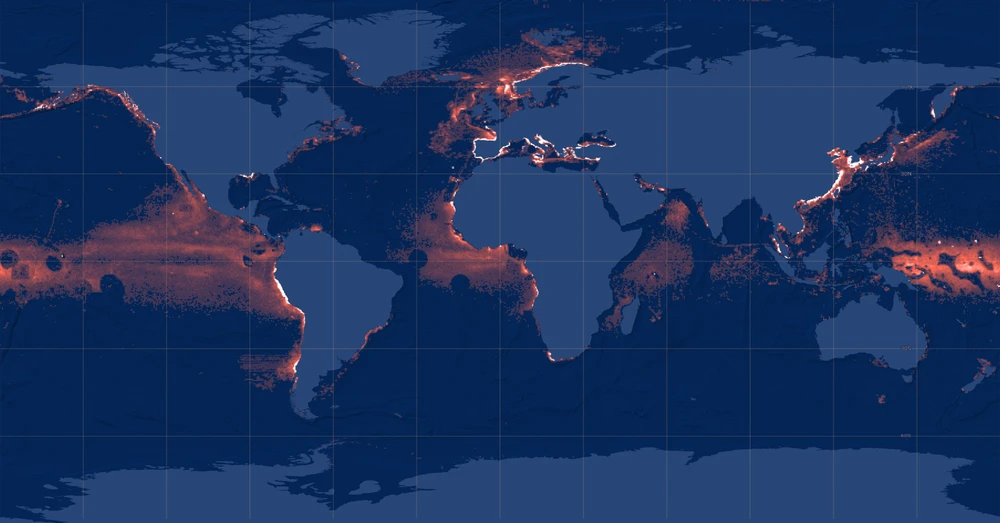
Ghost fishing risk, gear loss: 75,048.65 km2/year
Ghost fishing hazards and mitigation measures: ghost fishing (further research needed)
Glossary
FISHES = using "fishes" instead of "fish" for more than one individual - whether of the same species or not - is inspired by Jonathan Balcombe who proposed this usage in his book "What a fish knows". By referring to a group as "fishes", we acknowledge the individuals with their personalities and needs instead of an anonymous mass of "fish".
IND = individuals
JUVENILES = fully developed but immature individuals
LAB = setting in laboratory environment
PELAGIC = living independent of bottom and shore of a body of water
SPAWNERS = adults during the spawning season; in farms: adults that are kept as broodstock
TOTAL LENGTH = from snout to tip of caudal fin as compared to fork length (from snout to fork of caudal fin) 120 or standard length (from head to base of tail fin) or body length (from the base of the eye notch to the posterior end of the telson)
Bibliography
2 Feijó, D., A. Marçalo, T. Bento, J. Barra, D. Marujo, M. Correia, and A. Silva. 2018. Trends in the activity pattern, fishing yields, catch and landing composition between 2009 and 2013 from onboard observations in the Portuguese purse seine fleet. Regional Studies in Marine Science 23: 97–106. https://doi.org/10.1016/j.rsma.2017.12.007.
3 Tenningen, Maria, Armin Pobitzer, Nils Olav Handegard, and Karen de Jong. 2019. Estimating purse seine volume during capture: implications for fish densities and survival of released unwanted catches. Edited by Finbarr O’Neill. ICES Journal of Marine Science 76: 2481–2488. https://doi.org/10.1093/icesjms/fsz119.
4 Digre, H., G. M. Tveit, T. Solvang-Garten, A. Eilertsen, and I. G. Aursand. 2016. Pumping of mackerel (Scomber scombrus) onboard purse seiners, the effect on mortality, catch damage and fillet quality. Fisheries Research 176: 65–75. https://doi.org/10.1016/j.fishres.2015.12.011.
5 Misund, A., and K. Beltestad. 1994. Size-selection of mackerel and saithe in purse seine. ICES CM B28. International Council for the Exploration of the Sea, Fish Capture Committee.
6 Roth, Bjørn, and Torstein Skåra. 2021. Pre mortem capturing stress of Atlantic herring (Clupea harengus) in purse seine and subsequent effect on welfare and flesh quality. Fisheries Research 244: 106124. https://doi.org/10.1016/j.fishres.2021.106124.
7 Misund, O. A. 1993. Avoidance behaviour of herring (Clupea harengus) and mackerel (Scomber scombrus) in purse seine capture situations. Fisheries Research 16: 179–194. https://doi.org/10.1016/0165-7836(93)90051-8.
8 Stephenson, R. L., D. E. Lane, D. G. Aldous, and R. Nowak. 1993. Management of the 4WX Atlantic Herring (Clupea harengus) Fishery: An Evaluation of Recent Events. Canadian Journal of Fisheries and Aquatic Sciences 50. NRC Research Press: 2742–2757. https://doi.org/10.1139/f93-299.
9 Tenningen, M., G. J. Macaulay, G. Rieucau, H. Peña, and R. J. Korneliussen. 2017. Behaviours of Atlantic herring and mackerel in a purse-seine net, observed using multibeam sonar. ICES Journal of Marine Science 74: 359–368. https://doi.org/10.1093/icesjms/fsw159.
10 Mathisen, Ole A. 1989. Adaptation of the anchoveta (Engraulis ringens) to the Peruvian upwelling system. In The Peruvian Upwelling Ecosystem: Dynamics and Interactions, 220–234. ICLARM Conference Proceedings 18. WorldFish.
11 Gerlotto, F., J. Castillo, A. Saavedra, M.A. Barbieri, M. Espejo, and P. Cotel. 2004. Three-dimensional structure and avoidance behaviour of anchovy and common sardine schools in central southern Chile. ICES Journal of Marine Science 61: 1120–1126. https://doi.org/10.1016/j.icesjms.2004.07.017.
12 Bertrand, Arnaud, François Gerlotto, Sophie Bertrand, Mariano Gutiérrez, Luis Alza, Andres Chipollini, Erich Díaz, et al. 2008. Schooling behaviour and environmental forcing in relation to anchoveta distribution: An analysis across multiple spatial scales. Progress in Oceanography 79. The Northern Humboldt Current System: Ocean Dynamics, Ecosystem Processes, and Fisheries: 264–277. https://doi.org/10.1016/j.pocean.2008.10.018.
13 Fablet, Ronan, Paul Gay, Salvador Peraltilla, Cecilia Peña, Ramiro Castillo, and Arnaud Bertrand. 2012. Bags-of-Features for fish school cluster characterization in pelagic ecosystems: application to the discrimination of juvenile and adult anchovy (Engraulis ringens) clusters off Peru. Canadian Journal of Fisheries and Aquatic Sciences 69. NRC Research Press: 1329–1339. https://doi.org/10.1139/f2012-064.
14 Keč, V. Č., and B. Zorica. 2013. Length–weight relationship, age, growth and mortality of Atlantic chub mackerel Scomber colias in the Adriatic Sea. Journal of the Marine Biological Association of the United Kingdom 93. Cambridge University Press: 341–349. https://doi.org/10.1017/S0025315412000161.
15 Hawkins, A. D., L. Roberts, and S. Cheesman. 2014. Responses of free-living coastal pelagic fish to impulsive sounds. The Journal of the Acoustical Society of America 135: 3101–3116. https://doi.org/10.1121/1.4870697.
16 Anders, Neil, Mike Breen, Jostein Saltskår, Bjørn Totland, Jan Tore Øvredal, and Aud Vold. 2019. Behavioural and welfare implications of a new slipping methodology for purse seine fisheries in Norwegian waters. PLOS ONE 14. Public Library of Science: e0213031. https://doi.org/10.1371/journal.pone.0213031.
17 Peña, H., G. J. Macaulay, E. Ona, S. Vatnehol, and A. J Holmin. 2021. Estimating individual fish school biomass using digital omnidirectional sonars, applied to mackerel and herring. ICES Journal of Marine Science 78: 940–951. https://doi.org/10.1093/icesjms/fsaa237.
18 TASA. 2018. Conoce Nuestro Proceso de Cala 2018 (YouTube).
19 Saldaña, Melendes. 2020. faena de pesca (YouTube).
20 kviav7. 2015. Mackerel Fishing in The North Sea September 2013 (YouTube).
21 Gallais, Stephan Le. 2018. La Pêche aux Maquereaux en Corse - PECHE CORSE - Décembre 2018 (YouTube).
22 Seapix Ixblue. 2021. Mackerel fishing, purse seining in Norway (YouTube).
23 Galbraith, R. D., A. Rice, and E. S. Strange. 2004. An introduction to commercial fishing gear and methods used in Scotland. Scottish Fisheries.
24 Wyman, Brandon. 2013. F/V Ruth & Pat Herring Seining 2013 Season (YouTube).
25 Kobuk, Max. 2022. 2021 Bait Herring Season: Commercial Fishing Alaska (YouTube).
26 Lockwood, S. J., M. G. Pawson, and D. R. Eaton. 1983. The effects of crowding on mackerel (Scomber scombrus L.) — Physical condition and mortality. Fisheries Research 2: 129–147. https://doi.org/10.1016/0165-7836(83)90114-5.
27 bobby, rickey. 2010. Newfoundland Fishing Boat, Herring Seining (YouTube).
28 Kobuk, Max. 2022. 2022 Kodiak Island Roe Herring Season: Commercial Fishing Alaska (YouTube).
29 Yangua, Denis Chuquihuanga. 2020. Pesca de anchoveta en peru (YouTube).
30 Tejerina, R, M Hermida, G Faria, and J Delgado. 2019. The purse-seine fishery for small pelagic fishes off the Madeira Archipelago. African Journal of Marine Science 41. Taylor & Francis: 373–383. https://doi.org/10.2989/1814232X.2019.1678520.
31 Tenningen, Maria, Héctor Peña, and Gavin J. Macaulay. 2015. Estimates of net volume available for fish shoals during commercial mackerel (Scomber scombrus) purse seining. Fisheries Research 161: 244–251. https://doi.org/10.1016/j.fishres.2014.08.003.
32 Anders, Neil, Sigurd Hannaas, Jostein Saltskår, Erik Schuster, Maria Tenningen, Bjørn Totland, Aud Vold, Jan Tore Øvredal, and Mike Breen. 2022. Vitality as a measure of animal welfare during purse seine pumping related crowding of Atlantic mackerel (Scomber scrombrus). Scientific Reports 12. Nature Publishing Group: 21949. https://doi.org/10.1038/s41598-022-26373-x.
33 González-But, Juan Carlos, and Maritza Sepúlveda. 2016. Incidental capture of the short-beaked common dolphin (Delphinus delphis) in the industrial purse seine fishery in northern Chile. Revista de biología marina y oceanografía 51: 429–433. https://doi.org/10.4067/S0718-19572016000200019.
34 Ramírez, Daniel Aguilar, and J. C. Barrera-Guevara. 2018. Alternativas tecnológicas para el control de descartes y reducción de captura de juveniles en la pesquería de anchoveta. Síntesis Ejecutiva –versión en español para Oceana Perú. OCEANA - Protegiendo los Océanos del Mundo.
35 Fréon, Pierre, Angel Avadí, Wilbert Marin Soto, and Richard Negrón. 2014. Environmentally extended comparison table of large- versus small- and medium-scale fisheries: the case of the Peruvian anchoveta fleet. Canadian Journal of Fisheries and Aquatic Sciences 71. NRC Research Press: 1459–1474. https://doi.org/10.1139/cjfas-2013-0542.
36 Jurado-Ruzafa, A., G. González-Lorenzo, S. Jiménez, B. Sotillo, C. Acosta, and M.T.G. Santamaría. 2019. Seasonal evolution of small pelagic fish landings index in relation to oceanographic variables in the Canary Islands (Spain). Deep Sea Research Part II: Topical Studies in Oceanography 159: 84–91. https://doi.org/10.1016/j.dsr2.2018.07.002.
37 Teixeira, Célia M., Rita Gamito, Francisco Leitão, Alberto G. Murta, Henrique N. Cabral, Karim Erzini, and María José Costa. 2016. Environmental influence on commercial fishery landings of small pelagic fish in Portugal. Regional Environmental Change 16: 709–716. https://doi.org/10.1007/s10113-015-0786-1.
38 Vatnehol, S., H.. Peña, and E. Ona. 2017. Estimating the volumes of fish schools from observations with multi-beam sonars. ICES Journal of Marine Science 74: 813–821. https://doi.org/10.1093/icesjms/fsw186.
39 Huse, Irene, and A. Vold. 2010. Mortality of mackerel (Scomber scombrus L.) after pursing and slipping from a purse seine. Fisheries Research 106: 54–59. https://doi.org/10.1016/j.fishres.2010.07.001.
40 Sivle, Lise Doksæter, Petter Helgevold Kvadsheim, Michael A. Ainslie, Andrew Solow, Nils Olav Handegard, Nina Nordlund, and Frans-Peter A. Lam. 2012. Impact of naval sonar signals on Atlantic herring (Clupea harengus) during summer feeding. ICES Journal of Marine Science 69: 1078–1085. https://doi.org/10.1093/icesjms/fss080.
41 Stickney, Alden P. 1969. Factors influencing the attraction of Atlantic herring, Clupea harengus, to artificial lights. Fishery Bulletin-National Oceanic and Atmospheric Administration 68: 73–85.
42 Wahlberg, M. 2003. Sounds produced by herring (Clupea harengus) bubble release. Aquatic Living Resources 16: 271–275. https://doi.org/10.1016/S0990-7440(03)00017-2.
43 Lamas, L., P. B. Oliveira, J. P. Pinto, S. Almeida, R. Deus, A. J. Silva, and N. Almeida. 2017. Fishing areas characterisation using the SIMOcean platform. Aquatic Living Resources 30. EDP Sciences: 19. https://doi.org/10.1051/alr/2017020.
44 Brawn, Vivien M. 1962. Physical Properties and Hydrostatic Function of the Swimbladder of Herring (Clupea harengus L.). Journal of the Fisheries Research Board of Canada 19. NRC Research Press: 635–656. https://doi.org/10.1139/f62-043.
45 Marçalo, Ana. 2023. Personal communication.
46 Pica, Andrea. 2023. Personal communication.
47 Misund, Ole Arve, and Arvid K Beltestad. 2000. Survival of mackerel and saithe that escape through sorting grids in purse seines. Fisheries Research 48: 31–41. https://doi.org/10.1016/S0165-7836(00)00118-1.
48 Santander, H., J. Alheit, A. D. MacCall, and A. Alamo. 1983. Egg mortality of the Peruvian anchovy (Engraulis ringens) caused by cannibalism and predation by sardines (Sardinops sagax). 291. FAO Fisheries Report. Rome, Italy: Food and Agriculture Organization of the United Nations.
49 Breen, Mike. 2019. Personal communication.
50 Tenningen, Maria, Aud Vold, and Rolf Erik Olsen. 2012. The response of herring to high crowding densities in purse-seines: survival and stress reaction. ICES Journal of Marine Science 69: 1523–1531. https://doi.org/10.1093/icesjms/fss114.
51 Tenningen, Maria, Aud Vold, Bjørnar Isaksen, Ragnhild Svalheim, Rolf-Erik Olsen, and Mike Breen. 2012. Magnitude and causes of mortality of Atlantic herring (Clupea harengus) induced by crowding in purse seines. In ICES CM 2012, C:34:6. Bergen, Norway. https://doi.org/https://doi.org/10.17895/ices.pub.24973854.
52 Olsen, Rolf Erik, Frode Oppedal, Maria Tenningen, and Aud Vold. 2012. Physiological response and mortality caused by scale loss in Atlantic herring. Fisheries Research 129–130: 21–27. https://doi.org/10.1016/j.fishres.2012.06.007.
53 Anders, Neil, Bjørn Roth, and Mike Breen. 2021. Physiological response and survival of Atlantic mackerel exposed to simulated purse seine crowding and release. Edited by John Mandelman. Conservation Physiology 9: coab076. https://doi.org/10.1093/conphys/coab076.
54 Tveit, G. M., N. Anders, M. S. Bondø, J. R. Mathiassen, and M. Breen. 2022. Atlantic mackerel (Scomber scombrus) change skin colour in response to crowding stress. Journal of Fish Biology 100: 738–747. https://doi.org/10.1111/jfb.14987.
55 Harder, W. 1960. Vergleichende Untersuchungen zur Morphologie des Darmes bei Clupeoidea. Z. wiss. Zool. 163: 65–167.
56 Pauly, Daniel, Astrid Jarre, Susan Luna, Victor Sambilay, Jr., Blanca Rojas de Mendiola, and Alejandro Alamo. 1989. On the quantity and types of food ingested by Peruvian anchoveta, 1953-1982. In The Peruvian Upwelling Ecosystem: Dynamics and Interactions, 109–124. ICLAM Conference Proceedings 18. WorldFish.
57 Maia, Caroline Marques. 2023. Conclusion.
58 Misund, Ole Arve, and Arvid K. Beltestad. 1995. Survival of herring after simulated net bursts and conventional storage in net pens. Fisheries Research 22: 293–297. https://doi.org/10.1016/0165-7836(94)00326-R.
59 Cabrera-Álvarez, María. 2023. Conclusion.
60 Dommasnes, Are, Francisco Rey, and Ingolf Røttingen. 1994. Reduced oxygen concentrations in herring wintering areas. ICES Journal of Marine Science 51: 63–69. https://doi.org/10.1006/jmsc.1994.1006.
61 Morgan, Rachael Louise. 2014. Using behaviour of herring (Clupea harengus L.) to assess post-crowding stress in purse-seine fisheries. Master thesis, Bergen, Norway: The University of Bergen.
62 Breen, Mike. 2014. Personal communication.
63 Domenici, P., J. F. Steffensen, and R. S. Batty. 2000. The effect of progressive hypoxia on swimming activity and schooling in Atlantic herring. Journal of Fish Biology 57: 1526–1538. https://doi.org/10.1111/j.1095-8649.2000.tb02229.x.
64 Domenici, Paolo, R. Silvana Ferrari, John F. Steffensen, and Robert S. Batty. 2002. The effect of progressive hypoxia on school structure and dynamics in Atlantic herring Clupea harengus. Proceedings of the Royal Society of London. Series B: Biological Sciences 269: 2103–2111. https://doi.org/10.1098/rspb.2002.2107.
65 Herbert, Neill A., and John F. Steffensen. 2006. Hypoxia increases the behavioural activity of schooling herring: a response to physiological stress or respiratory distress? Marine Biology 149: 1217–1225. https://doi.org/10.1007/s00227-006-0284-6.
66 Volstorf, Jenny. 2023. Conclusion.
67 Pardo, Ignacio. 2023. Pesca de Cerco - Playa Astilleru (YouTube).
68 Volstorf, Jenny. 2024. Conclusion.
69 Maia, Caroline Marques. 2024. Conclusion.
70 Fiskeridirektoratet. 2014. Section §48a in Regulations Relating to Sea-water Fisheries.
71 Handegard, N. O., M. Tenningen, K. Howarth, N. Anders, G. Rieucau, and M. Breen. 2017. Effects on schooling function in mackerel of sub-lethal capture related stressors: Crowding and hypoxia. PLOS ONE 12. Public Library of Science: e0190259. https://doi.org/10.1371/journal.pone.0190259.
72 Anders, N., K. Howarth, B. Totland, N. O. Handegard, M. Tenningen, and M. Breen. 2019. Effects on individual level behaviour in mackerel (Scomber scombrus) of sub-lethal capture related stressors: Crowding and hypoxia. PLOS ONE 14. Public Library of Science: e0213709. https://doi.org/10.1371/journal.pone.0213709.
73 Swift, D. J. 1983. Blood component value changes in the atlantic mackerel (Scomber scombrus L.) subjected to capture, handling and confinement. Comparative Biochemistry and Physiology Part A: Physiology 76: 795–802. https://doi.org/10.1016/0300-9629(83)90143-3.
74 Anders, N., I. Eide, J. Lerfall, B. Roth, and M. Breen. 2020. Physiological and flesh quality consequences of pre-mortem crowding stress in Atlantic mackerel (Scomber scombrus). PLOS ONE 15. Public Library of Science: e0228454. https://doi.org/10.1371/journal.pone.0228454.
75 Quiñones, Javier, Aldrin Monroy, E. Marcelo Acha, and Hermes Mianzan. 2013. Jellyfish bycatch diminishes profit in an anchovy fishery off Peru. Fisheries Research 139: 47–50. https://doi.org/10.1016/j.fishres.2012.04.014.
76 Gamito, R., C. M. Teixeira, M. J. Costa, and H. N. Cabral. 2015. Are regional fisheries’ catches changing with climate? Fisheries Research 161: 207–216. https://doi.org/10.1016/j.fishres.2014.07.014.
77 Brawn, Vivien M. 1960. Temperature Tolerance of Unacclimated Herring (Clupea harengus L.). Journal of the Fisheries Research Board of Canada 17. NRC Research Press: 721–723. https://doi.org/10.1139/f60-057.
78 Rasmus Nielsen, J, Bo Lundgren, Torben F Jensen, and Karl-Johan Stæhr. 2001. Distribution, density and abundance of the western Baltic herring (Clupea harengus) in the Sound (ICES Subdivision 23) in relation to hydrographical features. Fisheries Research 50: 235–258. https://doi.org/10.1016/S0165-7836(00)00220-4.
79 Peltonen, Heikki, Mika Vinni, Antti Lappalainen, and Jukka Pönni. 2004. Spatial feeding patterns of herring (Clupea harengus L.), sprat (Sprattus sprattus L.), and the three-spined stickleback (Gasterosteus aculeatus L.) in the Gulf of Finland, Baltic Sea. ICES Journal of Marine Science 61: 966–971. https://doi.org/10.1016/j.icesjms.2004.06.008.
80 Valla, Raul. 2014. Asi se pesca la anchoveta en el Perú (YouTube).
81 Anders, Neil, Bjørn Roth, Endre Grimsbø, and Michael Breen. 2019. Assessing the effectiveness of an electrical stunning and chilling protocol for the slaughter of Atlantic mackerel (Scomber scombrus). PLOS ONE 14. Public Library of Science: e0222122. https://doi.org/10.1371/journal.pone.0222122.
82 Dias, Inês C., Ana Marçalo, Diana Feijó, Isabel Domingos, and Alexandra A. Silva. 2022. Interactions between the common dolphin, Delphinus delphis, and the Portuguese purse seine fishery over a period of 15 years (2003–2018). Aquatic Conservation: Marine and Freshwater Ecosystems 32: 1351–1364. https://doi.org/10.1002/aqc.3828.
83 Breen, Mike, Neil Anders, Odd-Børre Humborstad, Jonatan Nilsson, Maria Tenningen, and Aud Vold. 2020. Catch Welfare in Commercial Fisheries. In The Welfare of Fish, ed. Tore S. Kristiansen, Anders Fernö, Michail A. Pavlidis, and Hans van de Vis, 401–437. Animal Welfare. Cham: Springer International Publishing. https://doi.org/10.1007/978-3-030-41675-1_17.
84 Nielsen, Durita, and Grethe Hyldig. 2004. Influence of handling procedures and biological factors on the QIM evaluation of whole herring (Clupea harengus L.). Food Research International 37: 975–983. https://doi.org/10.1016/j.foodres.2004.06.006.
85 Tolstorebrov, I., T. M. Eikevik, and E. Indergård. 2014. The influence of long-term storage, temperature and type of packaging materials on the lipid oxidation and flesh color of frozen Atlantic herring fillets (Clupea harengus). International Journal of Refrigeration 40: 122–130. https://doi.org/10.1016/j.ijrefrig.2013.11.014.
86 Power, M. J., and R. L. Stephenson. 1987. An analysis of logs from the 1986 4X summer purse seine fishery. 77. Canadian Atlantic Fisheries Scientific Advisory Committee.
87 Power, M.J., and R. L. Stephenson. 1991. Logbook analysis for the 19904WX herring purse seine fishery. 54. Canadian Atlantic Fisheries Scientific Advisory Committee.
88 Jónsdóttir, S. 1992. Quality standards for herring. Quality Standards for Fish: Final Report Phase II.
89 Csirke, Jorge. 1989. Changes in the catchability coefficient in the Peruvian anchoveta (Engraulis ringens) fishery. In The Peruvian Upwelling Ecosystem: Dynamics and Interactions. WorldFish.
90 Kestin, S. C., D. H. Robb, and J. W. van de Vis. 2002. Protocol for assessing brain function in fish and the effectiveness of methods used to stun and kill them. Veterinary Record 150: 302–307. https://doi.org/10.1136/vr.150.10.302.
91 Nordgreen, Andreas Hoel, Erik Slinde, Dag Møller, and Bjorn Roth. 2008. Effect of Various Electric Field Strengths and Current Durations on Stunning and Spinal Injuries of Atlantic Herring. Journal of Aquatic Animal Health 20. Taylor & Francis: 110–115. https://doi.org/10.1577/H07-010.1.
92 FishChoice. 2020. Atlantic Herring. FishChoice.
93 Misund, Ole Arve. 1993. Dynamics of moving masses: variability in packing density, shape, and size among herring, sprat, and saithe schools. ICES Journal of Marine Science 50: 145–160. https://doi.org/10.1006/jmsc.1993.1016.
94 Driscoll, John, and Peter Tyedmers. 2010. Fuel use and greenhouse gas emission implications of fisheries management: the case of the new england atlantic herring fishery. Marine Policy 34: 353–359. https://doi.org/10.1016/j.marpol.2009.08.005.
95 Feijó, D., A. Marçalo, J. Vingada, and A. Silva. 2011. Observações a bordo da pescaria do Cerco: padrão de actividade, composição das capturas, rendimentos de pesca e interacções com cetáceos em 2010. In Rec. Mar. Acui., 381–396.
96 Feijó, Diana. 2013. Caracterização da pesca do Cerco na costa Portuguesa. https://doi.org/10.13140/RG.2.1.3102.4241.
97 Leitão, Francisco, Vânia Baptista, and Karim Erzini. 2018. Reconstructing discards profiles of unreported catches. Scientia Marina 82: 39–49. https://doi.org/10.3989/scimar.04723.08A.
98 Fisheries and Oceans Canada Government of Canada. 2021. Atlantic herring in the Maritimes Region. January 11.
99 NOAA Fisheries. 2022. Atlantic Herring Catch Cap | NOAA Fisheries. NOAA. March 11.
100 Vega, R., L. Ossa, B. Suárez, A. González, S. Henríquez, R. Ojeda, M. A. Jiménez, A. Ramírez, J. Le-Bert, and A. Simeone. 2018. Informe Final - Convenio de Desempeño 2017. Programa de observadores científicos 2017-2018. Programa de investigación del descarte y captura de pesca incidental en pesquerías pelágicas. Programa de monitoreo y evaluación de los planes de reducción del descarte y de la pesca incidental 2017-2018. Valparaíso, Chile: Instituto de Fomento Pesquero.
101 Carle, Ryan D., Jonathan J. Felis, Rodrigo Vega, Jessie Beck, Josh Adams, Verónica López, Peter J. Hodum, Andrés González, Valentina Colodro, and Tiare Varela. 2019. Overlap of Pink-footed Shearwaters and central Chilean purse-seine fisheries: Implications for bycatch risk. The Condor 121: duz026. https://doi.org/10.1093/condor/duz026.
102 Suazo, Cristián G., Luis A. Cabezas, Carlos A. Moreno, Javier A. Arata, Guillermo Luna Jorquera, Alejandro Simeone, Luis Adasme, et al. 2014. Seabird bycatch in Chile: a synthesis of its impacts, and a review of strategies to contribute to the reduction of a global phenomen. Pacific Seabirds 41: 1–12.
103 Simeone, Alejandro, Cristóbal Anguita, Maximiliano Daigre, Paulina Arce, Rodrigo Vega, Guillermo Luna-Jorquera, Matías Portflitt-Toro, Cristián G. Suazo, Diego Miranda-Urbina, and Mauricio Ulloa. 2021. Spatial and temporal patterns of beached seabirds along the Chilean coast: Linking mortalities with commercial fisheries. Biological Conservation 256: 109026. https://doi.org/10.1016/j.biocon.2021.109026.
104 Zardoya, R., R. Castilho, C. Grande, L. Favre-Krey, S. Caetano, S. Marcato, G. Krey, and T. Patarnello. 2004. Differential population structuring of two closely related fish species, the mackerel (Scomber scombrus) and the chub mackerel (Scomber japonicus), in the Mediterranean Sea. Molecular Ecology 13: 1785–1798. https://doi.org/10.1111/j.1365-294X.2004.02198.x.
105 Velasco, E. M., J. Del Arbol, J. Baro, and I. Sobrino. 2011. Age and growth of the Spanish chub mackerel Scomber colias off southern Spain: a comparison between samples from the NE Atlantic and the SW Mediterranean. Revista de biología marina y oceanografía 46. Universidad de Valparaíso. Facultad de Ciencias del Mar: 27–34. https://doi.org/10.4067/S0718-19572011000100004.
106 Vold, Aud, Neil Anders, Mike Breen, Jostein Saltskår, Bjørn Totland, and Jan Tore Øvredal. 2017. Beste praksis for slipping fra not. Utvikling av standard slippemetode for makrell og sild i fiske med not. Working paper. Havforskningsinstituttet.
107 Marçalo, Ana, Mike Breen, Maria Tenningen, Iñigo Onandia, Luis Arregi, and Jorge M. S. Gonçalves. 2019. Mitigating Slipping-Related Mortality from Purse Seine Fisheries for Small Pelagic Fish: Case Studies from European Atlantic Waters. In The European Landing Obligation: Reducing Discards in Complex, Multi-Species and Multi-Jurisdictional Fisheries, ed. Sven Sebastian Uhlmann, Clara Ulrich, and Steven J. Kennelly, 297–318. Cham: Springer International Publishing. https://doi.org/10.1007/978-3-030-03308-8_15.
108 Dias, I., D. Feijó, A. Marçalo, P. M. Guerreiro, and A. Silva. 2021. Pilot experiment to evaluate the survival of chub mackerel (Scomber colias) after slipping in the purse seine fishery. Poster.
109 Anon. 2004. Forskrift om drift av akvakulturanlegg (akvakulturdriftsforskriften). Fastsatt av Fiskeri- og kystdepartementet 22. desember 2004 med hjemmel i lov 14. juni 1985 nr. 68 om oppdrett av fisk, skalldyr, lov 19. desember 2003 nr. 124 om matproduksjon og mattrygghet og lov 20. desember 1974 nr. 73 om dyrevern.
110 Young, Jeff, and Kees Lankaster. 2013. Catch Shares in Action: Peruvian Anchoveta Northern-Central Stock Individual Vessel Quota Program. Environmental Defense Fund.
111 FAO. 2018. Report of the FAO Working Group on the Assessment of Small Pelagic Fish off Northwest Africa. FAO Fisheries and Aquaculture Report 1247. Rome, Italy: FAO.
112 SeaChoice. 2023. Atlantic Herring. SeaChoice.
113 NOAA Fisheries. 2023. Atlantic Herring Management Area 1B Possession Limit Adjustment | NOAA Fisheries. NOAA. January 11.
114 Perea, Á, C. Peña, R. Oliveros-Ramos, B. Buitrón, and J. Mori. 2011. Potential egg production, recruitment, and closed fishing season of the Peruvian anchovy (Engraulis ringens): Implications for fisheries management. Ciencias marinas 37: 585–601.
115 Molinari, Christian. 2021. Peru’s anchoveta season set to open, with much lower TAC. SeafoodSource.
116 Veterinaria Digital. 2022. The first anchoveta fishing season in Peru successfully progresses. Veterinaria Digital.
117 FromNorway.com. 2023. Herring. FromNorway.
118 Plaza, Guido, Francisco Cerna, Mauricio F. Landaeta, Alejandra Hernández, and Jorge E. Contreras. 2018. Daily growth patterns and age-at-recruitment of the anchoveta Engraulis ringens as indicated by a multi-annual analysis of otolith microstructure across developmental stages. Journal of Fish Biology 93: 370–381. https://doi.org/10.1111/jfb.13773.
119 Pauly, Daniel, and Maria Lourdes Palomares. 1989. New estimates of monthly biomass, recruitment and related statistics of anchoveta (Engraulis ringens) off Peru (4-14°S), 1953-1982. In The Peruvian Upwelling Ecosystem: Dynamics and Interactions, 189–206. ICLARM Conference Proceedings 18. WorldFish.
120 Pawson, M.G., and G.D. Pickett. 1996. The Annual Pattern of Condition and Maturity in Bass, Dicentrarchus Labrax, in Waters Around England and Wales. Journal of the Marine Biological Association of the United Kingdom 76: 107. https://doi.org/10.1017/S0025315400029040.
121 Richardson, Kelsey, David Haynes, Anthony Talouli, and Michael Donoghue. 2017. Marine pollution originating from purse seine and longline fishing vessel operations in the Western and Central Pacific Ocean, 2003-2015. Ambio 46: 190–200. https://doi.org/10.1007/s13280-016-0811-8.
122 Richardson, Kelsey, Britta Denise Hardesty, Joanna Vince, and Chris Wilcox. 2022. Global estimates of fishing gear lost to the ocean each year. Science Advances 8. American Association for the Advancement of Science: eabq0135. https://doi.org/10.1126/sciadv.abq0135.
123 Céspedes, Carlos Martín Salazar, Julio Alarcón Velez, and Germán Chacón Nieto. 2015. Workshop of the classification of the fishing gears of the Peruvian artisanal fishery. Peru: Unpublished.


Probably, we updated the profile. Check the version number in the head of the page. For more information on the version, see the FAQ about this. Why do we update profiles? Not just do we want to include new research that has come out, but we are continuously developing the database itself. For example, we changed the structure of entries in criteria or we added explanations for scores in the WelfareCheck | farm. And we are always refining our scoring rules.
The centre of the Overview is an array of criteria covering basic features and behaviours of the species. Each of this information comes from our literature search on the species. If we researched a full Dossier on the species, probably all criteria in the Overview will be covered and thus filled. This was our way to go when we first set up the database.
Because Dossiers are time consuming to research, we switched to focusing on WelfareChecks. These are much shorter profiles covering just 10 criteria we deemed important when it comes to behaviour and welfare in aquaculture (and lately fisheries, too). Also, WelfareChecks contain the assessment of the welfare potential of a species which has become the main feature of the fair-fish database over time. Because WelfareChecks do not cover as many criteria as a Dossier, we don't have the information to fill all blanks in the Overview, as this information is "not investigated by us yet".
Our long-term goal is to go back to researching Dossiers for all species covered in the fair-fish database once we set up WelfareChecks for each of them. If you would like to support us financially with this, please get in touch at ffdb@fair-fish.net
See the question "What does "not investigated by us yet" mean?". In short, if we have not had a look in the literature - or in other words, if we have not investigated a criterion - we cannot know the data. If we have already checked the literature on a criterion and could not find anything, it is "no data found yet". You spotted a "no data found yet" where you know data exists? Get in touch with us at ffdb@fair-fish.net!
Once you have clicked on "show details", the entry for a criterion will unfold and display the summarised information we collected from the scientific literature – complete with the reference(s).
As reference style we chose "Springer Humanities (numeric, brackets)" which presents itself in the database as a number in a grey box. Mouse over the box to see the reference; click on it to jump to the bibliography at the bottom of the page. But what does "[x]↶[y]" refer to?
This is the way we mark secondary citations. In this case, we read reference "y", but not reference "x", and cite "x" as mentioned in "y". We try to avoid citing secondary references as best as possible and instead read the original source ourselves. Sometimes we have to resort to citing secondarily, though, when the original source is: a) very old or not (digitally) available for other reasons, b) in a language no one in the team understands. Seldomly, it also happens that we are running out of time on a profile and cannot afford to read the original. As mentioned, though, we try to avoid it, as citing mistakes may always happen (and we don't want to copy the mistake) and as misunderstandings may occur by interpreting the secondarily cited information incorrectly.
If you spot a secondary reference and would like to send us the original work, please contact us at ffdb@fair-fish.net
In general, we aim at giving a good representation of the literature published on the respective species and read as much as we can. We do have a time budget on each profile, though. This is around 80-100 hours for a WelfareCheck and around 300 hours for a Dossier. It might thus be that we simply did not come around to reading the paper.
It is also possible, though, that we did have to make a decision between several papers on the same topic. If there are too many papers on one issue than we manage to read in time, we have to select a sample. On certain topics that currently attract a lot of attention, it might be beneficial to opt for the more recent papers; on other topics, especially in basic research on behaviour in the wild, the older papers might be the go-to source.
And speaking of time: the paper you are missing from the profile might have come out after the profile was published. For the publication date, please check the head of the profile at "cite this profile". We currently update profiles every 6-7 years.
If your paper slipped through the cracks and you would like us to consider it, please get in touch at ffdb@fair-fish.net
This number, for example "C | 2.1 (2022-11-02)", contains 4 parts:
- "C" marks the appearance – the design level – of the profile part. In WelfareChecks | farm, appearance "C" is our most recent one with consistent age class and label (WILD, FARM, LAB) structure across all criteria.
- "2." marks the number of major releases within this appearance. Here, it is major release 2. Major releases include e.g. changes of the WelfareScore. Even if we just add one paper – if it changes the score for one or several criteria, we will mark this as a major update for the profile. With a change to a new appearance, the major release will be re-set to 1.
- ".1" marks the number of minor updates within this appearance. Here, it is minor update 1. With minor updates, we mean changes in formatting, grammar, orthography. It can also mean adding new papers, but if these papers only confirm the score and don't change it, it will be "minor" in our book. With a change to a new appearance, the minor update will be re-set to 0.
- "(2022-11-02)" is the date of the last change – be it the initial release of the part, a minor, or a major update. The nature of the changes you may find out in the changelog next to the version number.
If an Advice, for example, has an initial release date and then just a minor update date due to link corrections, it means that – apart from correcting links – the Advice has not been updated in a major way since its initial release. Please take this into account when consulting any part of the database.
First up, you will find answers to questions for the specific page you are on. Scrolling down in the FAQ window, there are also answers to more general questions. Explore our website and the other sub pages and find there the answers to questions relevant for those pages.
In the fair-fish database, when you have chosen a species (either by searching in the search bar or in the species tree), the landing page is an Overview, introducing the most important information to know about the species that we have come across during our literatures search, including common names, images, distribution, habitat and growth characteristics, swimming aspects, reproduction, social behaviour but also handling details. To dive deeper, visit the Dossier where we collect all available ethological findings (and more) on the most important aspects during the life course, both biologically and concerning the habitat. In contrast to the Overview, we present the findings in more detail citing the scientific references.
Depending on whether the species is farmed or wild caught, you will be interested in different branches of the database.
Farm branch
Founded in 2013, the farm branch of the fair-fish database focuses on farmed aquatic species.
Catch branch
Founded in 2022, the catch branch of the fair-fish database focuses on wild-caught aquatic species.
The heart of the farm branch of the fair-fish database is the welfare assessment – or WelfareCheck | farm – resulting in the WelfareScore | farm for each species. The WelfareCheck | farm is a condensed assessment of the species' likelihood and potential for good welfare in aquaculture, based on welfare-related findings for 10 crucial criteria (home range, depth range, migration, reproduction, aggregation, aggression, substrate, stress, malformations, slaughter).
For those species with a Dossier, we conclude to-be-preferred farming conditions in the Advice | farm. They are not meant to be as detailed as a rearing manual but instead, challenge current farming standards and often take the form of what not to do.
In parallel to farm, the main element of the catch branch of the fair-fish database is the welfare assessment – or WelfareCheck | catch – with the WelfareScore | catch for each species caught with a specific catching method. The WelfareCheck | catch, too, is a condensed assessment of the species' likelihood and potential for good welfare – or better yet avoidance of decrease of good welfare – this time in fisheries. We base this on findings on welfare hazards in 10 steps along the catching process (prospection, setting, catching, emersion, release from gear, bycatch avoidance, sorting, discarding, storing, slaughter).
In contrast to the farm profiles, in the catch branch we assess the welfare separately for each method that the focus species is caught with. In the case of a species exclusively caught with one method, there will be one WelfareCheck, whereas in other species, there will be as many WelfareChecks as there are methods to catch the species with.
Summarising our findings of all WelfareChecks | catch for one species in Advice | catch, we conclude which catching method is the least welfare threatening for this species and which changes to the gear or the catching process will potentially result in improvements of welfare.
Welfare of aquatic species is at the heart of the fair-fish database. In our definition of welfare, we follow Broom (1986): “The welfare of an individual is its state as regards its attempts to cope with its environment.” Thus, welfare may be perceived as a continuum on which an individual rates “good” or “poor” or everything in between.
We pursue what could be called a combination of not only a) valuing the freedom from injuries and stress (function-based approach) but b) supporting attempts to provide rewarding experiences and cognitive challenges (feelings-based approach) as well as c) arguing for enclosures that mimic the wild habitat as best as possible and allow for natural behaviour (nature-based approach).
Try mousing over the element you are interested in - oftentimes you will find explanations this way. If not, there will be FAQ on many of the sub-pages with answers to questions that apply to the respective sub-page. If your question is not among those, contact us at ffdb@fair-fish.net.
It's right here! We decided to re-name it to fair-fish database for several reasons. The database has grown beyond dealing purely with ethology, more towards welfare in general – and so much more. Also, the partners fair-fish and FishEthoGroup decided to re-organise their partnership. While maintaining our friendship, we also desire for greater independence. So, the name "fair-fish database" establishes it as a fair-fish endeavour.