


Information
Authors: Caroline Marques Maia, João L. Saraiva
Version: C | 1.0Published: 2026-04-02
- profile update resulting in major editorial and content changes (changing the scoring in criteria 1-3, 5-8, 10)
- transfer to consistent age class and label structure resulting in changed appearance
- minor editorial changes plus new side note "Commercial relevance"
WelfareScore | farm



The score card gives our welfare assessments for aquatic species in 10 criteria.
For each criterion, we score the probability to experience good welfare under minimal farming conditions ("Likelihood") and under high-standard farming conditions ("Potential") representing the worst and best case scenario. The third dimension scores how certain we are of our assessments based on the number and quality of sources we found ("Certainty").
The WelfareScore sums just the "High" scores in each dimension. Although good welfare ("High") seems not possible in some criteria, there could be at least a potential improvement from low to medium welfare (indicated by ➚ and the number of criteria).
- Li = Likelihood that the individuals of the species experience good welfare under minimal farming conditions
- Po = Potential of the individuals of the species to experience good welfare under high-standard farming conditions
➚ = potential improvements not reaching "High" - Ce = Certainty of our findings in Likelihood and Potential
WelfareScore = Sum of criteria scoring "High" (max. 10 per dimension)





General remarks
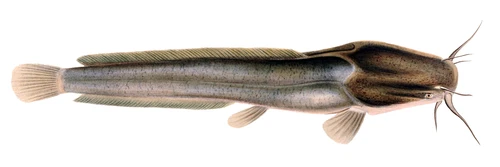
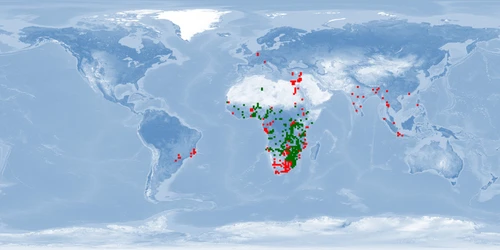
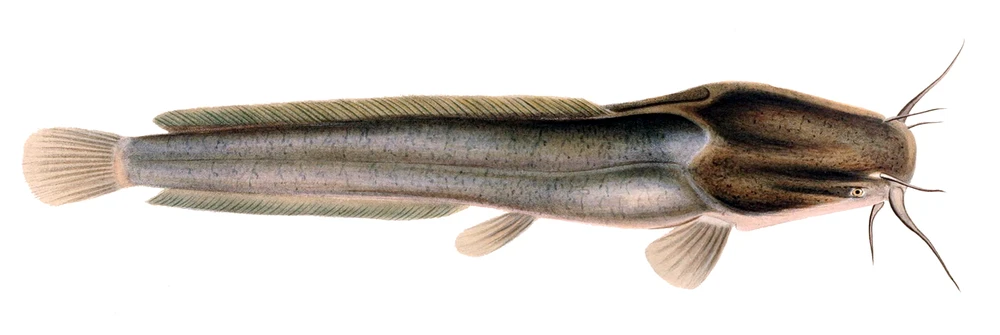
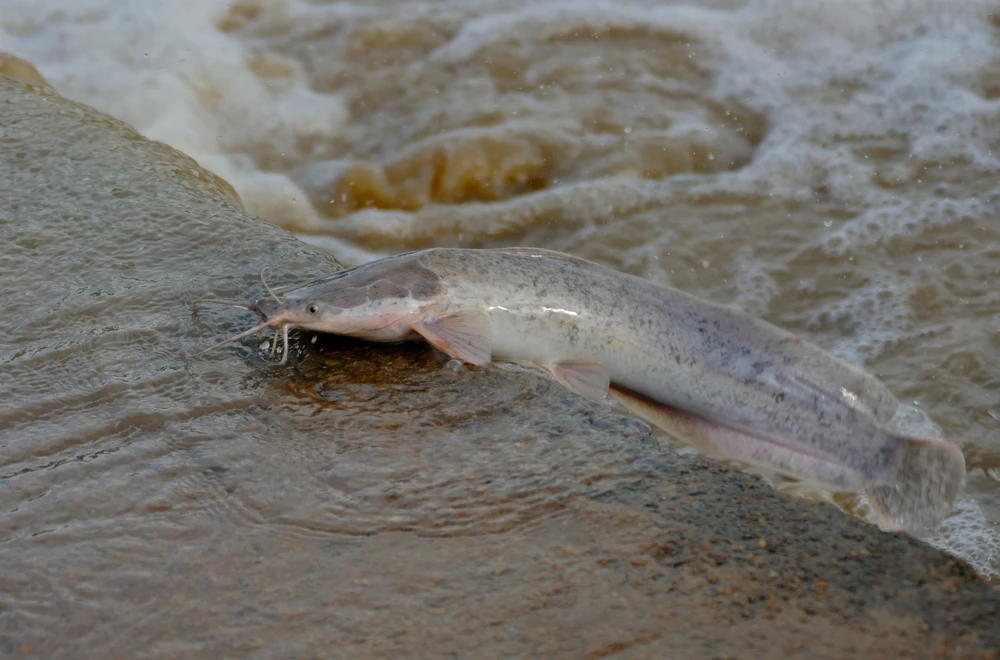
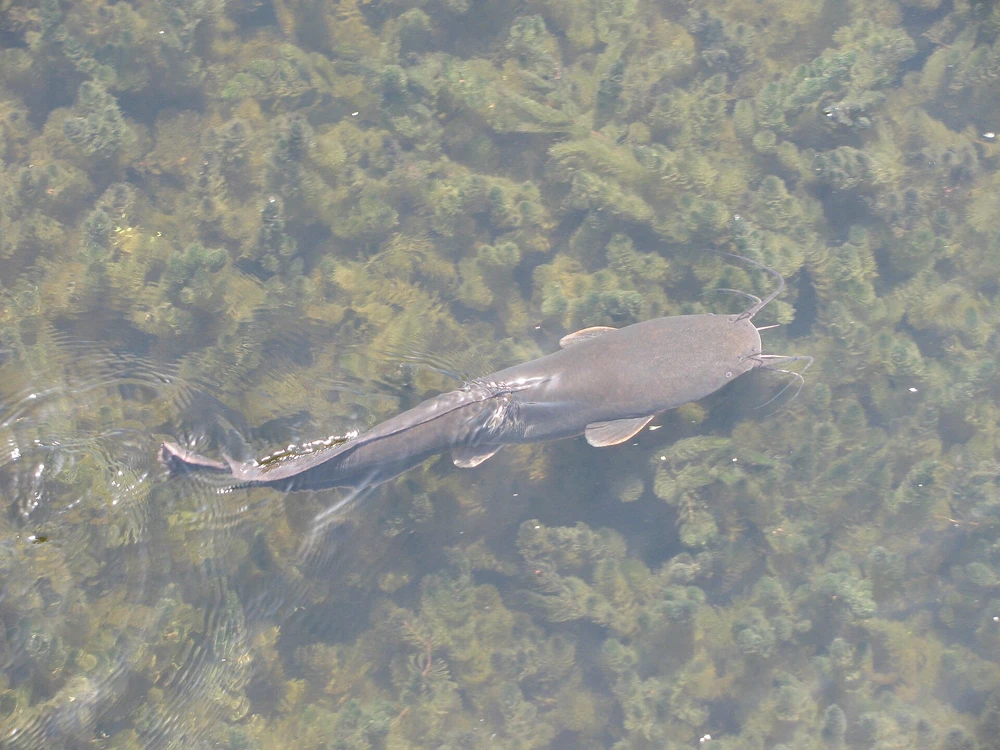
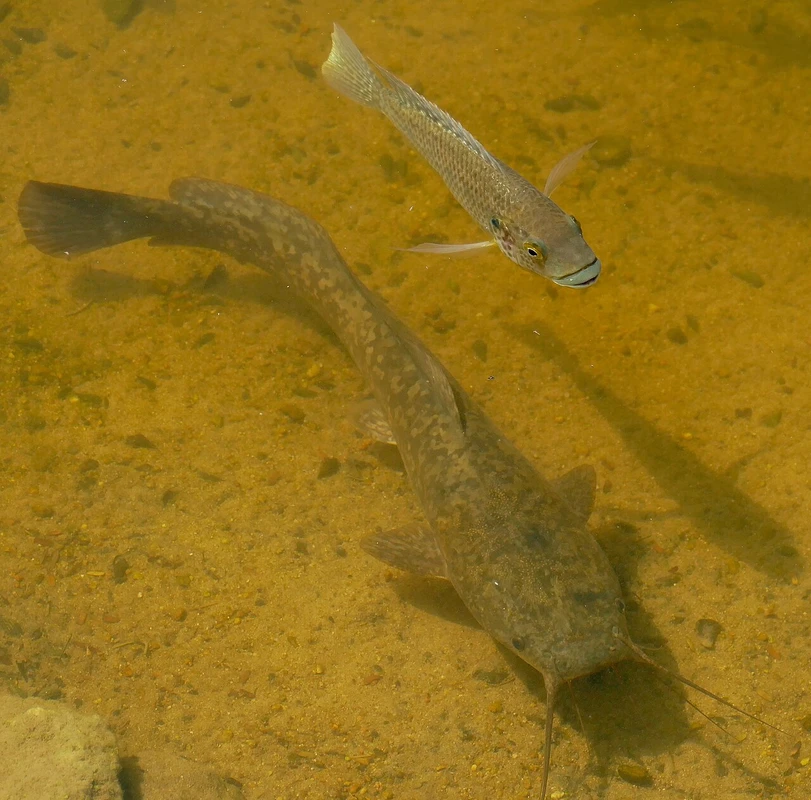
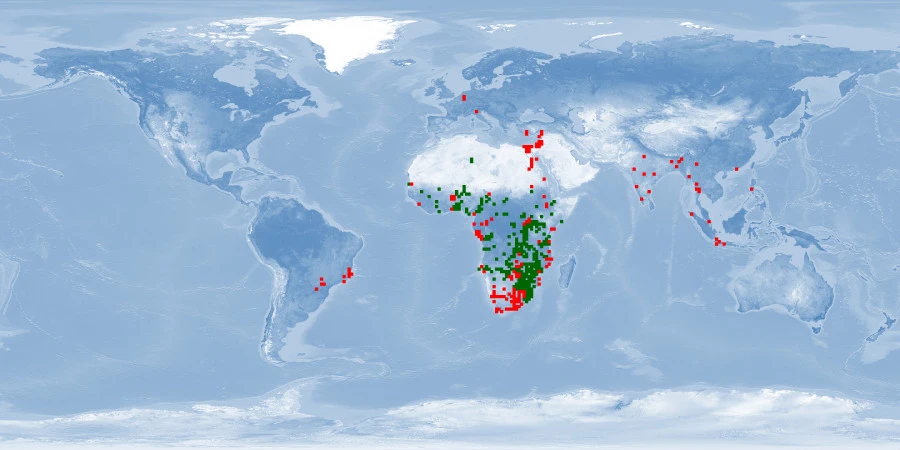
Clarias gariepinus is a very resilient air-breathing fish that can be naturally found in lakes, streams, rivers, swamps, and floodplains in Africa and Israel. This catfish is an omnivorous but primarily predatory fish. Clarias gariepinus is mainly a nocturnal species, migrating from the larger water bodies, in which the IND feed and mature, to temporarily flooded marginal areas to spawn. It was already introduced in inland waters of Africa, in addition to several other countries. Despite that, escapees generally result in negative or at most unpredictable consequences for the local ecosystems.
C. gariepinus is one of the most widely farmed species in Africa and a leading candidate for aquaculture development in Sub-Saharan regions, being also cultured in South America, Asia, and China by using EXTENSIVE and traditional methods as well as INTENSIVE and industrial techniques. Even though the lifecycle is closed in captivity (meaning all age classes can be achieved in farms), taking JUVENILES or SPAWNERS from the wild is still a habit occasionally. This catfish is reared in a variety of structures, including concrete, plastic, or fibreglass tanks, wooden vats, steel bathtubs, and earthen ponds. Its rapid growth, high fecundity, tolerance to diverse culture systems, and ability to thrive under a range of environmental conditions – including harsh water quality – make it a preferred species for INTENSIVE production.
On the other hand, it is an aggressive fish easily stressed by common rearing conditions and practices. Usual farming procedures for reproduction are also highly invasive – especially for males. Important information about its natural behaviours is still missing, especially about home range, migration distances, and aggregation ratios. Furthermore, developing and applying a high-standard slaughter method seems to be a challenge for this robust species.
1 Home range
Many species traverse in a limited horizontal space (even if just for a certain period of time per year); the home range may be described as a species' understanding of its environment (i.e., its cognitive map) for the most important resources it needs access to.
What is the probability of providing the species' whole home range in captivity?
It is low for minimal farming conditions, as tanks and some ponds do not cover the higher end of the home range in the wild, although we cannot be sure in some age classes. It is medium for high-standard farming conditions, as the range of other ponds at least overlaps with the home range in the wild. Our conclusion is based on a medium amount of evidence, as further research is needed on specific home range information in the wild.2 Depth range
Given the availability of resources (food, shelter) or the need to avoid predators, species spend their time within a certain depth range.
What is the probability of providing the species' whole depth range in captivity?
It is low for minimal farming conditions, as ponds, tanks, and hapas do not cover the higher end of the depth range in the wild. It is medium for high-standard farming conditions, as the mentioned systems at least overlap with the range in the wild. Our conclusion is based on a medium amount of evidence, as further research is needed to confirm farm studies reporting better growth in lower depths as in the wild.3 Migration
Some species undergo seasonal changes of environments for different purposes (feeding, spawning, etc.), and to move there, they migrate for more or less extensive distances.
What is the probability of providing farming conditions that are compatible with the migrating or habitat-changing behaviour of the species?
It is low for minimal farming conditions, as the species undertakes more or less extensive migrations (even though of unknown distance), and we cannot be sure that providing each age class with their respective environmental conditions will satisfy their urge to migrate or whether they need to experience the transition. It is unclear for high-standard farming conditions, as we lack wild information to compare the farming conditions to. Our conclusion is based on a medium amount of evidence, as further research is needed on specific migration distances in the wild.4 Reproduction
A species reproduces at a certain age, season, and sex ratio and possibly involving courtship rituals.
What is the probability of the species reproducing naturally in captivity without manipulation of these circumstances?
It is low for minimal farming conditions, as the species is manipulated (skewed sex ratio, separation by sex, hormonal manipulation, stripping/dissecting) and may be taken from the wild. It is high for high-standard farming conditions, as natural breeding (by simulating environmental conditions which we do not consider manipulation) with farm-reared IND at natural sex ratio and allowing for courtship is possible and verified for the farming context. Our conclusion is based on a high amount of evidence.5 Aggregation
Species differ in the way they co-exist with conspecifics or other species from being solitary to aggregating unstructured, casually roaming in shoals or closely coordinating in schools of varying densities.
What is the probability of providing farming conditions that are compatible with the aggregation behaviour of the species?
It is low for minimal farming conditions, as – even in the absence of density data in the wild – we may conclude from studies in farms or labs that low and high densities are potentially stress inducing. It is medium for high-standard farming conditions, as medium densities seem to be more beneficial than lower or higher ones, but this either needs to be verified for the farming context and/or for more rearing systems. Our conclusion is based on a medium amount of evidence, as further research is needed on the specified issues and on wild information in all age classes.6 Aggression
There is a range of adverse reactions in species, spanning from being relatively indifferent towards others to defending valuable resources (e.g., food, territory, mates) to actively attacking opponents.
What is the probability of the species being non-aggressive and non-territorial in captivity?
It is low for minimal farming conditions, as the species is aggressive – LARVAE and JUVENILES even cannibalistic – in all age classes. It is medium for high-standard farming conditions, as ways to reduce (but not avoid) aggression (feed, size grading, density, sex ratio, oxygen levels) are verified for the farming context, whereas other ways come with caveats: Keeping IND in complete darkness may not be in accordance with natural needs. Our conclusion is based on a high amount of evidence, as it seems clear that aggression cannot be completely avoided.7 Substrate
Depending on where in the water column the species lives, it differs in interacting with or relying on various substrates for feeding or covering purposes (e.g., plants, rocks and stones, sand and mud, turbidity).
What is the probability of providing the species' substrate and shelter needs in captivity?
It is low for minimal farming conditions, as all age classes of the species use substrate, but a) troughs and some tanks and ponds are devoid of it and b) given stripping (no opportunity to make use of spawning substrate). It is high for high-standard farming conditions given a) nests for eggs, b) earthen ponds for FRY to ADULTS which are not replaced by cement bottom and enriched with aquatic vegetation, and given c) natural reproduction with spawning substrate in earthen ponds for SPAWNERS. Our conclusion is based on a medium amount of evidence, as further research is needed to confirm the presence of vegetation in ponds or alternatively to determine whether nets or covers are an appropriate replacement for the shelter provided by vegetation in the wild.8 Stress
Farming involves subjecting the species to diverse procedures (e.g., handling, air exposure, short-term confinement, short-term crowding, transport), sudden parameter changes or repeated disturbances (e.g., husbandry, size-grading).
What is the probability of the species not being stressed?
It is low for minimal farming conditions, as the species is stressed (water quality, light and noise, handling, confinement, low and high densities, transport). It is medium for high-standard farming conditions, as some ways to reduce (but not avoid) stress are verified for the farming context. Our conclusion is based on a high amount of evidence, as it seems clear that stress cannot be avoided.9 Malformations
Deformities that – in contrast to diseases – are commonly irreversible may indicate sub-optimal rearing conditions (e.g., mechanical stress during hatching and rearing, environmental factors unless mentioned in crit. 3, aquatic pollutants, nutritional deficiencies) or a general incompatibility of the species with being farmed.
What is the probability of the species being malformed rarely?
It is low for minimal farming conditions, as malformation rates may exceed 10%. It is medium for high-standard farming conditions, as some malformations result from conditions that may be changed (water quality, feed, stressed SPAWNERS). Our conclusion is based on a medium amount of evidence, as improvement of the situation by adjusting conditions needs quantitative proof.10 Slaughter
The cornerstone for a humane treatment is that slaughter a) immediately follows stunning (i.e., while the individual is unconscious), b) happens according to a clear and reproducible set of instructions verified under farming conditions, and c) avoids pain, suffering, and distress.
What is the probability of the species being slaughtered according to a humane slaughter protocol?
It is low for minimal farming conditions (asphyxia, hypothermia, live exsanguination). It is medium for high-standard farming conditions, as electrical or percussive stunning followed by exsanguination and immersion in ice slurry induces unconsciousness fast (if done correctly), kills while still unconscious but needs to be verified for the farming context. Our conclusion is based on a medium amount of evidence, as further research is needed.Side note: Domestication
Teletchea and Fontaine introduced 5 domestication levels illustrating how far species are from having their life cycle closed in captivity without wild input, how long they have been reared in captivity, and whether breeding programmes are in place.
What is the species’ domestication level?
DOMESTICATION LEVEL 4 52, level 5 being fully domesticated. JUVENILES and SPAWNERS may be taken from the wild occasionally 9.
Side note: Forage fish in the feed
450-1,000 milliard wild-caught fishes end up being processed into fish meal and fish oil each year which contributes to overfishing and represents enormous suffering. There is a broad range of feeding types within species reared in captivity.
To what degree may fish meal and fish oil based on forage fish be replaced by non-forage fishery components (e.g., poultry blood meal) or sustainable sources (e.g., soybean cake)?
All age classes:
- WILD: omnivorous 6 53 8 54 55, but mainly carnivorous 3 4 19 6 8 54, especially larger IND 54, feeding on smaller FISHES, other smaller aquatic animals, plants, detritus, mud, zooplankton, phytoplankton, and insects 53 8 54 55.
- FARM: fish meal may be completely* replaced by non-forage fishery components 56 57 and by sustainable sources combined with a small portion of non-forage fishery components 58. Fish oil may be partly* replaced by sustainable sources combined with a small portion of non-forage fishery components 58. FRY/young JUVENILES: are usually fed with commercial diet, but offering only shell-free artemia or zooplankton is mentioned 24.
- LAB: fish meal (in feed with no fish oil) may be partly* replaced by sustainable sources 59 and mostly* replaced by non-forage fishery components 60.
*partly = <51% – mostly = 51-99% – completely = 100%
Side note: Commercial relevance
How much is this species farmed annually?
235,580 t/year 1990-2019 amounting to estimated 276,000,000-556,000,000 IND/year 1990-2019 61.
Glossary
12D = 12 h dark
12L = 12 h light
18D = 18 h dark
18L = 18 h light
24D = 24 h dark
6D = 6 h dark
6L = 6 h light
ADULTS = mature individuals
BENTHIC = living at the bottom of a body of water, able to rest on the floor
DOMESTICATION LEVEL 4 = entire life cycle closed in captivity without wild inputs 52
EXTENSIVE = low degree of intensification of fish farming in which no additional feed is provided to the individuals, and they solely rely on the natural feed produced in the system; often practised in traditional rice-fish cultures, cage and pen cultures in eutrophic waters, culture in lakes and reservoirs, etc. 12
FARM = setting in farming environment or under conditions simulating farming environment in terms of size of facility or number of individuals
FINGERLINGS = early juveniles with fully developed scales and working fins, the size of a human finger
FISHES = using "fishes" instead of "fish" for more than one individual - whether of the same species or not - is inspired by Jonathan Balcombe who proposed this usage in his book "What a fish knows". By referring to a group as "fishes", we acknowledge the individuals with their personalities and needs instead of an anonymous mass of "fish".
FRY = larvae from external feeding on
IND = individuals
INTENSIVE = high degree of intensification of fish farming in which the individuals are solely provided with a nutrionally complete additonal feed, and there is little to no natural feed produced in the system; often practised in integrated fisheries-aquaculture systems feeding wild-caught fishes or in some integrated peri-urban-aquaculture systems feeding slaughterhouse waste, also in cage, raceway, and RAS systems 12
JUVENILES = fully developed but immature individuals
LAB = setting in laboratory environment
LARVAE = hatching to mouth opening
PHOTOPERIOD = duration of daylight
POTAMODROMOUS = migrating within fresh water
RAS = Recirculating Aquaculture System - almost completely closed system using filters to clean and recirculate water with the aim of reducing water input and with the advantage of enabling close control of environmental parameters to maintain high water quality
SPAWNERS = adults during the spawning season; in farms: adults that are kept as broodstock
WILD = setting in the wild
Bibliography
1 Edwards, Peter, Roger S. V. Pullin, and J. A. Gartner. 1988. Research and Education for the Development of Integrated Crop-Livestock-Fish Farming Systems in the Tropics. WorldFish.
2 Hambrey, J., P. Edwards, and B. Belton. 2008. An ecosystem approach to freshwater aquaculture: a global review. In FAO Fisheries and Aquaculture Proceedings, 14:117–121. Rome, Italy: FAO.
3 Bruton, M. N. 1978. The Habitats and Habitat Preferences of Clarias Gariepinus (pisces: Clariidae) in a Clear Coastal Lake (lake Sibaya, South Africa). Journal of the Limnological Society of Southern Africa 4: 81–88. https://doi.org/10.1080/03779688.1978.9633156.
4 Bruton, M. N. 1979. The breeding biology and early development of Clarias gariepinus (Pisces: Clariidae) in Lake Sibaya, South Africa, with a review of breeding in species of the subgenus Clarias (Clarias). The Transactions of the Zoological Society of London 35: 1–45. https://doi.org/10.1111/j.1096-3642.1979.tb00056.x.
5 de Graaf, Gertjan, and Johannes Janssen. 1996. Handbook on the artificial reproduction and pond rearing of the African catfish Clarias gariepinus in sub-Saharan Africa. FAO Fisheries Technical Paper 362. Rome: Food and Agriculture Organization of the United Nations.
6 Basiita, R.K., and F. Rajts. 2021. Guidelines for African catfish (Clarias gariepinus) spawning and fingerling production in the Democratic Republic of Congo. Penang, Malaysia: CGIAR Research Program on Fish Agri-Food Systems.
7 Akinwole, A. O., and E. O. Faturoti. 2007. Biological performance of African Catfish (Clarias gariepinus) cultured in recirculating system in Ibadan. Aquacultural Engineering 36: 18–23. https://doi.org/10.1016/j.aquaeng.2006.05.001.
8 Isa, S.I. 2023. Best management practices for hatcheries culturing African catfish. Penang, Malaysia: WorldFish. Manual.
9 Fregene, B.T., P. Bolorunduro, R. Yossa, H. C. Karisa, A. Olaniyi, and I. Ajose. 2020. Extension manual on production of quality catfish seed. Ibadan, Nigeria; Penang, Malaysia: Technologies for African Agricultural Transformation; WorldFish Manual.
10 Hocutt, Charles H. 1989. Seasonal and diel behaviour of radio-tagged Clarias gariepinus in Lake Ngezi, Zimbabwe (Pisces: Clariidae). Journal of Zoology 219: 181–199. https://doi.org/10.1111/j.1469-7998.1989.tb02575.x.
11 Pouomogne, V. 2010. Cultured Aquatic Species Information Programme. Clarias gariepinus. Rome: FAO Fisheries and Aquaculture Department.
12 Abdel-Hay, A.-H., W. Emam, A. A. Omar, W. F. Eltras, and R. A. Mohamed. 2020. The effects of rearing water depths and feed types on the growth performance of African catfish (Clarias gariepinus). Aquaculture Research 51. https://doi.org/10.1111/are.14409.
13 Baßmann, B., L. Hahn, A. Rebl, L. C. Wenzel, M.-C. Hildebrand, M. Verleih, and H. W. Palm. 2023. Effects of Stocking Density, Size, and External Stress on Growth and Welfare of African Catfish (Clarias gariepinus Burchell, 1822) in a Commercial RAS. Fishes 8. Multidisciplinary Digital Publishing Institute: 74. https://doi.org/10.3390/fishes8020074.
14 Hildebrand, M.-C., D. Runge, B. Bassmann, and H. W. Palm. 2025. The Influence of Different Feeding Time Management on the Growth and Stress Response of the African Catfish Clarias gariepinuns (Burchel, 1822) Under Farming Conditions. Fishes 10. Multidisciplinary Digital Publishing Institute: 414. https://doi.org/10.3390/fishes10080414.
15 Huisman, E. A., and C. J. J. Richter. 1987. Reproduction, growth, health control and aquacultural potential of the African catfish, Clarias gariepinus (Burchell 1822). Aquaculture 63. Culture of Clarias Species: 1–14. https://doi.org/10.1016/0044-8486(87)90057-3.
16 Toko, Imorou, Emile D. Fiogbe, Bruno Koukpode, and Patrick Kestemont. 2007. Rearing of African catfish (Clarias gariepinus) and vundu catfish (Heterobranchus longifilis) in traditional fish ponds (whedos): Effect of stocking density on growth, production and body composition. Aquaculture 262: 65–72. https://doi.org/10.1016/j.aquaculture.2006.08.054.
17 Stokes, J. 1976. Personal communication.
18 El Naggar, Gamal O., George John, Mahmoud A. Rezk, Waheed Elwan, and Mohammed Yehia. 2006. Effect of varying density and water level on the spawning response of African catfish Clarias gariepinus: Implications for seed production. Aquaculture 261: 904–907. https://doi.org/10.1016/j.aquaculture.2006.07.043.
19 Dadebo, Elias. 2000. Reproductive biology and feeding habits of the catfish Clarias gariepinus (Burchell)(Pisces: Clariidae) in Lake Awassa, Ethiopia. SINET: Ethiopian Journal of Science 23: 231–246.
20 Willoughby, N. G., and D. Tweddle. 1978. The ecology of the catfish Clarias gariepinus and Clarias ngamensis in the Shire Valley, Malawi. Journal of Zoology 186: 507–534. https://doi.org/10.1111/j.1469-7998.1978.tb03936.x.
21 Ikpi, Gabriel U., Adetola Jenyo-Oni, and Benedict O. Offem. 2012. Effect of Season on Catch rate, Diet and Aspects of Reproduction of Clarias gariepinus (Teleostei: Clariidae) in a Tropical Waterfalls. Advances in Life Sciences 2: 68–74.
22 Anteneh, Wassie, Eshete Dejen, and Abebe Getahun. 2012. Shesher and Welala Floodplain Wetlands (Lake Tana, Ethiopia): Are They Important Breeding Habitats for Clarias gariepinus and the Migratory Labeobarbus Fish Species? The Scientific World Journal. https://doi.org/10.1100/2012/298742.
23 Mbalassa, Mulongaibalu, Muderhwa Nshombo, Mujugu Eliezer Kateyo, Lauren Chapman, Jackson Efitre, and Gladys Bwanika. 2015. Identification of migratory and spawning habitats of Clarias gariepinus (Burchell, 1822) in Lake Edward-Ishasha River watershed, Albertine Rift Valley, East Africa. International Journal of Fisheries and Aquatic Studies 2: 128–138.
24 Kwikiriza, G., S. M.a Tebitendwa, P. Rwezawula, W. W. Mwanja, I. Abaho, and H. Meimberg. 2025. Enhancing African Catfish (Clarias gariepinus) Aquaculture in Uganda: Insights into Hatchery Propagation, Population Suitability, and Broodstock Management. Fishes 10. Multidisciplinary Digital Publishing Institute: 290. https://doi.org/10.3390/fishes10060290.
25 van der Waal, B. C. W. 1974. Observations on the breeding habits of Clarias gariepinus (Burchell). Journal of Fish Biology 6: 23–27. https://doi.org/10.1111/j.1095-8649.1974.tb04518.x.
26 de Graaf, G J, F Galemoni, and B Banzoussi. 1995. Artificial reproduction and fingerling production of the African catfish, Clarias gariepinus (Burchell 1822), in protected and unprotected ponds. Aquaculture Research 26: 233–242. https://doi.org/10.1111/j.1365-2109.1995.tb00908.x.
27 Wenzel, L. C., E. Berchtold, and H. W. Palm. 2022. Effects of stocking density and grading on behaviour, cannibalism and performance of African catfish (Clarias gariepinus) fry. Aquaculture Reports 27. Elsevier: 101400. https://doi.org/10.1016/j.aqrep.2022.101400.
28 Indriastuti, C. E., M. Zairin Jr, M. A. Suprayudi, E. Supriyono, and A. Alimuddin. 2023. Cannibalism and survivorship of early juvenile African catfish (Clarias gariepinus) in relation to stocking density and 17β-estradiol treatment. Journal of Applied Aquaculture 35. Taylor & Francis: 975–991. https://doi.org/10.1080/10454438.2022.2063703.
29 van de Nieuwegiessen, Pascal G., Annette S. Boerlage, Johan A. J. Verreth, and Johan W. Schrama. 2008. Assessing the effects of a chronic stressor, stocking density, on welfare indicators of juvenile African catfish, Clarias gariepinus Burchell. Applied Animal Behaviour Science 115: 233–243. https://doi.org/10.1016/j.applanim.2008.05.008.
30 Ojelade, O., O. Iyasere, S. Durosaro, I. Abdulraheem, and A. Akinde. 2022. Social isolation impairs feed intake, growth and behavioural patterns of catfish under culture conditions. animal 16: 100521. https://doi.org/10.1016/j.animal.2022.100521.
31 Hecht, T., and S. Appelbaum. 1988. Observations on intraspecific aggression and coeval sibling cannibalism by larval and juvenile Claias gariepinus (Clariidae: Pisces) under controlled conditions. Journal of Zoology 214: 21–44. https://doi.org/10.1111/j.1469-7998.1988.tb04984.x.
32 Kaiser, H., O. Weyl, and T. Hecht. 1995. Observations on agonistic behaviour of Clarias gariepinus larvae and juveniles under different densities and feeding frequencies in a controlled environment. Journal of Applied Ichthyology 11: 25–36. https://doi.org/10.1111/j.1439-0426.1995.tb00003.x.
33 Almazán-Rueda, Pablo, Johan W Schrama, and Johan A. J Verreth. 2004. Behavioural responses under different feeding methods and light regimes of the African catfish (Clarias gariepinus) juveniles. Aquaculture 231: 347–359. https://doi.org/10.1016/j.aquaculture.2003.11.016.
34 Adewolu, Morenike A., Comfort A. Adeniji, and Ademola B. Adejobi. 2008. Feed utilization, growth and survival of Clarias gariepinus (Burchell 1822) fingerlings cultured under different photoperiods. Aquaculture 283: 64–67. https://doi.org/10.1016/j.aquaculture.2008.07.020.
35 Almazán-Rueda, P., A. T. M Van Helmond, J. a. J. Verreth, and J. W. Schrama. 2005. Photoperiod affects growth, behaviour and stress variables in Clarias gariepinus. Journal of Fish Biology 67: 1029–1039. https://doi.org/10.1111/j.0022-1112.2005.00806.x.
36 Baron, V. D., A. A. Orlov, and A. S. Golubtsov. 1994. African Clarias catfish elicits long-lasting weak electric pulses. Experientia 50: 644–647. https://doi.org/10.1007/BF01952864.
37 Fatollahi, M., and A. O. Kasumyan. 2006. The study of sensory bases of the feeding behavior of the African catfish Clarias gariepinus (Clariidae, Siluriformes). Journal of Ichthyology 46: S161–S172. https://doi.org/10.1134/S0032945206110051.
38 Kasumyan, A. O. 2014. Behavior and gustatory reception of air-breathing catfishes (Clariidae). Journal of Ichthyology 54: 934–943. https://doi.org/10.1134/S0032945214100075.
39 Van Wassenbergh, Sam, Anthony Herrel, Dominique Adriaens, and Peter Aerts. 2005. A test of mouth-opening and hyoid-depression mechanisms during prey capture in a catfish using high-speed cineradiography. The Journal of Experimental Biology 208: 4627–4639. https://doi.org/10.1242/jeb.01919.
40 Van Wassenbergh, Sam, Tim Lieben, Anthony Herrel, Frank Huysentruyt, Tom Geerinckx, Dominique Adriaens, and Peter Aerts. 2009. Kinematics of benthic suction feeding in Callichthyidae and Mochokidae, with functional implications for the evolution of food scraping in catfishes. Journal of Experimental Biology 212: 116–125. https://doi.org/10.1242/jeb.023929.
41 Haylor, G. S. 1992. Controlled hatchery production of Clarias gariepinus (Burchell): growth and survival of larvae at high stocking density. Aquaculture Research 23: 303–314. https://doi.org/10.1111/j.1365-2109.1992.tb00773.x.
42 Zidan, E. M., A. A. Goma, H. G. Tohamy, M. Mohamed Soliman, and M. Shukry. 2022. Insight study on the impact of different salinity levels on behavioural responses, biochemical stress parameters and growth performance of African catfish (Clarias gariepinus). Aquaculture Research 53: 2750–2759. https://doi.org/10.1111/are.15790.
43 Brijs, J., E. Sundell, P. Hjelmstedt, C. Berg, I. Senčić, E. Sandblom, M. Axelsson, et al. 2021. Humane slaughter of African sharptooth catfish (Clarias gariepinus): Effects of various stunning methods on brain function. Aquaculture 531: 735887. https://doi.org/10.1016/j.aquaculture.2020.735887.
44 Adeyemo, Olanike K, Irene Naigaga, and Rashidat A Alli. 2009. Effect of handling and transportation on haematology of African catfish (Clarias gariepinus). Journal of FisheriesSciences. com 3: 333–341.
45 Adebayo, OT. 2006. Reproductive performance of African Clariid Catfish Clarias gariepinus broodstock on varying maternal stress. Journal of Fisheries international 1: 17–20.
46 Boon, J.H., R.W.A. Oorschot, A. M. Henken, and J.H. Van Doesum. 1987. Ruptured intestine syndrome of unknown etiology in young African catfish, Clarias gariepinus (Burchell 1822)) and its relation to the feeding level. Aquaculture 63: 283–300.
47 Alarape, Selim Adewale, Temilolu Oladipo Hussein, Eyihuri Veronica Adetunji, and Olanike Kudirat Adeyemo. 2015. Skeletal and Other Morphological Abnormalities in Cultured Nigerian African Catfish (Clarias Gariepinus, Burchell 1822). International Journal of Fisheries and Aquatic Studies 2: 20–25.
48 Eya, Jonathan C. 1996. ‘Broken-Skull Disease’ in African Catfish Clarias gariepinus is Related to a Dietary Deficiency of Ascorbic Acid. Journal of the World Aquaculture Society 27: 493–498. https://doi.org/10.1111/j.1749-7345.1996.tb00635.x.
49 Lambooij, E., R. J. Kloosterboer, M. A. Gerritzen, and J. W. van de Vis. 2006. Assessment of electrical stunning in fresh water of African Catfish (Clarias gariepinus) and chilling in ice water for loss of consciousness and sensibility. Aquaculture 254: 388–395. https://doi.org/10.1016/j.aquaculture.2005.10.027.
50 Lambooij, E, R J Kloosterboer, C Pieterse, M A Gerritzen, and J W Van de vis. 2003. Stunning of farmed African catfish (Clarias gariepinus) using a captive needle pistol; assessment of welfare aspects. Aquaculture Research 34: 1353–1358. https://doi.org/10.1046/j.1365-2109.2003.00966.x.
51 Sattari, A., E. Lambooij, H. Sharifi, W. Abbink, H. Reimert, and J. W. van de Vis. 2010. Industrial dry electro-stunning followed by chilling and decapitation as a slaughter method in Claresse® (Heteroclarias sp.) and African catfish (Clarias gariepinus). Aquaculture 302: 100–105. https://doi.org/10.1016/j.aquaculture.2010.01.011.
52 Teletchea, Fabrice, and Pascal Fontaine. 2012. Levels of domestication in fish: implications for the sustainable future of aquaculture. Fish and Fisheries 15: 181–195. https://doi.org/10.1111/faf.12006.
53 Eyayu, A., and A. Getahun. 2022. Feeding strategy and diet overlap in major fish stocks of Ayima and Gelegu Rivers, northwestern Ethiopia. African Journal of Ecology 60: 1007–1018. https://doi.org/10.1111/aje.13036.
54 Tesfahun, A., and S. Alebachew. 2023. Diet composition and feeding habits of the African sharptooth catfish Clarias gariepinus (Burchell, 1822) from Ribb Reservoir, South Gondar, Ethiopia. Cogent Food & Agriculture 9. Cogent OA: 2284228. https://doi.org/10.1080/23311932.2023.2284228.
55 Dessie, A., M. Mingist, D. Mequanent, and D. Aemro. 2024. Food and feeding habits of the African catfish Clarias gariepinus (Burchell, 1822) (Pisces: Clariidae) in the newly built Ribb Reservoir, north-west Ethiopia. Indian Journal of Fisheries 71: 37–42. https://doi.org/10.21077/ijf.2024.71.2.134268-05.
56 Fasakin, E A, A M Balogun, and O O Ajayi. 2003. Evaluation of full-fat and defatted maggot meals in the feeding of clariid catfish Clarias gariepinus fingerlings. Aquaculture Research 34: 733–738. https://doi.org/10.1046/j.1365-2109.2003.00876.x.
57 Sotolu, AO, and others. 2009. Comparative utilizations of fish waste meal with imported fishmeal by African Catfish (Clarias gariepinus). American-Euras J. Sci. Res 4: 285–289.
58 Nyina-Wamwiza, L., B. Wathelet, J. Richir, X. Rollin, and P. Kestemont. 2010. Partial or total replacement of fish meal by local agricultural by-products in diets of juvenile African catfish (Clarias gariepinus): growth performance, feed efficiency and digestibility. Aquaculture Nutrition 16: 237–247. https://doi.org/10.1111/j.1365-2095.2009.00658.x.
59 Roslan, N. A., S. A. Sukri, L. S. Wei, M. Shahjahan, M. F. Rohani, C. S. Yea, M. A. Kabir, et al. 2024. Replacement of fishmeal by fermented spent coffee ground: Effects on growth performance, feed stability, blood biochemistry, liver, and intestinal morphology of African catfish (Clarias gariepinus). Aquaculture Reports 36: 102073. https://doi.org/10.1016/j.aqrep.2024.102073.
60 Fawole, F. J., A. A. Adeoye, L. O. Tiamiyu, K. I. Ajala, S. O. Obadara, and I. O. Ganiyu. 2020. Substituting fishmeal with Hermetia illucens in the diets of African catfish (Clarias gariepinus): Effects on growth, nutrient utilization, haemato-physiological response, and oxidative stress biomarker. Aquaculture 518: 734849. https://doi.org/10.1016/j.aquaculture.2019.734849.
61 Mood, Alison, Elena Lara, Natasha K. Boyland, and Phil Brooke. 2023. Estimating global numbers of farmed fishes killed for food annually from 1990 to 2019. Animal Welfare 32. Cambridge University Press: e12. https://doi.org/10.1017/awf.2023.4.


The legend next to the WelfareScore card gives the definitions of the three dimensions we score the welfare of aquatic species on. You will also find the score options and how we arrive at the overall WelfareScore. If you scroll down to the criteria, you will find the explanations for the scores for each criterion for many species already. We are in the process of inserting these for all WelfareChecks we update. If your species of interest is missing these score justifications or if you are interested to know more details about the scoring procedure, please consult our scoring rationale.
For WelfareChecks we have not managed to update yet, previous scoring rationales may apply:
- before 2022: scoring rationale
- before 2018: scoring rationale
The criteria cover the main focus of the WelfareChecks – an assessment of the welfare of aquatic species. When selecting the criteria, though, we were aware of the importance of some topics so that we wanted to include them and collect data but not score them. For WelfareChecks | farm, these topics are "domestication level", "feed replacement", and "commercial relevance". The domestication and commercial relevance aspects allow us to analyse the questions whether increasing rate of domestication or relevance in farming worldwide goes hand in hand with better welfare; the feed replacement rather goes in the direction of added suffering for all those species which end up as feed. For a carnivorous species, to gain 1 kg of meat, you do not just kill this one individual but you have to take into account the meat that it was fed during its life in the form of fish meal and fish oil. In other words, carnivorous species (and to a degree also omnivorous ones) have a larger "fish in:fish out" ratio.
Probably, we updated the profile. Check the version number in the head of the page. For more information on the version, see the FAQ about this. Why do we update profiles? Not just do we want to include new research that has come out, but we are continuously developing the database itself. For example, we changed the structure of entries in criteria or we added explanations for scores in the WelfareCheck | farm. And we are always refining our scoring rules.
The centre of the Overview is an array of criteria covering basic features and behaviours of the species. Each of this information comes from our literature search on the species. If we researched a full Dossier on the species, probably all criteria in the Overview will be covered and thus filled. This was our way to go when we first set up the database.
Because Dossiers are time consuming to research, we switched to focusing on WelfareChecks. These are much shorter profiles covering just 10 criteria we deemed important when it comes to behaviour and welfare in aquaculture (and lately fisheries, too). Also, WelfareChecks contain the assessment of the welfare potential of a species which has become the main feature of the fair-fish database over time. Because WelfareChecks do not cover as many criteria as a Dossier, we don't have the information to fill all blanks in the Overview, as this information is "not investigated by us yet".
Our long-term goal is to go back to researching Dossiers for all species covered in the fair-fish database once we set up WelfareChecks for each of them. If you would like to support us financially with this, please get in touch at ffdb@fair-fish.net
See the question "What does "not investigated by us yet" mean?". In short, if we have not had a look in the literature - or in other words, if we have not investigated a criterion - we cannot know the data. If we have already checked the literature on a criterion and could not find anything, it is "no data found yet". You spotted a "no data found yet" where you know data exists? Get in touch with us at ffdb@fair-fish.net!
Once you have clicked on "show details", the entry for a criterion will unfold and display the summarised information we collected from the scientific literature – complete with the reference(s).
As reference style we chose "Springer Humanities (numeric, brackets)" which presents itself in the database as a number in a grey box. Mouse over the box to see the reference; click on it to jump to the bibliography at the bottom of the page. But what does "[x]↶[y]" refer to?
This is the way we mark secondary citations. In this case, we read reference "y", but not reference "x", and cite "x" as mentioned in "y". We try to avoid citing secondary references as best as possible and instead read the original source ourselves. Sometimes we have to resort to citing secondarily, though, when the original source is: a) very old or not (digitally) available for other reasons, b) in a language no one in the team understands. Seldomly, it also happens that we are running out of time on a profile and cannot afford to read the original. As mentioned, though, we try to avoid it, as citing mistakes may always happen (and we don't want to copy the mistake) and as misunderstandings may occur by interpreting the secondarily cited information incorrectly.
If you spot a secondary reference and would like to send us the original work, please contact us at ffdb@fair-fish.net
In general, we aim at giving a good representation of the literature published on the respective species and read as much as we can. We do have a time budget on each profile, though. This is around 80-100 hours for a WelfareCheck and around 300 hours for a Dossier. It might thus be that we simply did not come around to reading the paper.
It is also possible, though, that we did have to make a decision between several papers on the same topic. If there are too many papers on one issue than we manage to read in time, we have to select a sample. On certain topics that currently attract a lot of attention, it might be beneficial to opt for the more recent papers; on other topics, especially in basic research on behaviour in the wild, the older papers might be the go-to source.
And speaking of time: the paper you are missing from the profile might have come out after the profile was published. For the publication date, please check the head of the profile at "cite this profile". We currently update profiles every 6-7 years.
If your paper slipped through the cracks and you would like us to consider it, please get in touch at ffdb@fair-fish.net
This number, for example "C | 2.1 (2022-11-02)", contains 4 parts:
- "C" marks the appearance – the design level – of the profile part. In WelfareChecks | farm, appearance "C" is our most recent one with consistent age class and label (WILD, FARM, LAB) structure across all criteria.
- "2." marks the number of major releases within this appearance. Here, it is major release 2. Major releases include e.g. changes of the WelfareScore. Even if we just add one paper – if it changes the score for one or several criteria, we will mark this as a major update for the profile. With a change to a new appearance, the major release will be re-set to 1.
- ".1" marks the number of minor updates within this appearance. Here, it is minor update 1. With minor updates, we mean changes in formatting, grammar, orthography. It can also mean adding new papers, but if these papers only confirm the score and don't change it, it will be "minor" in our book. With a change to a new appearance, the minor update will be re-set to 0.
- "(2022-11-02)" is the date of the last change – be it the initial release of the part, a minor, or a major update. The nature of the changes you may find out in the changelog next to the version number.
If an Advice, for example, has an initial release date and then just a minor update date due to link corrections, it means that – apart from correcting links – the Advice has not been updated in a major way since its initial release. Please take this into account when consulting any part of the database.
First up, you will find answers to questions for the specific page you are on. Scrolling down in the FAQ window, there are also answers to more general questions. Explore our website and the other sub pages and find there the answers to questions relevant for those pages.
In the fair-fish database, when you have chosen a species (either by searching in the search bar or in the species tree), the landing page is an Overview, introducing the most important information to know about the species that we have come across during our literatures search, including common names, images, distribution, habitat and growth characteristics, swimming aspects, reproduction, social behaviour but also handling details. To dive deeper, visit the Dossier where we collect all available ethological findings (and more) on the most important aspects during the life course, both biologically and concerning the habitat. In contrast to the Overview, we present the findings in more detail citing the scientific references.
Depending on whether the species is farmed or wild caught, you will be interested in different branches of the database.
Farm branch
Founded in 2013, the farm branch of the fair-fish database focuses on farmed aquatic species.
Catch branch
Founded in 2022, the catch branch of the fair-fish database focuses on wild-caught aquatic species.
The heart of the farm branch of the fair-fish database is the welfare assessment – or WelfareCheck | farm – resulting in the WelfareScore | farm for each species. The WelfareCheck | farm is a condensed assessment of the species' likelihood and potential for good welfare in aquaculture, based on welfare-related findings for 10 crucial criteria (home range, depth range, migration, reproduction, aggregation, aggression, substrate, stress, malformations, slaughter).
For those species with a Dossier, we conclude to-be-preferred farming conditions in the Advice | farm. They are not meant to be as detailed as a rearing manual but instead, challenge current farming standards and often take the form of what not to do.
In parallel to farm, the main element of the catch branch of the fair-fish database is the welfare assessment – or WelfareCheck | catch – with the WelfareScore | catch for each species caught with a specific catching method. The WelfareCheck | catch, too, is a condensed assessment of the species' likelihood and potential for good welfare – or better yet avoidance of decrease of good welfare – this time in fisheries. We base this on findings on welfare hazards in 10 steps along the catching process (prospection, setting, catching, emersion, release from gear, bycatch avoidance, sorting, discarding, storing, slaughter).
In contrast to the farm profiles, in the catch branch we assess the welfare separately for each method that the focus species is caught with. In the case of a species exclusively caught with one method, there will be one WelfareCheck, whereas in other species, there will be as many WelfareChecks as there are methods to catch the species with.
Summarising our findings of all WelfareChecks | catch for one species in Advice | catch, we conclude which catching method is the least welfare threatening for this species and which changes to the gear or the catching process will potentially result in improvements of welfare.
Welfare of aquatic species is at the heart of the fair-fish database. In our definition of welfare, we follow Broom (1986): “The welfare of an individual is its state as regards its attempts to cope with its environment.” Thus, welfare may be perceived as a continuum on which an individual rates “good” or “poor” or everything in between.
We pursue what could be called a combination of not only a) valuing the freedom from injuries and stress (function-based approach) but b) supporting attempts to provide rewarding experiences and cognitive challenges (feelings-based approach) as well as c) arguing for enclosures that mimic the wild habitat as best as possible and allow for natural behaviour (nature-based approach).
Try mousing over the element you are interested in - oftentimes you will find explanations this way. If not, there will be FAQ on many of the sub-pages with answers to questions that apply to the respective sub-page. If your question is not among those, contact us at ffdb@fair-fish.net.
It's right here! We decided to re-name it to fair-fish database for several reasons. The database has grown beyond dealing purely with ethology, more towards welfare in general – and so much more. Also, the partners fair-fish and FishEthoGroup decided to re-organise their partnership. While maintaining our friendship, we also desire for greater independence. So, the name "fair-fish database" establishes it as a fair-fish endeavour.